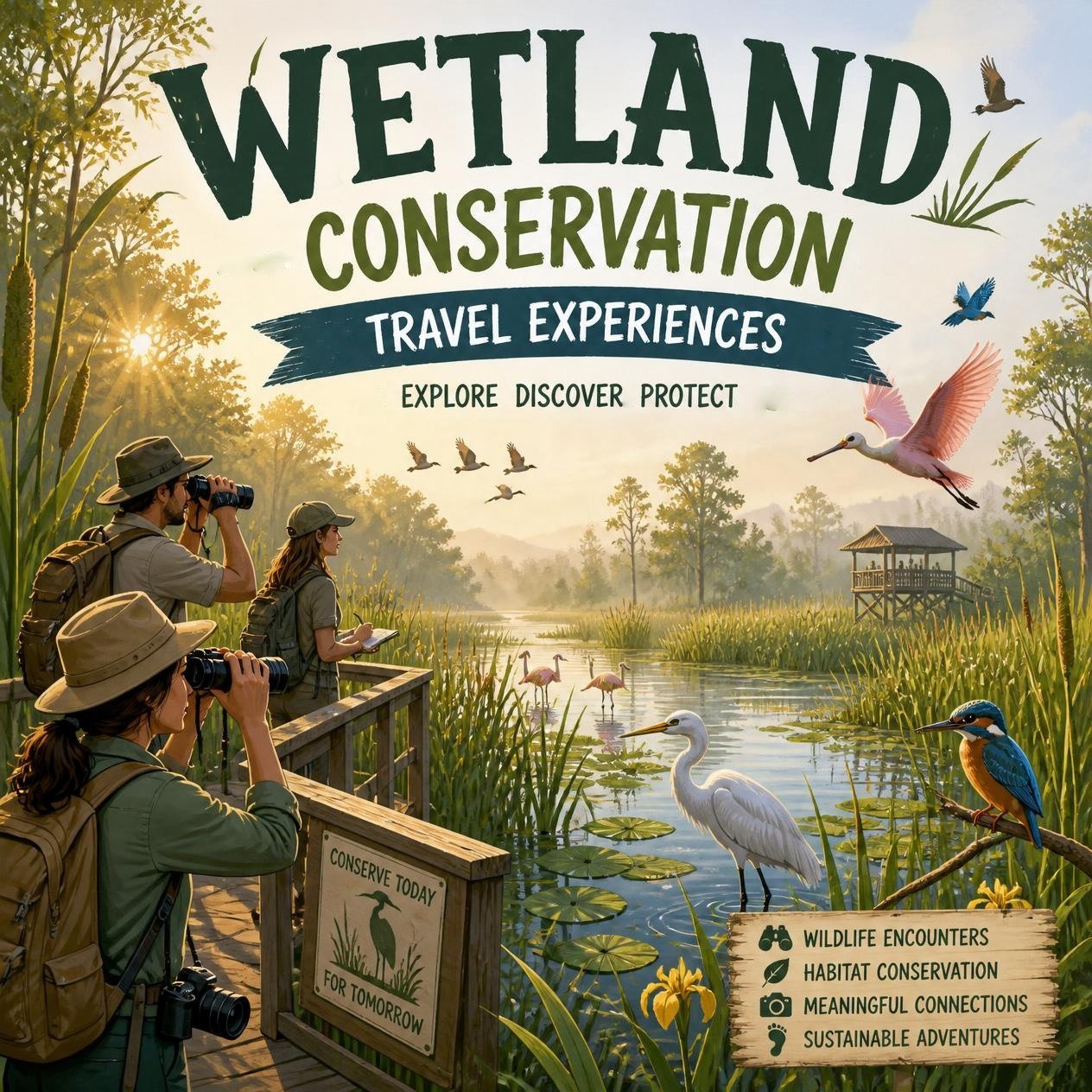
Wetland conservation travel experiences offer a meaningful way to explore nature while helping protect some of the world’s most valuable ecosystems. From peaceful marshlands and freshwater lakes to coastal lagoons and mangrove forests, wetlands support a remarkable variety of wildlife. They provide essential habitats for birds, fish, amphibians, insects, and plants while helping maintain the natural balance of the surrounding environment.
For travellers who enjoy wildlife watching, photography, peaceful landscapes, and responsible outdoor adventures, wetlands offer something special. These environments change with the seasons, creating opportunities to observe migrating birds, discover unusual plant species, and learn how water supports life across different habitats.
Unlike conventional sightseeing holidays, conservation-focused travel encourages visitors to understand the relationship between tourism and nature protection. Travellers can join guided wildlife walks, visit protected reserves, learn from local conservation projects, and support businesses that care about the environment.
Whether you are interested in birdwatching, ecological education, photography, or low-impact nature holidays, wetland conservation travel can turn an ordinary trip into a more meaningful experience. With responsible planning, it is possible to enjoy beautiful landscapes while helping protect the natural places that make these journeys worthwhile.
What Are Wetland Conservation Travel Experiences?
Wetland conservation travel experiences are nature-based journeys that introduce visitors to wetland ecosystems and the importance of protecting them. These experiences may take place in marshes, swamps, peatlands, river floodplains, estuaries, mangrove forests, and shallow coastal waters.
Wetlands are areas where water influences the soil, vegetation, and wildlife for at least part of the year. Some remain wet throughout every season, while others experience changing water levels depending on rainfall, tides, or seasonal flooding.
These habitats perform important environmental functions. They can store water, reduce the effects of flooding, filter certain pollutants, support biodiversity, and store carbon, particularly in ecosystems such as peatlands and mangroves.
Conservation travel helps visitors understand these functions through direct experience. Activities may include guided birdwatching, educational walks, wildlife observation from designated platforms, visits to conservation centres, and learning sessions led by local guides.
Some programmes also offer opportunities to support habitat restoration or community conservation initiatives. However, travellers should choose reputable organisations that explain how their activities contribute to genuine environmental protection.
Why Wetlands Matter for Wildlife and Nature
Wetlands are often overlooked when people plan outdoor holidays, yet they are among the most important natural environments on Earth.
Wetlands Support Diverse Wildlife
Wetlands provide food, shelter, breeding areas, and resting places for many animal species. Waterbirds use them for feeding and nesting, while fish and amphibians depend on suitable aquatic habitats to survive and reproduce.
Migratory birds may rely on wetlands as essential stopping points during long journeys between breeding and wintering grounds. Healthy wetlands can therefore support wildlife across several countries and continents.
Visitors may observe herons, ducks, geese, kingfishers, wading birds, and other species, depending on the location and season. Some wetlands also support mammals, reptiles, insects, and rare plants.
Wildlife sightings are never guaranteed, but patient observation and knowledgeable guidance can make the experience more rewarding.
Wetlands Help Manage Water Naturally
Wetlands can absorb and temporarily store excess water during periods of heavy rainfall. This natural storage may help reduce flooding in certain areas, although the level of protection depends on the landscape and the condition of the wetland.
Wetland vegetation and soils can also help trap sediment and process some nutrients and pollutants. These functions contribute to water quality and support healthier ecosystems.
When wetlands are drained, polluted, or converted for other uses, these natural benefits can decline. Conservation travel helps raise awareness of why these habitats need careful management.
Wetlands Store Carbon and Support Climate Resilience
Certain wetland ecosystems, especially peatlands and mangroves, store substantial amounts of carbon in their soils and vegetation. Protecting these environments can help prevent the release of stored carbon and maintain important ecological functions.
Wetlands can also help communities adapt to some climate-related pressures, including coastal erosion and changing rainfall patterns. Their effectiveness depends on local conditions, and conservation must be combined with wider environmental planning.
Learning about these connections helps travellers understand that wetland protection benefits wildlife, people, and the wider environment.
Best Destinations for Wetland Conservation Travel
Wetlands occur in many parts of the world, offering different wildlife experiences, landscapes, and conservation opportunities. These destinations provide inspiration for travellers interested in nature protection and responsible exploration.
1. Danube Delta, Romania
The Danube Delta in eastern Romania is one of Europe’s best-known wetland landscapes. Where the Danube River approaches the Black Sea, it forms a complex network of channels, lakes, reed beds, and marshes.
This varied environment supports a rich range of birdlife and aquatic species. Depending on the season, visitors may observe pelicans, herons, cormorants, and many other waterbirds.
Boat excursions with knowledgeable local guides can help travellers explore suitable waterways while learning about the delta’s ecology. Guided walks and visits to local communities may provide additional insight into how people live alongside this dynamic environment.
The delta also faces challenges associated with habitat change, water management, pollution, and human activity. Responsible visitors can help by following protected-area rules, avoiding disturbance to nesting birds, and choosing operators who respect wildlife and local conservation requirements.
2. Doñana National Park, Spain
Doñana National Park in southern Spain contains marshes, lagoons, dunes, and Mediterranean habitats that support an impressive range of wildlife.
The wetland areas are particularly important for birds, including migratory species that travel between Europe and Africa. Seasonal changes in water levels can influence which species are present and where they gather.
Visitors can explore designated areas through approved routes, visitor centres, and guided excursions. These activities provide opportunities to learn about wetland ecology, bird migration, and the relationship between water availability and wildlife.
Water management is a major issue for the wider region, making conservation education especially relevant. Travellers should respect access restrictions and use authorised routes to avoid disturbing sensitive habitats.
3. Okavango Delta, Botswana
The Okavango Delta is a remarkable inland wetland system in southern Africa. Seasonal floodwaters spread across a largely dry landscape, creating channels, lagoons, grasslands, and islands that support diverse wildlife.
The delta provides habitat for waterbirds, fish, mammals, and many other species. Its changing water patterns influence animal movements and create a distinctive environment for wildlife observation.
Depending on the location and season, visitors may experience guided boat trips, mokoro excursions with authorised operators, and land-based wildlife activities. These experiences can help travellers understand how water shapes the ecosystem and supports local communities.
Responsible tourism is especially important in this environment. Visitors should select reputable guides, follow wildlife safety instructions, and avoid activities that disrupt animals or damage vegetation.
Because access, water levels, and wildlife movements vary, it is worth researching the best season for the particular experience you want.
4. Everglades National Park, United States
Florida’s Everglades National Park protects an extensive wetland landscape of freshwater marshes, mangrove forests, coastal areas, and slow-moving waterways.
The region supports a wide range of wildlife, including wading birds, alligators, turtles, fish, and numerous other species. Its distinctive ecosystem depends on the movement and quality of water across the landscape.
Visitors can learn about the Everglades through established trails, boardwalks, visitor centres, and authorised guided excursions. Wildlife observation is best undertaken from suitable viewing areas, where visitors can appreciate animals without approaching or feeding them.
The Everglades faces environmental pressures that include altered water flows, invasive species, and habitat degradation. Conservation education helps explain why restoring natural water patterns and protecting native habitats are important for the park’s future.
5. Sundarbans, Bangladesh and India
The Sundarbans form a vast mangrove ecosystem across parts of Bangladesh and eastern India. This tidal landscape contains winding waterways, mudflats, islands, and dense mangrove vegetation.
The region provides habitat for numerous bird species, aquatic life, reptiles, and mammals. It is also internationally recognised for its Bengal tiger population, although sightings are uncommon and should never be expected or pursued.
Guided boat journeys and authorised nature experiences can introduce visitors to the ecological importance of mangroves. Local guides may explain how mangrove roots stabilise sediment, provide habitat for aquatic species, and help protect some coastal areas from waves and erosion.
The region faces challenges linked to changing environmental conditions, pollution, and human pressures. Visitors should follow local regulations, avoid disturbing wildlife, and choose operators that respect protected zones and community needs.
6. Norfolk Broads, England
The Norfolk Broads are a network of rivers, shallow lakes, marshes, and reed beds in eastern England. The landscape provides a more accessible wetland experience for travellers who want to enjoy nature without planning an expedition to a distant wilderness.
The area supports waterbirds, fish, insects, and wetland plants. Walking paths, nature reserves, and authorised boat routes provide different ways to explore the region.
Birdwatching hides and designated viewing points can allow visitors to observe wildlife with minimal disturbance. Guided nature walks may also explain the importance of reed beds, water quality, and habitat management.
The Norfolk Broads are a useful choice for families, beginners, and travellers interested in combining gentle outdoor activities with environmental learning.
Activities to Enjoy During Wetland Conservation Travel
Wetland destinations offer many ways to explore nature while learning about conservation.
Birdwatching and Wildlife Observation
Birdwatching is one of the most popular activities in wetland environments. Shallow water, reed beds, mudflats, and lakes can attract different species throughout the year.
A pair of binoculars, a simple field guide, and patience can make wildlife observation more enjoyable. Joining a local guide may help visitors identify birds and understand their behaviour.
Keep a suitable distance from animals, avoid approaching nests, and never use food to attract wildlife. If a bird changes its behaviour because of your presence, move away quietly.
Guided Wetland Walks
Guided walks offer an opportunity to understand wetlands beyond their appearance. A knowledgeable guide may explain plant species, seasonal flooding, animal habitats, and the role of wetlands in the local environment.
Some routes use raised boardwalks to protect sensitive ground and provide safer access. Visitors should remain on designated paths, particularly in areas with fragile vegetation or nesting wildlife.
These walks are suitable for travellers who prefer a relaxed pace and want to learn while exploring.
Nature and Wildlife Photography
Wetlands provide excellent opportunities for photography. Reflections on calm water, birds moving through reeds, changing skies, and misty mornings can create beautiful scenes.
Use a camera lens or binoculars that allow you to observe animals from a distance. Avoid moving closer to wildlife just to obtain a photograph, and never disturb nesting or feeding areas.
Early mornings and late afternoons can offer attractive natural light, although the best conditions depend on the location and season.
Conservation Learning Experiences
Some reserves and environmental organisations offer educational sessions, interpretation centres, or organised conservation activities. These can explain the challenges facing local wetlands and the practical work being undertaken to protect them.
Where genuine opportunities are available, visitors may be able to participate in supervised habitat restoration or community-led conservation projects. Activities should be organised by experienced professionals and designed to avoid harming the ecosystem.
Not every volunteer programme delivers meaningful conservation benefits, so research the organisation before paying to participate.
How to Plan a Responsible Wetland Holiday
A successful wetland trip requires preparation, especially if you plan to visit remote reserves or observe wildlife in sensitive habitats.
Choose the Right Season
Wildlife activity often changes throughout the year. Migratory birds may be present only during particular seasons, while water levels can influence access and the appearance of the landscape.
Research the species you hope to observe and check the reserve’s seasonal visitor guidance. The best time for birdwatching may differ from the best time for comfortable walking or photography.
Avoid assuming that a destination will offer the same wildlife experience every month.
Pack Suitable Clothing and Equipment
Wetland environments can be humid, windy, muddy, or exposed to strong sunlight. Comfortable walking shoes with suitable grip, lightweight layers, waterproof clothing, and sun protection are useful for many trips.
Binoculars can improve wildlife observation, while a reusable water bottle helps you stay hydrated. In areas with biting insects, use appropriate protection and follow local health guidance.
A small bag for carrying personal rubbish is also useful when visiting places with limited facilities.
Follow Local Guidance
Wetlands can contain fragile habitats and dangerous conditions, including deep mud, slippery banks, changing tides, and unpredictable water levels.
Use designated paths and authorised boat routes. Follow instructions from park staff and guides, and do not enter closed areas.
If a destination requires permits or advance bookings, arrange them before travelling. These rules often help protect wildlife and manage visitor pressure.
Support Local Communities
Local communities often play an important role in wetland management and tourism. Choosing local guides, community-run accommodation, and responsible small businesses can help tourism benefits remain within the region.
Ask how a tour operates and whether it follows wildlife protection rules. A responsible provider should be willing to explain its approach to conservation and visitor safety.
Responsible Travel Practices That Protect Wetlands
Travellers can help reduce their environmental impact through a few practical choices.
First, avoid leaving litter behind. Plastic packaging and other rubbish can harm animals or enter waterways. Carry waste with you until it can be disposed of properly.
Second, do not feed wildlife or attempt to touch animals. Human food can change animal behaviour, while close contact can cause stress and create safety risks.
Third, respect noise limits and viewing distances. Loud sounds and repeated disturbance can interrupt feeding, resting, and breeding.
Finally, avoid damaging vegetation or collecting natural objects. Even small actions can affect fragile environments when repeated by many visitors.
Supporting conservation organisations can be another option, but research their work and transparency before donating. Responsible travel is most valuable when it supports long-term environmental care rather than simply using conservation language as a marketing message.
Who Should Choose Wetland Conservation Travel Experiences?
Wetland conservation travel can suit a wide range of travellers. Nature enthusiasts can learn about ecosystems, birdwatchers can search for different species, and photographers can explore changing light and wildlife behaviour.
Families may enjoy accessible nature trails and educational visitor centres, while solo travellers may appreciate the peaceful atmosphere of quieter reserves. Students and environmental enthusiasts can also gain a better understanding of habitat protection through guided learning experiences.
These trips do not always require demanding physical activity. Many destinations offer accessible boardwalks, observation platforms, or guided excursions that can be adapted to different needs.
The most important requirement is a willingness to respect the environment and follow local guidance.
Conclusion
Wetland conservation travel experiences provide a meaningful way to discover wildlife while supporting the protection of natural habitats. From the waterways of Romania’s Danube Delta and the marshes of Spain’s Doñana National Park to the mangroves of the Sundarbans and the accessible wetlands of England’s Norfolk Broads, each destination offers its own combination of scenery, wildlife, and conservation learning.
These journeys show that wetlands are much more than areas covered by water. They support biodiversity, influence natural water systems, store carbon in certain habitats, and provide valuable resources for surrounding communities.
By choosing responsible guides, respecting wildlife, following designated routes, and supporting credible local conservation efforts, travellers can help reduce the impact of tourism on fragile ecosystems.
Whether you are planning a peaceful birdwatching holiday, a wildlife photography trip, or an educational nature adventure, wetland conservation travel offers an opportunity to explore the natural world with greater understanding. Discover these extraordinary environments with Larski Travel and make your next journey an opportunity to appreciate and protect nature.