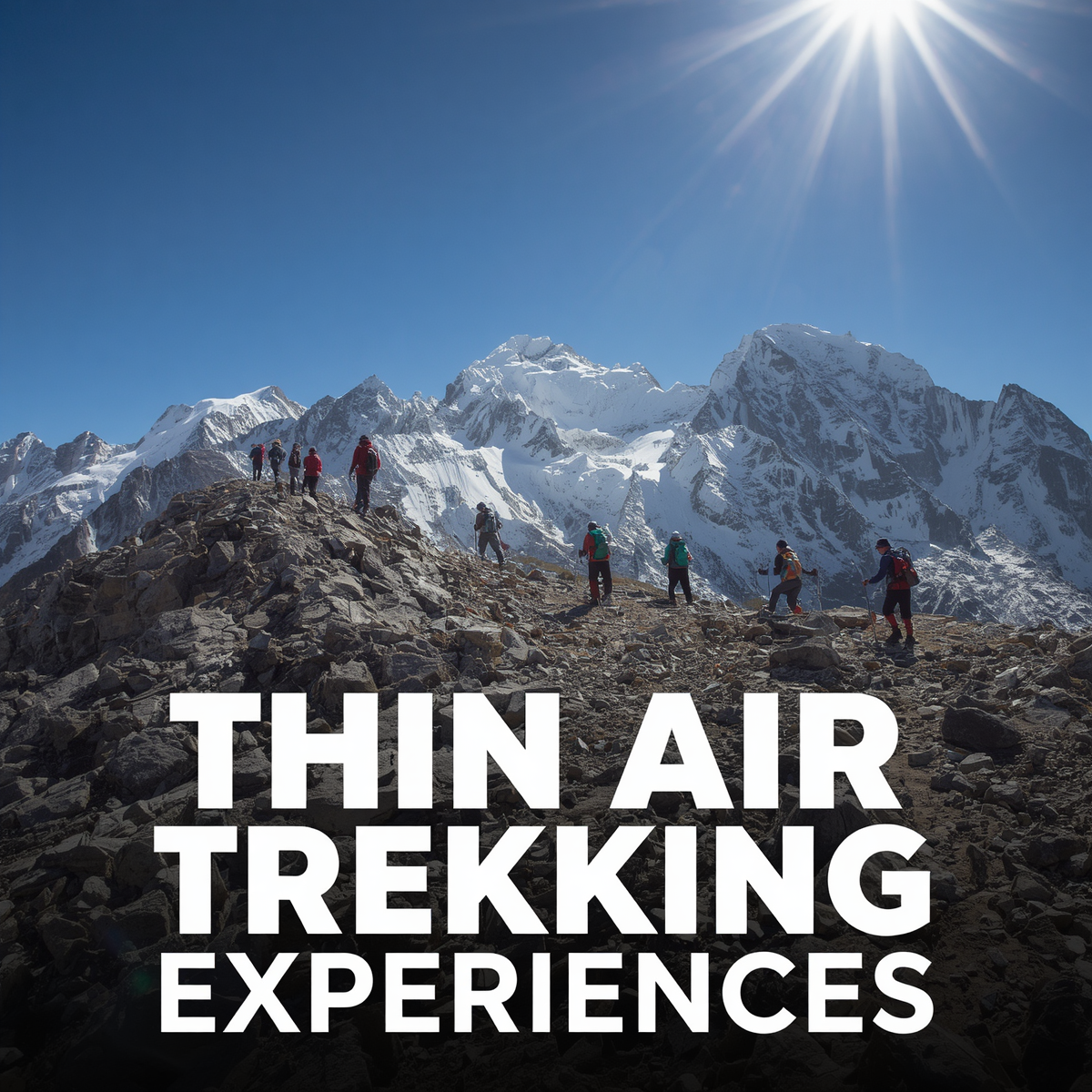
Thin air trekking experiences offer a unique way to discover some of the world’s most impressive mountain environments. High above sea level, landscapes become more dramatic, temperatures can change quickly, and every step can feel more meaningful. The combination of challenging trails, enormous peaks, remote valleys, and peaceful surroundings creates an unforgettable form of adventure travel.
High-altitude trekking is different from ordinary hiking. As elevation increases, the air contains less available oxygen, which can affect the body and make physical activity more demanding. This is why preparation, gradual acclimatization, suitable equipment, and responsible route planning are important.
For travelers who enjoy mountains and want to experience landscapes far above ordinary walking routes, thin air trekking can provide a rewarding journey into some of the planet’s most extraordinary environments.
What Is Thin Air Trekking?
Thin air trekking refers to hiking or trekking at high elevations where reduced atmospheric pressure means less oxygen is available with each breath.
The experience can begin at relatively moderate elevations and become increasingly noticeable as a route climbs higher.
High-altitude trails can pass through rocky valleys, alpine meadows, glaciers, mountain passes, and remote settlements. The environment may appear quieter and more dramatic than landscapes at lower elevations.
However, high altitude should always be taken seriously. The difficulty of a route is not determined only by distance. Elevation gain, weather, terrain, temperature, and acclimatization can all affect the experience.
Why High-Altitude Landscapes Feel Different
Mountains change as you climb.
At lower elevations, trails may pass through forests and green valleys. Higher sections can gradually become more open, with fewer trees and more exposed rock.
Eventually, alpine vegetation becomes limited and the landscape may consist mainly of rocks, snow, ice, and vast mountain slopes.
This changing environment makes high-altitude trekking especially fascinating.
A single journey can take travelers through several different ecosystems, each offering its own scenery.
The air can feel colder and cleaner, the horizon can seem wider, and surrounding peaks may appear enormous.
Explore the Himalayas of Nepal
Nepal is one of the world’s most famous destinations for high-altitude trekking.
The Himalayas contain some of the highest mountains on Earth, including Mount Everest.
The Everest region provides several trekking options. The classic route toward Everest Base Camp passes through mountain communities, suspension bridges, forests, valleys, and increasingly high alpine terrain.
The Annapurna region offers another remarkable experience. Trekkers can explore dramatic mountain landscapes while passing through villages and different ecological zones.
High-altitude journeys in Nepal require careful planning. Acclimatization days are an important part of many itineraries because they allow the body time to adjust to increasing elevation.
The combination of Himalayan scenery, local culture, and challenging trails makes Nepal an exceptional destination for mountain travelers.
Discover the Karakoram in Pakistan
The Karakoram offers some of the world’s most dramatic high-altitude landscapes.
Northern Pakistan is home to enormous peaks, glaciers, deep valleys, and remote mountain communities.
The Baltoro region provides access to some of the world’s most impressive mountain scenery, including views toward K2 and surrounding peaks.
The journey through the Karakoram can be physically demanding, with changing terrain and remote conditions.
Hunza and Gilgit-Baltistan also offer opportunities to experience high mountain landscapes without every journey requiring extreme expedition-level trekking.
The region’s combination of towering peaks, traditional villages, glaciers, and rugged valleys makes it especially appealing to travelers interested in remote mountain environments.
Trek Through the Andes
The Andes provide another extraordinary setting for thin air trekking.
The mountain range stretches along much of western South America and contains numerous high-altitude routes.
Peru is particularly well known for mountain trekking. Routes around Cusco and the Sacred Valley combine dramatic scenery with ancient cultural landscapes.
The Salkantay region offers high mountain passes, changing ecosystems, and views toward snow-covered peaks.
Bolivia also provides remarkable high-altitude experiences. The Cordillera Real near La Paz contains rugged peaks, glaciers, and high valleys.
Travelers should remember that high-altitude conditions can affect visitors differently. Proper acclimatization and careful planning are essential.
Experience the High Atlas Mountains
Morocco’s High Atlas provides a different type of high-altitude trekking experience.
Mount Toubkal is the highest peak in North Africa, and the surrounding mountain region contains trails through valleys, villages, rocky slopes, and high passes.
The landscapes are particularly interesting because of the contrast between mountain environments and traditional communities.
Trekkers can experience local culture while moving through changing terrain.
The High Atlas can provide an excellent introduction to higher-altitude trekking for travelers who want a mountain challenge without traveling to the world’s highest ranges.
Explore the Caucasus Mountains
The Caucasus region offers dramatic mountain landscapes between Europe and Asia.
Georgia’s Svaneti region is especially attractive to trekkers. The area contains high peaks, deep valleys, traditional stone towers, and remote villages.
Routes around Mestia and Ushguli provide opportunities to explore the mountains while experiencing the distinctive culture of the region.
Mount Kazbek is another major attraction for experienced mountain travelers.
The Caucasus can feel different from the Alps or Himalayas, making it an interesting destination for travelers seeking new high-altitude environments.
Discover the Andes of Argentina and Chile
The Andes continue through Argentina and Chile, creating many opportunities for mountain exploration.
The Aconcagua region in Argentina is famous for Mount Aconcagua, the highest mountain outside Asia.
The surrounding landscapes are dry, rocky, and dramatic, creating a very different experience from the greener mountain valleys found elsewhere.
Chile also offers high-altitude routes through the Andes, where volcanic landscapes, desert environments, salt flats, and distant peaks can create remarkable scenery.
The contrast between arid terrain and enormous mountains makes this region especially memorable.
The Importance of Acclimatization
Acclimatization is one of the most important parts of high-altitude trekking.
The body needs time to adjust to reduced oxygen availability as elevation increases.
This is why responsible trekking itineraries often include gradual elevation gains and rest or acclimatization days.
Trying to climb too quickly can increase the risk of altitude-related illness.
Travelers should listen to their bodies and follow guidance from experienced guides and medical professionals where appropriate.
Symptoms such as severe headache, unusual confusion, difficulty walking, significant breathing problems, or worsening illness at altitude should never be ignored.
Descending to a lower elevation may be necessary in serious situations.
Preparing for Thin Air Trails
Preparation begins before reaching the mountains.
Physical fitness can help travelers manage long walking days, but fitness alone does not eliminate altitude-related risks.
Training can include regular walking, uphill hiking, cardiovascular exercise, and strength work.
Travelers should also research the route carefully.
Important considerations include:
- Maximum elevation
- Daily elevation gain
- Trekking distance
- Expected weather
- Accommodation
- Food and water availability
- Emergency access
- Guide requirements
- Seasonal trail conditions
Good preparation can make a high-altitude journey safer and more enjoyable.
Essential Gear for High-Altitude Trekking
Equipment should be chosen according to the destination and season.
Important items may include:
- Strong hiking boots
- Layered clothing
- Waterproof outerwear
- Warm insulating layers
- Gloves and hat
- Sun protection
- Sunglasses
- Water bottles or hydration systems
- Headlamp
- Navigation equipment
- First-aid supplies
- Trekking poles
- High-energy snacks
Sun exposure can also be stronger at high elevations, so sunscreen and suitable eye protection are important.
The correct equipment helps travelers manage changing conditions without carrying unnecessary weight.
Respecting Mountain Communities
High-altitude trails often pass through communities that have lived in mountain environments for generations.
Travelers can make their journeys more meaningful by respecting local traditions and customs.
Using local guides, staying in locally operated accommodation, and purchasing local products can also help support mountain communities.
In regions such as Nepal, Pakistan, Peru, and Georgia, local people can provide valuable knowledge about trails, weather, culture, and mountain conditions.
Responsible tourism should benefit both visitors and residents.
Protecting High Mountain Environments
High-altitude ecosystems can be fragile.
Waste can remain in cold environments for long periods, and vegetation may recover slowly from damage.
Trekkers should carry their waste out, avoid unnecessary disturbance to wildlife, and follow protected-area regulations.
Reusable bottles and responsible packing can help reduce unnecessary waste.
Travelers should also avoid taking natural objects such as rocks, plants, or cultural artifacts from protected areas.
Leaving the landscape as you found it helps preserve these environments for future visitors.
The Mental Side of High-Altitude Trekking
Thin air trekking is not only a physical experience.
Long climbs can test patience and determination. A route may require hours of steady movement before reaching a mountain pass or viewpoint.
At high elevations, progress can feel slower than expected.
This makes the journey itself important.
Stopping to enjoy the landscape, taking regular breaks, and maintaining a steady pace can make the experience more manageable.
Reaching a high viewpoint after a long climb can also create a powerful sense of achievement.
When to Plan a High-Altitude Trek
The best season depends heavily on the destination.
Nepal’s trekking seasons differ from those in the Andes, Alps, or Karakoram.
Before booking a journey, travelers should research local weather patterns, snowfall, monsoon conditions, trail access, and mountain pass openings.
Conditions can change quickly at altitude, so flexibility is valuable.
A route that is accessible in one month may become difficult or unavailable later in the year.
Final Thoughts
Thin air trekking experiences offer an opportunity to explore some of the world’s most spectacular mountain environments.
From Nepal’s Himalayas and Pakistan’s Karakoram to the Andes, High Atlas, Caucasus, and South American mountain landscapes, high-altitude trails reveal enormous peaks, remote valleys, glaciers, rocky passes, and unique cultures.
The experience requires more preparation than an ordinary hiking holiday. Acclimatization, suitable equipment, weather awareness, responsible pacing, and careful route planning all play important roles.
Yet the rewards can be extraordinary.
Standing high above a mountain valley, watching sunlight move across distant peaks, or walking through a remote landscape surrounded by enormous mountains can create memories that remain long after the journey ends.
For travelers who are prepared for the challenges of altitude, thin air trekking offers more than a demanding walk. It provides a chance to experience the mountains at their most dramatic, remote, and inspiring.