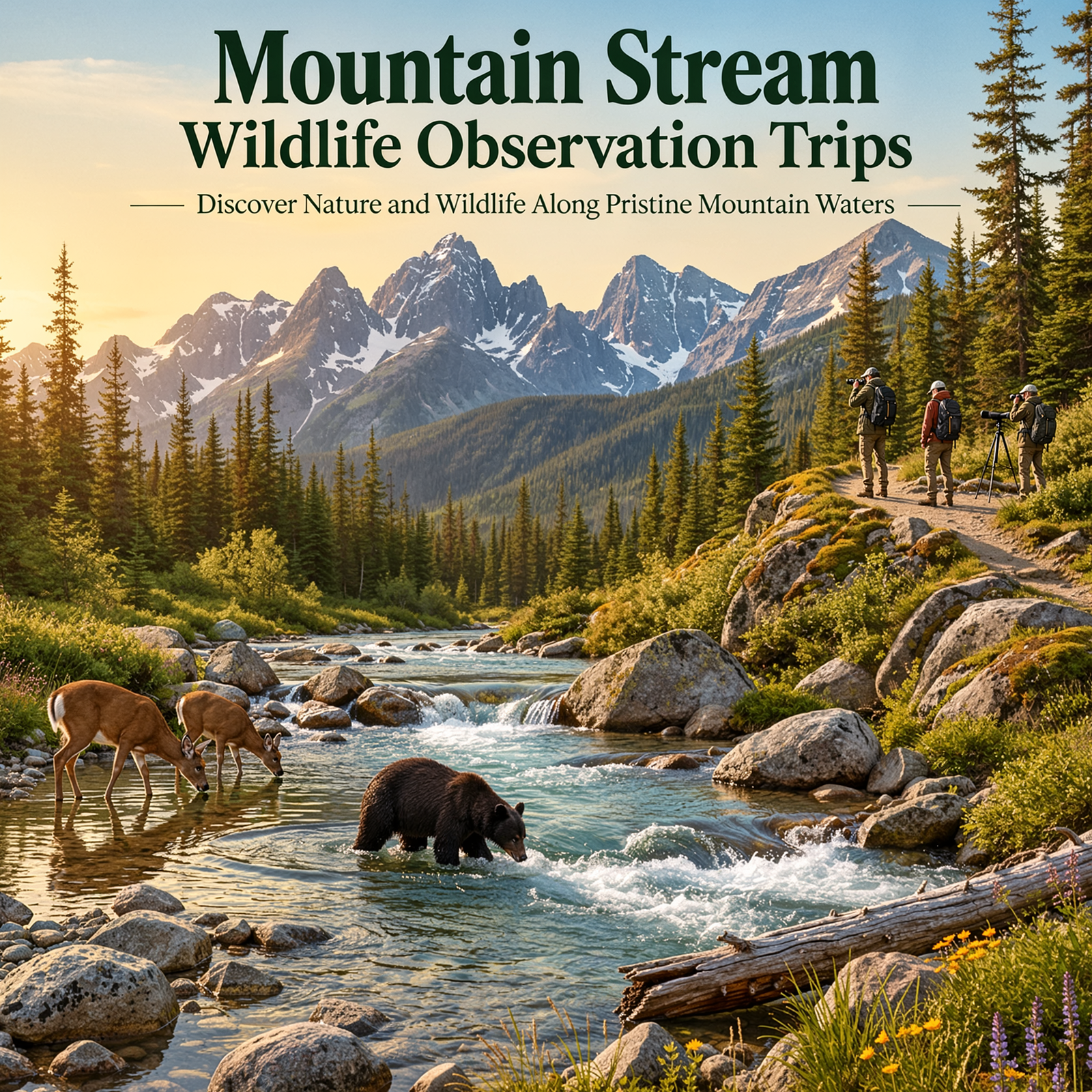
Mountain streams are among the most beautiful natural features of the world’s mountain landscapes. Flowing through green valleys, rocky slopes and peaceful forests, these clear waterways create important habitats for a wide variety of wildlife. From colourful birds and small mammals to aquatic insects and freshwater species, mountain streams support ecosystems that are full of natural activity.
Mountain Stream Wildlife Observation Trips offer travellers an opportunity to explore these remarkable environments while learning about the animals and plants that depend on freshwater habitats. Rather than focusing only on reaching a destination, these journeys encourage visitors to slow down, observe their surroundings and appreciate the natural world.
Whether you enjoy birdwatching, wildlife photography, nature walks or peaceful outdoor experiences, mountain streams provide an excellent setting for discovering wildlife in its natural environment.
What Makes Mountain Streams Special Wildlife Habitats?
Mountain streams are usually formed by melting snow, natural springs and rainfall. Their water flows through different landscapes, creating a mixture of shallow pools, rocky channels, small waterfalls and deeper sections.
These changing water conditions support different types of wildlife. Some species live directly in the water, while others depend on the surrounding vegetation for food, shelter and nesting areas.
The cool temperatures and flowing water can also support sensitive freshwater organisms, including aquatic insects and certain fish species. Along the banks, grasses, shrubs and trees provide habitats for birds, amphibians and small mammals.
The natural variety found around mountain streams makes them valuable locations for wildlife observation. Every section of a stream can offer something different, from birds searching for food near the water to insects moving across the surface.
Wildlife You May Discover Along Mountain Streams
One of the most enjoyable parts of a mountain wildlife trip is discovering the different species that live around freshwater environments. Wildlife sightings depend on the region, season, weather and local habitat conditions, but several groups of animals are commonly associated with these landscapes.
Mountain Birds
Birdlife is often one of the most noticeable features of mountain streams. Birds may visit the water to drink, search for insects or find suitable nesting locations.
Depending on the region, visitors might observe wagtails, dippers, kingfishers and other water-associated birds. Some species are specially adapted to living near fast-flowing water, where they search for small aquatic organisms.
Birdwatchers can look for movement along exposed rocks, branches and streamside vegetation. Early mornings are often productive because bird activity can be easier to observe before the landscape becomes busier.
Freshwater Fish
Some mountain streams provide suitable conditions for freshwater fish, including trout in certain regions. These fish may prefer cool, oxygen-rich water with natural pools and sheltered areas.
Observing fish in clear streams can be fascinating, although sightings are not always guaranteed. Quiet observation from the bank is usually the best approach. Visitors should avoid entering sensitive areas or disturbing the water unnecessarily.
Amphibians and Small Wildlife
Moist streamside environments can support frogs, salamanders and other amphibians, depending on the location. These animals often depend on clean water and suitable surrounding vegetation.
Small mammals may also visit streams to drink or search for food. Their activity can be difficult to notice, so looking for tracks, feeding signs and movement near the banks can make wildlife observation more interesting.
Aquatic Insects
Aquatic insects play an important role in freshwater ecosystems. Their larvae may live beneath rocks or within stream vegetation before emerging as adult insects.
Mayflies, stoneflies and caddisflies are examples of insects associated with many freshwater environments. They provide food for fish and birds and can help indicate the condition of a stream ecosystem.
The Importance of Clean Mountain Waters
Mountain streams are not simply attractive natural features. They are important parts of wider freshwater systems.
They transport water through valleys, support biodiversity and contribute to rivers and wetlands further downstream. Many communities and ecosystems depend on healthy mountain watersheds.
Clean water is particularly important for species that are sensitive to pollution, changes in temperature and habitat disturbance. When streams become polluted or their natural flow is altered, wildlife can lose important feeding and breeding areas.
Responsible wildlife observation helps visitors understand why these environments deserve protection. Seeing animals in their natural habitats can create a stronger appreciation for freshwater conservation.
Best Activities During Mountain Stream Wildlife Trips
A mountain stream wildlife trip can include several activities, depending on the landscape and the interests of visitors.
Birdwatching Along Stream Banks
Birdwatching is an excellent way to explore mountain waterways. Visitors can walk slowly along suitable paths and observe birds resting on rocks, flying between trees or searching for food near the water.
A pair of binoculars can make distant sightings easier to enjoy without approaching wildlife too closely.
Nature Photography
Mountain streams provide beautiful settings for nature photography. Flowing water, moss-covered rocks, wildflowers and forest backgrounds create interesting natural compositions.
Wildlife photographers can focus on birds, insects and other animals while also capturing the wider landscape. A camera with a suitable zoom lens can help photograph animals without disturbing them.
Patience is important. Waiting quietly in one location may provide better opportunities than constantly moving through the habitat.
Guided Nature Walks
Guided walks can help visitors understand the natural environment more deeply. Local guides may explain how mountain streams are formed, which animals live nearby and how seasonal changes influence wildlife activity.
They can also help identify tracks, feathers, plants and other signs that are easy to overlook.
Freshwater Habitat Observation
Some trips focus on understanding the stream itself. Visitors can observe differences between shallow and deep water, notice how rocks influence water movement and learn why certain plants grow near the banks.
These activities can make a simple walk more educational and encourage a better understanding of freshwater ecosystems.
Choosing the Best Season for Wildlife Observation
The best time to visit a mountain stream depends on its location, elevation and local climate. Different seasons offer different opportunities for observing nature.
Spring often brings renewed plant growth and increased wildlife activity. Birds may become more active during breeding periods, while insects begin appearing as temperatures rise.
Summer can provide comfortable conditions for walking and longer opportunities to explore mountain valleys. Water levels and wildlife activity vary depending on rainfall and snowmelt.
Autumn offers beautiful scenery as leaves change colour. It can be a rewarding season for photography, although some wildlife becomes less active as temperatures fall.
Winter transforms many mountain streams into quieter landscapes. Snow and ice can create impressive scenery, but access may become difficult and wildlife observation can require additional preparation.
Before travelling, visitors should check local weather forecasts, trail conditions and seasonal access restrictions.
Responsible Wildlife Observation and Nature Conservation
Wildlife observation should always respect the animals and habitats being explored. Even small disturbances can affect feeding, nesting and resting behaviour.
Visitors can follow several simple principles to protect mountain stream environments.
- Maintain a respectful distance from wildlife.
- Avoid feeding wild animals.
- Keep noise levels low, particularly near nesting areas.
- Stay on marked paths where available.
- Never leave litter or food waste behind.
- Avoid removing rocks, plants or natural materials.
- Keep pets under control and follow local access rules.
- Respect protected habitats and seasonal restrictions.
It is also important to avoid damaging stream banks. Walking directly through sensitive vegetation or disturbing rocks in the water can affect small organisms and the places where wildlife lives.
Responsible travel allows visitors to enjoy nature while helping preserve it for future generations.
What to Pack for a Mountain Stream Wildlife Trip
Suitable preparation can make a mountain wildlife journey more comfortable and enjoyable.
Comfortable walking footwear with good grip is useful because paths near streams may be uneven, muddy or slippery. Weather-appropriate clothing is also important, as mountain temperatures can change quickly.
Useful items include binoculars, a camera, a reusable water bottle, a small backpack and a basic first-aid kit. A field guide or wildlife identification application can help visitors recognise different species.
For longer walks, carry suitable food and enough drinking water. Always check whether a route requires specialist equipment or additional safety preparation.
Visitors should also remember that mobile phone coverage may be limited in remote mountain areas. Planning the route in advance and informing someone about travel arrangements can be sensible precautions.
How Wildlife Observation Supports Sustainable Tourism
Nature-based tourism can help local communities recognise the value of protecting their natural surroundings. Guided wildlife walks, photography trips and educational experiences can create opportunities for local businesses while encouraging responsible visitor behaviour.
When organised carefully, mountain stream wildlife trips can support conservation awareness without placing unnecessary pressure on sensitive habitats.
Choosing local guides who understand the area can improve the experience. They can share knowledge about native wildlife, local landscapes and conservation challenges.
Travellers can also support sustainable tourism by following designated routes, using locally provided services and respecting community guidelines.
The most valuable wildlife experiences are not always those with the greatest number of animal sightings. Sometimes, understanding a small freshwater ecosystem or observing a single bird feeding beside a stream can create a lasting memory.
Discover the Beauty of Mountain Stream Wildlife Observation Trips
Mountain streams offer a peaceful opportunity to experience nature beyond busy tourist attractions. Their clear waters, changing landscapes and diverse wildlife make them rewarding destinations for people who enjoy outdoor exploration.
From birdwatching and nature photography to guided walks and freshwater habitat discovery, these trips provide different ways to connect with the natural world.
More importantly, they encourage travellers to understand the relationship between clean water, healthy habitats and biodiversity. By exploring responsibly and respecting local conservation guidelines, visitors can enjoy these remarkable environments while helping protect them.
Mountain Stream Wildlife Observation Trips are ideal for anyone looking for a meaningful nature experience, combining beautiful mountain scenery with opportunities to discover the wildlife that depends on pristine freshwater habitats.