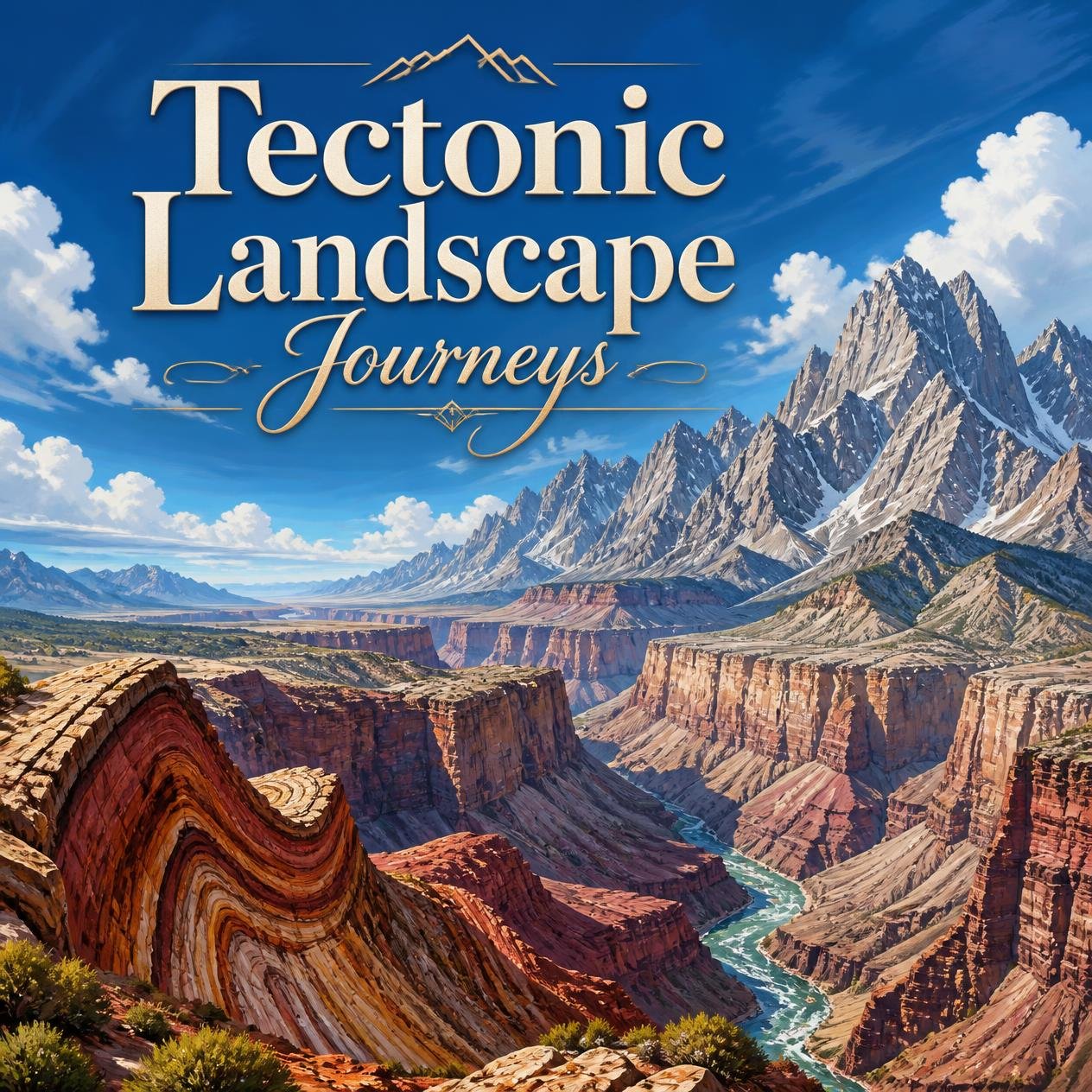
Earth is constantly changing beneath our feet. Mountains rise, valleys deepen, oceans expand, and volcanic landscapes are shaped by powerful forces hidden below the surface. Although many of these changes happen slowly, the landscapes they create can be some of the most dramatic sights on the planet.
Tectonic landscape journeys offer travelers a chance to explore these remarkable geological wonders while learning more about how Earth was formed and continues to evolve. Instead of simply visiting a beautiful destination, travelers can discover the natural forces that created it.
From towering mountain ranges and deep valleys to volcanic islands and rugged coastlines, tectonic landscapes can be found across almost every continent. These journeys are ideal for travelers who enjoy hiking, photography, nature, geology, and exploring places that feel different from ordinary tourist destinations.
What Are Tectonic Landscapes?
Tectonic landscapes are landforms created or strongly influenced by the movement of Earth’s tectonic plates. These enormous pieces of Earth’s crust move extremely slowly over time. Their movement can cause mountains to form, earthquakes to occur, volcanoes to erupt, and large valleys or ocean basins to develop.
When tectonic plates collide, one plate may move beneath another, while other collisions can push land upward and create huge mountain systems. Where plates move apart, magma can rise from below and form new crust.
The result is a wide range of natural landscapes that are both visually impressive and scientifically important.
Traveling through these regions allows visitors to see the effects of Earth’s geological activity on a much larger scale.
Explore the Himalayas
The Himalayas are one of the world’s most famous examples of tectonic mountain building. Stretching across several countries in Asia, this enormous mountain system includes some of the highest peaks on Earth.
The range formed through the collision of the Indian and Eurasian tectonic plates. This ongoing geological process continues to influence the region today.
A journey through the Himalayas can include dramatic mountain valleys, high passes, glaciers, rivers, and remote villages. Nepal, northern India, Bhutan, and parts of Pakistan provide different ways to experience this remarkable mountain environment.
Popular trekking areas such as the Everest region and Annapurna region offer spectacular views, while less crowded Himalayan areas provide opportunities for travelers looking for quieter geological adventures.
The scale of the Himalayas makes them particularly powerful for understanding how tectonic movement can transform the surface of the planet.
Discover the Andes Mountains
The Andes form one of the longest mountain ranges in the world, running along the western side of South America.
The landscape has been strongly shaped by the interaction between the Nazca Plate and the South American Plate. The region is known for high mountains, deep valleys, volcanoes, plateaus, and dramatic changes in elevation.
Travelers can explore the Andes in countries including Chile, Peru, Bolivia, Argentina, Ecuador, and Colombia.
Peru offers opportunities to combine mountain trekking with visits to ancient cultural sites. Chile and Argentina provide access to dramatic volcanic landscapes and high-altitude wilderness. Bolivia is known for its extraordinary high plateau landscapes, while Ecuador offers a remarkable collection of volcanic peaks.
For travelers interested in tectonic landscape journeys, the Andes provide an enormous natural classroom.
Walk Through Iceland’s Geological Landscapes
Iceland is another fascinating destination for travelers interested in Earth’s geological forces.
The island sits along the Mid-Atlantic Ridge, where tectonic plates are moving apart. This geological setting has helped create a landscape filled with volcanoes, lava fields, glaciers, geothermal areas, waterfalls, and rugged coastlines.
One of the most interesting places to explore is Þingvellir, where visitors can observe the geological effects of the separation between the North American and Eurasian plates.
Iceland’s volcanic landscapes also provide a strong reminder that tectonic activity is not only part of Earth’s ancient history. Geological processes continue to shape the island today.
A road journey through Iceland can combine geological sightseeing with hiking, photography, camping, and visits to geothermal areas.
Experience the Great Rift Valley
The East African Rift is one of the world’s most impressive tectonic regions. It represents a vast zone where the Earth’s crust is gradually being pulled apart.
The landscape includes dramatic escarpments, volcanic mountains, deep valleys, lakes, and unusual geological formations.
Countries such as Kenya, Tanzania, Ethiopia, and Uganda provide opportunities to explore different parts of this extraordinary region.
The Great Rift Valley is particularly interesting because it demonstrates how landscapes can develop when tectonic plates slowly move away from each other.
Travelers can combine geological exploration with wildlife experiences, cultural visits, hiking, and photography.
Explore the Volcanic Landscapes of Japan
Japan sits in a highly active tectonic region where several tectonic plates interact. This has helped create a landscape filled with mountains, volcanoes, hot springs, and rugged coastlines.
Mount Fuji is perhaps the country’s most recognizable geological landmark. Its symmetrical volcanic shape has become an important symbol of Japan.
Beyond Mount Fuji, travelers can explore volcanic regions in places such as Hokkaido, Kyushu, and the Japanese Alps.
Hot springs, known as onsen, are another way to experience the geological character of Japan. Geothermal heat beneath the surface contributes to many of these natural springs.
A tectonic landscape journey through Japan can therefore combine geological exploration with hiking, traditional culture, food, and relaxation.
Discover the San Andreas Fault Region
California provides another fascinating example of tectonic activity. The San Andreas Fault marks a major boundary between the Pacific Plate and North American Plate.
Although visitors should never approach hazardous areas without following local guidance, the broader region offers many opportunities to learn about earthquakes, fault systems, and landscape development.
Places across California provide geological viewpoints, educational centers, hiking trails, and natural landscapes shaped by long-term tectonic activity.
A journey through this region can be especially interesting for travelers who want to understand how plate movement affects areas where millions of people live.
Explore New Zealand’s Dramatic Geology
New Zealand offers a remarkable combination of mountains, volcanoes, geothermal areas, glaciers, and fault systems.
The country sits along the boundary between the Australian and Pacific plates, making it one of the world’s most interesting places for geological exploration.
The North Island is known for volcanic and geothermal landscapes. Rotorua is famous for geothermal activity, while Tongariro National Park contains dramatic volcanic terrain.
The South Island offers another side of New Zealand’s geology, with the Southern Alps, deep valleys, glaciers, and rugged landscapes.
Hiking through these regions allows travelers to experience how different geological processes can create completely different environments within one country.
Visit the Dolomites and European Mountain Landscapes
The Dolomites in northern Italy are famous for their distinctive rock formations and dramatic mountain scenery.
Their pale limestone peaks create a landscape that looks very different from many other European mountain ranges. The area offers extensive hiking trails, mountain passes, alpine meadows, and panoramic viewpoints.
For travelers interested in geological landscapes, the Dolomites demonstrate how uplift, erosion, and long-term geological change can work together to create extraordinary mountain scenery.
The region is also ideal for combining geological exploration with traditional alpine villages, local cuisine, photography, and outdoor activities.
Travel Through the Caucasus
The Caucasus Mountains between Europe and Asia offer another fascinating tectonic landscape.
Georgia, Armenia, Azerbaijan, and nearby regions contain mountains, volcanic formations, deep valleys, and high-altitude landscapes.
Georgia’s Svaneti region is particularly attractive for adventure travelers. Its dramatic mountain environment combines rugged peaks with traditional villages and ancient towers.
The Caucasus is a strong choice for travelers who want to explore mountain landscapes that may feel less familiar than the Alps or Himalayas.
Why Tectonic Travel Is Different
Tectonic landscape journeys are not simply about seeing mountains or volcanoes. They encourage travelers to look at landscapes differently.
A mountain is no longer just a mountain. It becomes evidence of enormous geological forces operating over millions of years.
A volcanic island becomes a reminder of magma rising from beneath the Earth’s surface.
A deep valley can reveal the effects of uplift, erosion, and changing geological conditions.
This way of traveling adds meaning to outdoor experiences. Hiking, road trips, photography, and sightseeing become opportunities to understand the planet.
Best Activities for Tectonic Landscape Journeys
There are many ways to experience geological destinations.
Hiking is one of the best options because walking allows travelers to notice changes in rock, terrain, elevation, and vegetation.
Photography is also ideal for tectonic landscapes. Mountain formations, volcanic craters, cliffs, fault zones, and unusual rock structures can create powerful photographs.
Road trips are another excellent choice. Some geological regions cover enormous distances, making driving a practical way to experience changing landscapes.
Camping can provide a closer connection with remote geological environments, especially in areas where permitted and where travelers follow local environmental rules.
Guided geological tours can also add value. Local guides and geological experts can explain how a landscape formed and point out features that visitors might otherwise miss.
Responsible Travel in Geological Areas
Many tectonic landscapes are fragile environments. Volcanic soils, alpine ecosystems, desert formations, and unusual rock structures can be damaged by careless tourism.
Travelers should remain on marked trails where required, avoid removing rocks or natural materials, follow local safety instructions, and respect protected areas.
Volcanic regions also require particular caution. Conditions can change quickly, and some areas may contain gases, unstable ground, or other hazards.
Responsible travel protects these destinations so future visitors can continue to experience their geological importance.
Plan Your Own Tectonic Landscape Adventure
Planning a tectonic landscape journey begins with choosing the type of geology that interests you most.
If you love huge mountain ranges, the Himalayas and Andes offer extraordinary possibilities. If volcanoes and geothermal landscapes interest you, Iceland, Japan, and New Zealand are fascinating choices.
For dramatic valleys and continental-scale geological change, the East African Rift provides a completely different experience.
Travelers interested in fault systems can explore destinations such as California, while those who prefer European mountain landscapes can discover the Dolomites and Caucasus.
The best journey does not necessarily require visiting the most famous geological landmark. Sometimes the most memorable experience comes from spending time in a remote valley, walking across an ancient volcanic landscape, or watching the changing light move across a mountain range.
Final Thoughts
Tectonic landscape journeys offer a different way to explore the world. They connect travel with geology, adventure, photography, hiking, and natural history.
From the rising peaks of the Himalayas to the volcanic landscapes of Iceland, the Andes, the Great Rift Valley, Japan, New Zealand, and the Caucasus, Earth provides countless examples of geological forces shaping the places we visit.
These landscapes remind us that the planet is not static. Mountains rise, rocks change, valleys develop, and continents continue their slow movement.
For travelers who want more than ordinary sightseeing, exploring tectonic landscapes can turn a journey into an opportunity to understand the incredible forces that have shaped Earth for millions of years.
The next time you stand beneath a towering mountain, beside a volcanic crater, or above a dramatic geological valley, take a moment to look beyond the scenery. You may be looking at the visible result of one of the greatest natural processes on our planet.