The ocean is home to some of the most fascinating natural environments on Earth. Beneath the surface, hidden underwater landscapes support a wide variety of marine life and play an important role in maintaining healthy coastal ecosystems. Seagrass meadows are among these remarkable habitats, offering travellers a unique opportunity to discover marine biodiversity and explore the beauty of underwater nature.
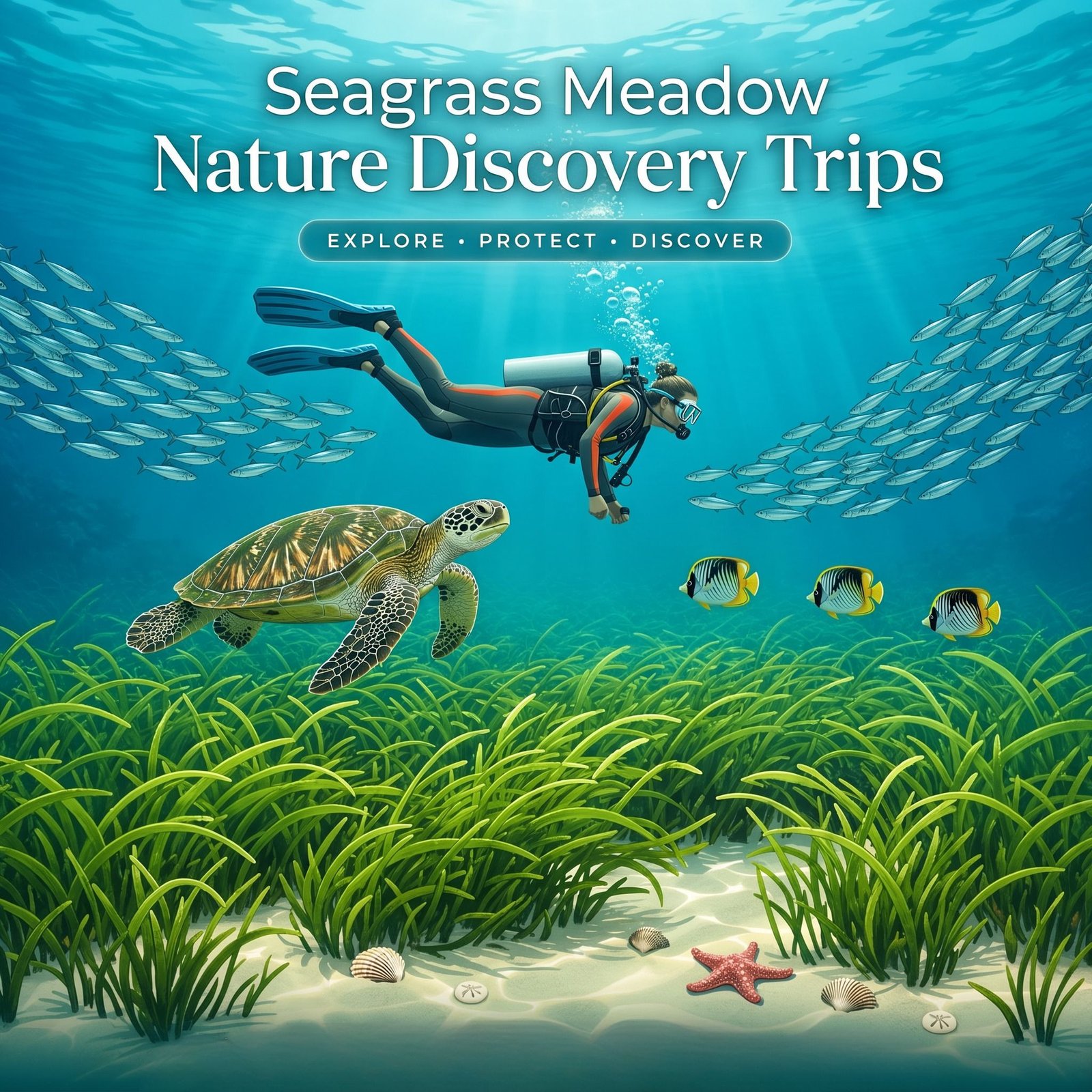
Seagrass meadow nature discovery trips provide an exciting way to learn about coastal environments while enjoying peaceful marine experiences. These underwater meadows are found in shallow coastal waters, where green seagrass grows across the seabed and creates shelter for numerous marine species.
From colourful fish and seahorses to sea turtles and small marine creatures, seagrass habitats support a fascinating variety of wildlife. Visitors can discover these environments through guided snorkelling, boat excursions, underwater observation and educational nature tours.
Whether you enjoy marine photography, wildlife observation or learning about ocean conservation, exploring seagrass meadows can make your next nature-focused holiday truly memorable.
What Are Seagrass Meadows?
Seagrass meadows are underwater habitats formed by flowering marine plants that grow in shallow coastal waters. Unlike seaweed, seagrasses have roots, stems and leaves, allowing them to grow in sandy or muddy seabeds.
These underwater plants create green landscapes that can extend across large areas of coastal environments. They are particularly important because they provide food, shelter and breeding grounds for different marine species.
Seagrass meadows can be found in tropical, subtropical and temperate waters. Their appearance changes depending on the species, water depth and surrounding environment.
Some meadows grow in clear tropical lagoons, while others develop in cooler coastal regions. Each location offers a different underwater landscape and opportunities to observe marine wildlife.
Why Explore Seagrass Meadow Nature Discovery Trips?
Seagrass meadow discovery trips offer more than a traditional beach holiday. They introduce travellers to underwater environments that are often overlooked but are essential to marine ecosystems.
One of the biggest attractions is the opportunity to observe wildlife in its natural habitat. Visitors may encounter small fish moving between seagrass leaves, crabs searching for food and sea turtles feeding in suitable locations.
Another benefit is the educational value of these trips. Guided excursions can explain how seagrass supports marine biodiversity, protects coastlines and contributes to ocean health.
These experiences also encourage responsible tourism. Learning about underwater habitats helps visitors understand why protecting marine environments is important.
For travellers interested in nature, photography and conservation, seagrass meadow exploration provides a meaningful way to experience coastal destinations.
Fascinating Marine Wildlife Found in Seagrass Meadows
Seagrass meadows support a wide variety of marine creatures. Their dense underwater vegetation provides protection, feeding opportunities and suitable habitats for many species.
1. Sea Turtles
Green sea turtles are among the most recognisable animals associated with seagrass habitats. They feed on seagrass in several coastal regions and play an important role in these ecosystems.
Watching sea turtles in their natural environment can be an unforgettable experience. Guided wildlife excursions may offer opportunities to observe them without disturbing their behaviour.
2. Seahorses
Seahorses are fascinating marine animals that are sometimes found among seagrass leaves. Their unusual appearance and ability to hold onto underwater vegetation make them particularly interesting to observe.
Because they are often small and difficult to spot, discovering a seahorse can be a special moment during an underwater nature trip.
3. Colourful Reef and Coastal Fish
Many small fish use seagrass meadows as shelter during different stages of their lives. These habitats provide protection from predators and access to food.
Travellers may discover different species depending on the destination, water conditions and season.
4. Crabs and Small Marine Creatures
Crabs, shrimps, molluscs and other small creatures also live among seagrass vegetation. Although they may be less noticeable than larger marine animals, they are essential parts of the underwater ecosystem.
Observing these smaller creatures helps visitors understand how different species depend on one another.
5. Dugongs
Dugongs are large marine mammals found in certain warm coastal regions. They are particularly associated with seagrass ecosystems because seagrass is their main food source.
Some destinations offer responsible wildlife observation opportunities, although sightings are never guaranteed. Visitors should always maintain a respectful distance and follow local wildlife guidance.
Top Destinations to Explore Seagrass Meadows Around the World
Several coastal destinations are known for their beautiful seagrass habitats and marine biodiversity. Here are some places worth considering for underwater nature discovery trips.
1. Shark Bay, Australia
Shark Bay in Western Australia is famous for its extensive seagrass ecosystems and diverse marine wildlife.
The region supports important habitats for dugongs, sea turtles and various coastal species. Its underwater landscapes make it a valuable destination for travellers interested in marine conservation and wildlife observation.
Visitors can explore the area through guided boat excursions and other responsible nature experiences.
2. Florida Keys, USA
The Florida Keys are known for their tropical coastal scenery, coral reefs and extensive seagrass habitats.
These underwater meadows support numerous marine species, including fish, rays and sea turtles.
Snorkelling and guided boat trips provide opportunities to explore the region’s marine environments while learning about the importance of protecting coastal ecosystems.
3. Red Sea, Egypt
The Red Sea is famous for its clear water, colourful marine life and beautiful underwater landscapes.
Certain coastal areas contain seagrass habitats that support sea turtles and other marine species. Visitors can discover marine environments through guided snorkelling and boat excursions.
The region is particularly attractive to travellers who want to combine underwater exploration with beach holidays.
4. Wakatobi, Indonesia
Wakatobi is an impressive marine destination in Southeast Sulawesi, Indonesia. It is known for its rich marine biodiversity, coral reefs and coastal habitats.
The surrounding waters provide opportunities to explore different underwater ecosystems, including seagrass areas that support marine wildlife.
It is an excellent destination for nature enthusiasts interested in marine photography and responsible ocean tourism.
5. Mediterranean Coast
Several Mediterranean coastal regions contain important seagrass meadows, particularly those supporting Posidonia oceanica.
This marine plant creates valuable underwater habitats that provide shelter for marine organisms and contribute to healthy coastal environments.
Destinations in Spain, France, Italy and other Mediterranean countries offer opportunities to learn about these ecosystems through guided coastal excursions.
Best Activities During Seagrass Meadow Discovery Trips
Exploring seagrass habitats can involve several activities depending on the destination and local environmental conditions.
Guided Snorkelling: Snorkelling allows visitors to observe shallow underwater habitats and discover marine creatures without needing advanced diving equipment. Always use permitted access areas and follow wildlife protection guidance.
Glass-Bottom Boat Tours: These excursions are suitable for travellers who prefer observing underwater environments without entering the water. They provide an opportunity to see marine vegetation and wildlife from above.
Marine Photography: Seagrass habitats offer interesting photography opportunities, from underwater plants to small marine creatures and larger wildlife.
Educational Marine Tours: Local guides and marine specialists can explain how underwater ecosystems function and why seagrass conservation matters.
Coastal Wildlife Observation: Some trips combine underwater discovery with shoreline exploration, allowing visitors to observe coastal birds and other wildlife.
Conservation Activities: Certain destinations offer educational programmes and supervised conservation activities that help travellers understand marine habitat protection.
Best Time to Enjoy Seagrass Meadow Nature Trips
The ideal time for a seagrass discovery trip depends on the destination, climate and local marine conditions.
In tropical destinations, the dry season often provides favourable conditions for coastal excursions. Clearer water and calmer seas can improve underwater visibility, although conditions vary.
Spring and summer can be suitable for exploring Mediterranean seagrass habitats, depending on local weather and water conditions.
In Australia, the best season varies by region. Travellers should check local marine conditions and wildlife guidelines before planning excursions.
It is also worth remembering that marine wildlife sightings are never guaranteed. Respecting natural behaviour is more important than getting close photographs.
Essential Things to Prepare for an Underwater Nature Trip
Preparing suitable equipment can make your marine discovery experience more comfortable.
Consider packing the following items:
- Comfortable swimwear.
- A suitable snorkelling mask and snorkel.
- Fins where appropriate and permitted.
- A quick-drying towel.
- Reef-safe sun protection where recommended locally.
- A waterproof bag for personal belongings.
- Reusable drinking water bottles.
- A camera suitable for underwater photography.
- Comfortable clothing for boat excursions.
- A light first-aid kit.
If you are joining a guided excursion, check whether snorkelling equipment and safety equipment are included.
Travellers should also consider their swimming ability and choose activities that match their experience level.
Why Seagrass Conservation Matters
Seagrass meadows are valuable ecosystems that provide important environmental benefits.
One of their major contributions is supporting marine biodiversity. These habitats provide feeding grounds and shelter for numerous marine organisms, including commercially important fish species.
Seagrasses also help capture and store carbon in coastal sediments, contributing to natural climate regulation. This stored carbon is often called blue carbon.
Another important benefit is coastal protection. Seagrass leaves can slow down water movement and help stabilise underwater sediments, reducing the movement of sand and mud.
However, these ecosystems face several threats, including coastal development, pollution, destructive fishing practices and damage from boat anchors.
Responsible tourism can help raise awareness of these challenges and encourage visitors to support marine conservation efforts.
Responsible Tourism Around Seagrass Meadows
Protecting underwater habitats should always be part of a responsible marine holiday.
Visitors should avoid standing on or pulling seagrass plants. Even small areas of damage can affect the surrounding habitat.
Always follow designated snorkelling and boating routes. Avoid dropping anchors directly onto seagrass meadows, as anchors and chains can damage underwater vegetation.
Never touch, feed or chase marine animals. Observing wildlife from a respectful distance helps protect natural behaviour.
Avoid leaving plastic, food waste or other rubbish near beaches and coastal waters.
Choosing responsible local tour operators is another useful way to support marine conservation. Look for guides who follow environmental regulations and explain the importance of protecting underwater habitats.
How to Plan a Memorable Seagrass Meadow Discovery Holiday
Planning ahead can help you enjoy a comfortable and rewarding marine adventure.
Start by researching destinations known for their seagrass ecosystems. Consider the type of marine wildlife you hope to observe and the activities available in each location.
Check the local weather, water visibility and seasonal marine conditions before booking an excursion.
Choose guided experiences where possible, particularly if you are unfamiliar with underwater environments. Local guides can help identify marine species and explain important safety precautions.
Accommodation is another important consideration. Staying near coastal nature reserves or established marine tourism areas can make it easier to explore different locations.
You can also combine your trip with other activities such as coastal walking, wildlife photography, cultural sightseeing and beach exploration.
Most importantly, keep your expectations realistic. Natural habitats are not controlled attractions, and every wildlife encounter depends on environmental conditions.
Discover Marine Nature Experiences with Larski Travel
At Larski Travel, discovering beautiful destinations and enjoying meaningful travel experiences are important parts of exploring the world.
Seagrass meadow nature discovery trips provide a wonderful opportunity to experience underwater landscapes while learning about the fascinating marine life that depends on them.
From the extensive seagrass habitats of Australia to the coastal ecosystems of the Mediterranean and tropical waters of Indonesia, these destinations offer exciting opportunities for nature lovers.
Whether you enjoy guided snorkelling, underwater photography or educational marine excursions, exploring seagrass meadows can introduce you to a different side of the natural world.
With responsible planning and respect for marine ecosystems, these experiences can become memorable journeys while helping protect valuable underwater habitats.
Conclusion
Seagrass meadow nature discovery trips offer a unique way to explore underwater habitats and discover fascinating marine wildlife. These green underwater landscapes support sea turtles, seahorses, fish, dugongs and many other marine creatures.
From Australia and Indonesia to the Mediterranean and the Red Sea, travellers can discover remarkable coastal environments through responsible marine tourism.
By choosing suitable guided activities, respecting wildlife and protecting underwater vegetation, visitors can enjoy rewarding nature experiences while supporting ocean conservation.
Plan your next marine adventure with Larski Travel and discover the hidden beauty of seagrass meadows and the fascinating wildlife living beneath the ocean surface.