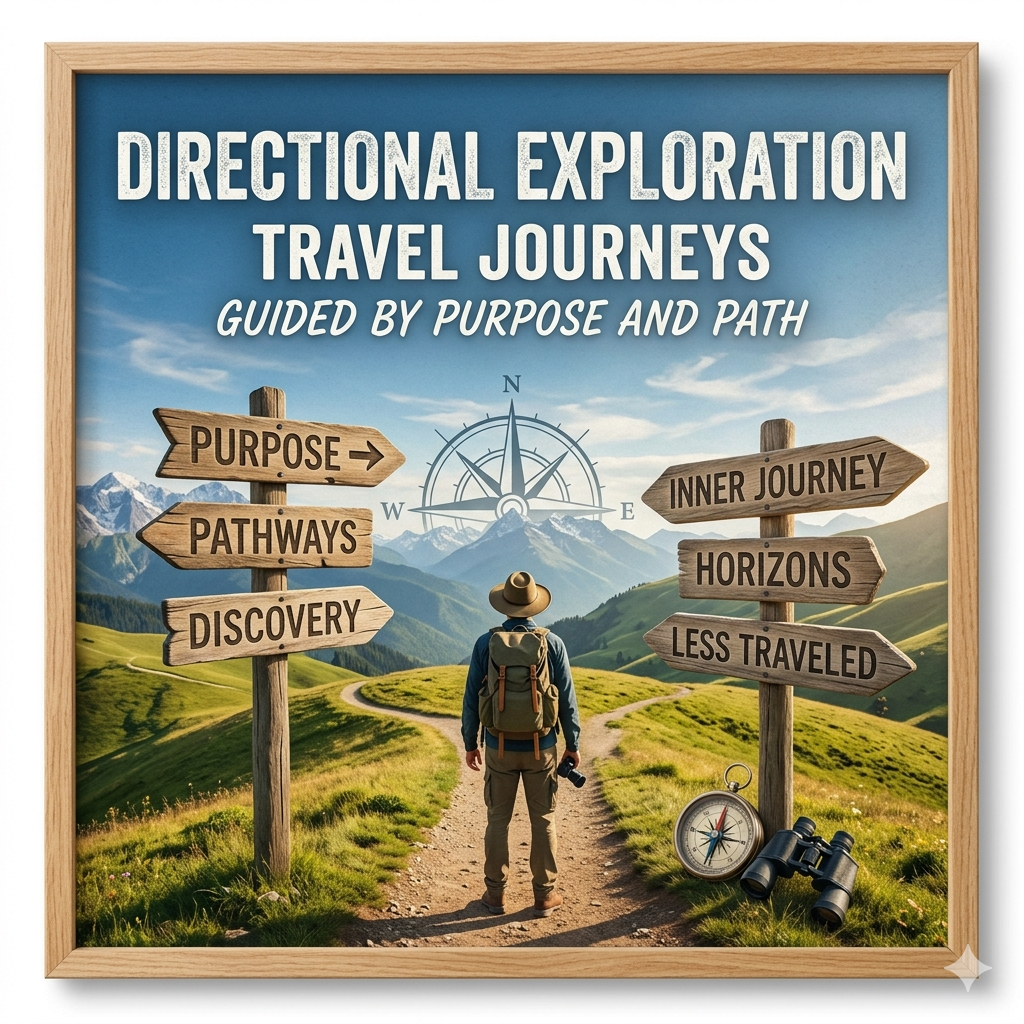
Travel is evolving. It’s no longer just about wandering from one destination to another—it’s about moving with intention. Directional exploration travel is a concept where every journey is guided by a clear purpose, a meaningful path, and a deeper connection to the places you visit.
Instead of random travel plans, this approach focuses on why you travel, not just where you go. It transforms travel into a journey of discovery, clarity, and personal growth.
What Is Directional Exploration Travel?
Directional exploration travel is a mindful way of traveling where your journey follows a specific purpose or theme. Rather than visiting places randomly, you design your travel around:
- Personal goals
- Cultural learning
- Nature connection
- Adventure challenges
- Spiritual or emotional growth
It’s about aligning your travel path with your intentions.
Why Purpose-Driven Travel Matters
1. More Meaningful Experiences
When you travel with purpose, every destination becomes part of a bigger story.
2. Clear Direction
You avoid confusion and wasted time because your journey has a defined path.
3. Deeper Connection
You engage more deeply with places, people, and experiences.
4. Personal Transformation
Purpose-driven travel often leads to self-discovery and growth.
Types of Directional Exploration Journeys
Cultural Pathways
Follow a journey focused on culture and heritage.
- Exploring ancient cities
- Learning traditional crafts
- Understanding local lifestyles
Example: Traveling through Kyoto to experience temples, tea ceremonies, and history.
Nature-Based Routes
Travel guided by natural landscapes and ecosystems.
- Mountain trekking
- Forest exploration
- Coastal journeys
Example: Hiking across Patagonia to connect with raw wilderness.
Spiritual Journeys
Travel for inner peace and self-reflection.
- Meditation retreats
- Visiting sacred places
- Silent travel experiences
Example: Finding mindfulness in Bali through yoga and spiritual practices.
Adventure Trails
Follow a path of challenge and thrill.
- High-altitude trekking
- Desert crossings
- Remote expeditions
Example: Exploring the rugged terrain of Ladakh for adventure and endurance.
Creative Exploration
Travel inspired by creativity and inspiration.
- Photography tours
- Writing retreats
- Art-focused journeys
How to Plan a Directional Exploration Journey
1. Define Your Purpose
Start by asking yourself:
- What do I want from this journey?
- What experience am I seeking?
- What will make this trip meaningful?
Your answers will guide your travel direction.
2. Choose a Theme
Select a central theme such as:
- Nature
- Culture
- Wellness
- Adventure
This theme becomes the foundation of your journey.
3. Map Your Path
Instead of random stops, create a connected route where each destination supports your purpose.
For example:
A cultural journey might include multiple heritage cities rather than unrelated locations.
4. Travel Slowly
Directional exploration is not about rushing. Spend enough time in each place to fully experience it.
5. Stay Flexible
While having direction is important, leave room for unexpected experiences and discoveries.
Benefits of Traveling With Direction
- Clarity: You know why you’re traveling
- Focus: Your journey feels intentional
- Depth: Experiences become more meaningful
- Fulfillment: You return with more than just memories
Challenges to Consider
- Requires thoughtful planning
- May limit spontaneous travel
- Needs alignment with personal goals
However, these challenges often lead to more rewarding experiences.
Real-World Example of Directional Travel
Imagine planning a journey focused on self-discovery:
- Start with meditation in Bali
- Move to nature exploration in Patagonia
- End with cultural reflection in Kyoto
Each destination adds value to your purpose, creating a cohesive and meaningful journey.
The Future of Purpose-Driven Travel
Travel is shifting from destination-based to intention-based. People want experiences that align with their values and goals.
Future trends include:
- Personalized travel planning
- Wellness-focused journeys
- Sustainable and responsible travel
- Experience-driven itineraries
Directional exploration is becoming a key part of modern travel.
Conclusion
Directional exploration travel is about moving with purpose, following a path that aligns with your goals, and experiencing the world more deeply. It transforms travel from simple movement into a meaningful journey of discovery.
Whether you’re seeking culture in Kyoto, adventure in Ladakh, or peace in Bali, the key is to travel with intention.
👉 Final thought:
A journey with direction doesn’t just take you places—it takes you somewhere within yourself.