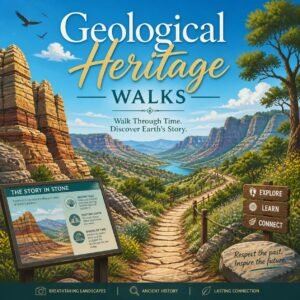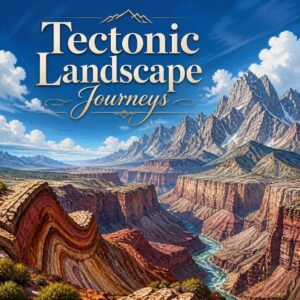
Some hiking trails take you through forests, others across open countryside, but rock formation hiking offers something completely different. These journeys lead travelers through landscapes shaped by millions of years of geological activity, erosion, weather, volcanic forces, and shifting layers of the Earth’s crust.
Towering rock towers, enormous cliffs, natural arches, sandstone valleys, strange stone pillars, and rugged mountain formations can make a hiking journey feel like an exploration of another world. Every formation has a story, and walking through these landscapes gives travelers an opportunity to experience that story at ground level.
Rock formation hiking is ideal for people who enjoy adventure, photography, geology, nature, and discovering unusual destinations. The experience does not always require technical climbing. Many remarkable formations can be reached by walking trails that offer spectacular views while allowing hikers to appreciate the details of the surrounding geology.
From the red sandstone landscapes of Jordan to the unusual rock pillars of Turkey and the rugged mountains of Australia, there are countless places where rocks become the main attraction.
What Makes Rock Formation Hiking Special?
Rock formations are created through a combination of geological processes. Some develop when layers of sediment are compressed and hardened over millions of years. Others are produced by volcanic activity, tectonic movement, glaciers, wind, or water erosion.
Over time, softer rock can disappear while harder layers remain. This can create arches, towers, cliffs, hoodoos, pinnacles, and isolated mountains.
Hiking allows travelers to experience these formations from different perspectives. A rock tower may look enormous from below, while a trail climbing around it can reveal completely different shapes and textures.
This makes rock formation hiking more than a simple outdoor activity. It combines movement, discovery, natural history, and visual exploration.
Explore the Rock Landscapes of Wadi Rum
Jordan’s Wadi Rum is one of the most impressive destinations for travelers interested in dramatic rock landscapes.
The desert contains enormous sandstone mountains, cliffs, narrow valleys, natural arches, and weathered rock formations. The contrast between the reddish rock and wide desert floor creates a striking environment.
Hiking through Wadi Rum can take travelers into quiet valleys and around massive rock walls. Some routes are short and accessible, while others require experienced local guides and careful planning.
The landscape is particularly beautiful during early morning and late afternoon when changing sunlight emphasizes the shapes and textures of the rocks.
For travelers who enjoy photography, Wadi Rum offers endless opportunities to capture dramatic desert scenery.
Discover Cappadocia’s Unusual Rock Formations
Turkey’s Cappadocia is famous for its extraordinary geological landscape.
The region contains tall rock pillars, volcanic formations, valleys, and cone-shaped structures commonly known as fairy chimneys. These formations developed through volcanic activity followed by long periods of erosion.
Walking through valleys such as Göreme and Pigeon Valley allows visitors to see the formations from close range.
Some trails pass between tall rock walls, while others climb to viewpoints overlooking the surrounding landscape.
Cappadocia is also an excellent example of how people have interacted with geological environments. Homes, churches, and other structures were carved into the soft volcanic rock, creating a landscape where natural and human history exist together.
Hike Through the Pinnacles of Western Australia
Western Australia contains some remarkable examples of unusual rock formations.
The Pinnacles Desert in Nambung National Park is famous for thousands of limestone pillars rising from the sandy landscape.
The formations vary in size and shape, creating an unusual desert environment. Some appear narrow and pointed, while others are wider and more irregular.
Visitors can explore the area along designated walking routes and viewing areas.
The landscape is especially interesting because the formations appear scattered across a broad sandy plain. Walking among them provides a completely different experience from hiking through conventional mountain terrain.
Explore the Bungle Bungle Range
The Bungle Bungle Range in Western Australia’s Purnululu National Park offers another extraordinary rock formation experience.
The landscape is known for distinctive sandstone domes with layered patterns. These rounded formations rise from the surrounding terrain and create a dramatic geological environment.
Walking trails allow visitors to explore narrow gorges, rocky valleys, and viewpoints overlooking the domes.
The combination of orange and dark bands across the sandstone creates strong visual patterns.
Because the region can be remote and conditions can be challenging, hikers should prepare carefully and follow park guidance.
Discover the Stone Forests of Madagascar
Madagascar offers one of the world’s most unusual hiking environments in the Tsingy de Bemaraha region.
The word “tsingy” is associated with sharp limestone formations. Over long periods, erosion has carved the limestone into narrow pinnacles, ridges, and deep crevices.
Walking through the area can involve bridges, ladders, narrow passages, and viewpoints over the stone formations.
The landscape is not only geologically fascinating but also ecologically important. The unusual rock environment supports plants and animals adapted to the region.
A journey here combines geological exploration with an opportunity to experience Madagascar’s distinctive natural environment.
Walk Among the Hoodoos of Bryce Canyon
Bryce Canyon National Park in Utah, USA, is famous for its enormous collection of hoodoos.
These tall, irregular rock pillars have been shaped by erosion over long periods. Water, ice, and weathering gradually carved the soft rock into thousands of distinctive formations.
Walking trails descend among the hoodoos and provide a close view of their shapes and colors.
The Navajo Loop and Queen’s Garden areas are among the well-known sections of the park, although trail conditions can vary.
The formations look particularly dramatic when sunlight moves across the canyon, highlighting the changing shapes of the rock walls and pillars.
Explore the Monuments of the American Southwest
The American Southwest contains an enormous variety of rock formation landscapes.
Utah and Arizona are especially well known for sandstone arches, mesas, cliffs, canyons, and isolated rock towers.
Arches National Park contains hundreds of natural arches created through long-term erosion. Canyonlands offers enormous canyon landscapes and elevated rock formations, while Monument Valley is famous for its isolated sandstone buttes.
Hiking through these environments allows travelers to see how wind, water, temperature changes, and geological structure have shaped the landscape.
The scale of the American Southwest makes it an excellent destination for multi-day rock formation journeys.
Hike Through the Grampians in Australia
Victoria’s Grampians region provides a different type of rock formation experience.
The area contains rugged sandstone mountains, cliffs, rocky outcrops, valleys, and panoramic viewpoints.
Walking trails range from shorter scenic routes to longer mountain hikes.
The Pinnacle area is particularly popular for dramatic views across the surrounding landscape. Other trails explore waterfalls, forests, and rocky ridges.
The combination of exposed stone and Australian vegetation creates a distinctive hiking environment.
Discover the Granite Landscapes of Sweden
Scandinavia offers another fascinating approach to rock formation hiking.
Sweden contains extensive granite landscapes shaped by ancient geological processes and glacial activity.
In areas such as the Bohuslän coast, travelers can find smooth granite cliffs, rocky islands, sea formations, and coastal trails.
The rounded appearance of many rocks reflects the long-term influence of glaciers and weathering.
Hiking along the coast provides a quieter alternative to some of the world’s more famous geological destinations.
Explore the Dolerite Cliffs of Tasmania
Tasmania is home to some remarkable geological landscapes, including the dramatic dolerite formations of the Tasmanian wilderness.
Cradle Mountain and the surrounding landscape provide opportunities to hike through rugged terrain featuring mountains, rocky ridges, lakes, and valleys.
The Overland Track is one of Australia’s best-known multi-day walking routes and passes through landscapes where geological structure is an important part of the scenery.
The combination of exposed rock, alpine vegetation, forests, and changing weather gives Tasmania a strong sense of wilderness.
Photography on Rock Formation Hiking Trails
Rock formations provide excellent subjects for outdoor photography.
Wide-angle images can capture the scale of cliffs and mountain landscapes, while closer photographs reveal cracks, layers, colors, and textures.
Morning and evening light often creates stronger shadows across rock surfaces.
Hikers should also look for different viewpoints. A formation may look completely different from a valley floor compared with a high ridge.
Photography can therefore encourage travelers to slow down and observe geological details that might otherwise be overlooked.
Preparing for a Rock Formation Hiking Journey
Preparation is important because geological hiking destinations can vary greatly.
Some trails are short and easy, while others involve steep climbs, exposed terrain, or remote wilderness.
Before beginning a hike, check:
- Trail distance and difficulty
- Weather conditions
- Water availability
- Local access rules
- Wildlife information
- Navigation requirements
- Emergency arrangements
- Seasonal trail closures
Good hiking footwear is particularly useful on rocky terrain. A small first-aid kit, sufficient water, sun protection, navigation equipment, and weather-appropriate clothing should also be considered.
For remote destinations, local guides can provide valuable knowledge about routes, conditions, and geological features.
Respect Geological Landscapes
Rock formations may appear strong and permanent, but they can be surprisingly fragile.
Climbing on delicate formations, removing rocks, scratching surfaces, or leaving marked trails can damage landscapes that took thousands or millions of years to develop.
Travelers should follow local rules and stay on designated paths where required.
Responsible hiking helps protect geological heritage for future generations.
Combine Hiking With Geological Discovery
One of the most rewarding aspects of rock formation hiking is learning how landscapes were created.
A guidebook, geological map, visitor center, or local guide can explain the history behind a formation.
Once travelers understand the processes involved, ordinary rocks can become fascinating features.
A sandstone arch may reveal the effects of erosion. A volcanic pillar may show the remains of ancient lava flows. A limestone landscape may reveal how water gradually shaped underground and surface formations.
This knowledge adds another layer to the hiking experience.
Final Thoughts
Rock formation hiking offers an exciting way to explore some of Earth’s most unusual landscapes.
From the sandstone mountains of Wadi Rum and the fairy chimneys of Cappadocia to the limestone pinnacles of Madagascar, the hoodoos of Bryce Canyon, the deserts of Western Australia, and the rugged landscapes of Tasmania, each destination tells a different geological story.
These journeys are ideal for travelers who want adventure with a sense of discovery. They combine walking, photography, natural history, geology, and exploration in a way that makes every trail feel unique.
The next time you plan a hiking adventure, consider choosing a destination where the rocks are part of the main attraction. Walk slowly, look closely, and notice the shapes, layers, colors, and textures around you.
Every cliff and rock formation has been shaped by time. Hiking through these landscapes gives you the opportunity to experience that history one step at a time.