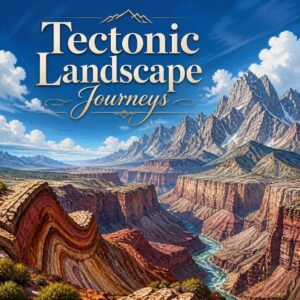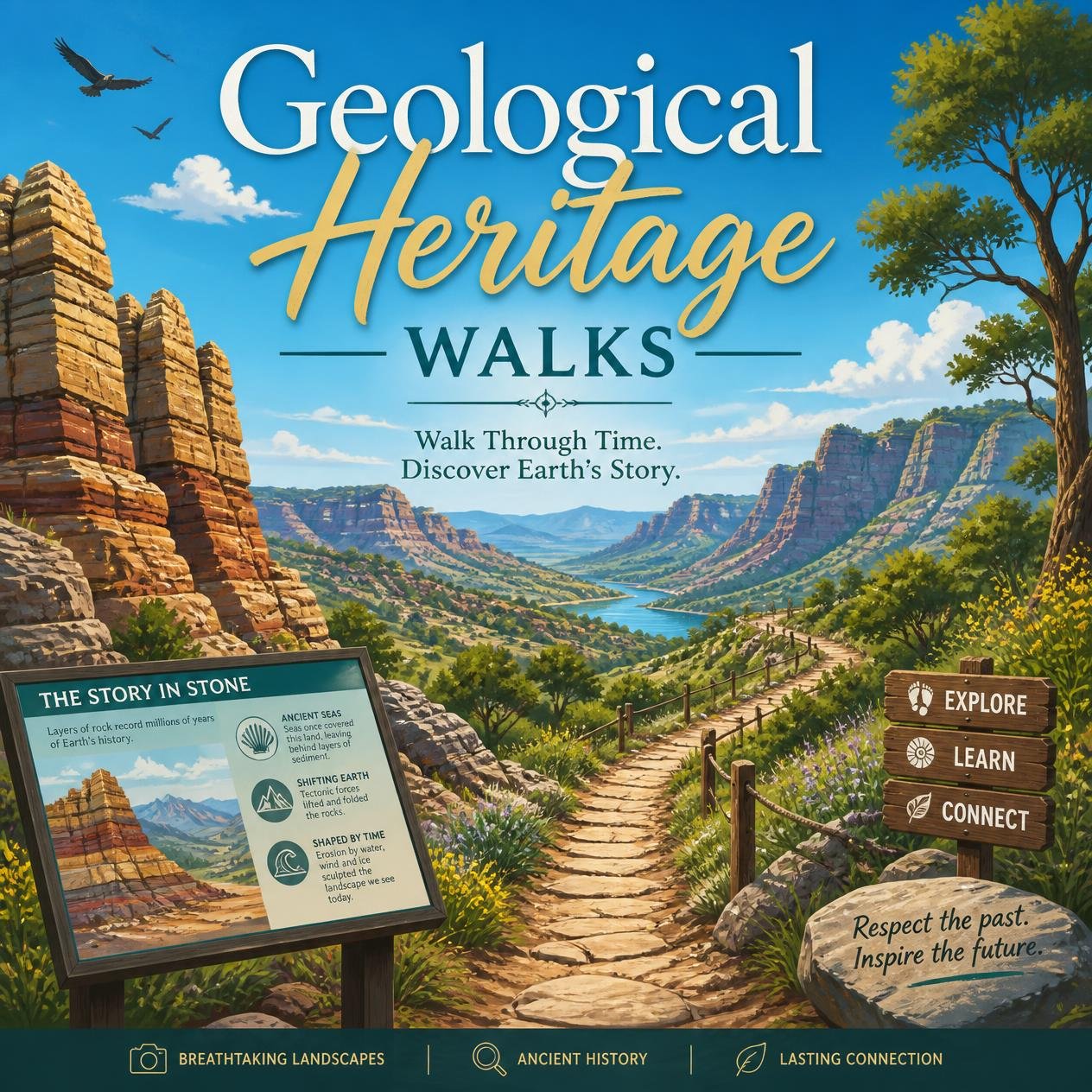
Walking through nature can be much more than enjoying fresh air and beautiful scenery. Some walking routes offer a chance to travel through millions of years of Earth’s history. A rocky coastline, an ancient valley, a fossil-rich cliff, or a mountain trail can reveal stories about how landscapes were formed and how the planet has changed over time.
Geological heritage walks bring these stories to life. They combine gentle exploration, outdoor adventure, natural history, photography, and learning. Instead of simply looking at a landscape, travelers can understand why it looks the way it does.
From ancient rock formations in the United Kingdom to fossil landscapes in Australia and dramatic mountain valleys in Europe, geological heritage can be discovered in many parts of the world. These walking journeys are particularly appealing to travelers who enjoy nature but want something more meaningful from their time outdoors.
What Is Geological Heritage?
Geological heritage refers to important geological features that help us understand the history of Earth. These can include rocks, fossils, caves, mountains, cliffs, volcanoes, mineral formations, fault lines, and landscapes created by glaciers or erosion.
Some geological features are hundreds of millions of years old. Others were created by much more recent processes such as volcanic eruptions or glacial movement.
Walking through these landscapes provides a direct connection with natural history. Every layer of rock can represent a different period, while unusual formations may show how water, ice, wind, and tectonic forces shaped the land.
This makes geological heritage walks different from ordinary countryside walks. The landscape itself becomes part of the story.
Walk Through the Jurassic Coast in England
The Jurassic Coast in southern England is one of the world’s best-known geological heritage landscapes.
Stretching along the coast of Dorset and Devon, the area contains rocks representing roughly 185 million years of Earth’s history. Its cliffs and beaches have produced important fossil discoveries, making it a fascinating destination for natural history enthusiasts.
Walking along sections of the coast can reveal dramatic cliffs, beaches, rock layers, and unusual geological formations.
Locations around Lyme Regis, Charmouth, Durdle Door, and Lulworth Cove offer different experiences. Visitors can combine coastal walking with fossil learning and scenic photography.
The changing colors and textures of the cliffs also make the region particularly attractive for photographers.
Discover the Scottish Geological Landscape
Scotland contains an extraordinary variety of geological environments.
The Highlands, islands, and coastal regions feature ancient rocks, dramatic mountains, glacial valleys, volcanic landscapes, and unusual rock formations.
The Isle of Skye is especially interesting for geological walking. Its landscapes include distinctive formations created by volcanic activity and long periods of erosion.
The Quiraing is one of the island’s most recognizable walking areas, with dramatic cliffs, pinnacles, and ridges.
The Old Man of Storr provides another famous landscape where geological forces have created striking rock formations.
Walking in Scotland can therefore become an exploration of both natural scenery and geological history.
Explore the Giant’s Causeway in Northern Ireland
The Giant’s Causeway is one of Europe’s most recognizable geological landscapes.
Located on the north coast of Northern Ireland, the site is famous for thousands of interlocking basalt columns. These unusual formations were created by ancient volcanic activity and later shaped by erosion.
Walking along the coastal paths provides views of the columns, cliffs, sea, and surrounding landscape.
The unusual geometric patterns make the Giant’s Causeway particularly memorable. It demonstrates how volcanic processes can create structures that appear almost too regular to be natural.
For geological heritage travelers, it is an excellent place to see the connection between ancient volcanic activity and modern coastal scenery.
Walk Among the Rocks of the Dolomites
The Dolomites in northern Italy are famous for their dramatic limestone mountains.
Their distinctive peaks and cliffs have been shaped by geological processes and erosion over enormous periods of time. The region’s rock formations create some of Europe’s most recognizable mountain landscapes.
Walking trails range from relatively gentle routes to demanding mountain paths. Visitors can choose routes according to their fitness and experience.
The combination of pale rock towers, green alpine meadows, forests, and mountain valleys makes the Dolomites ideal for scenic walking.
Along the way, travelers can appreciate how geological structure influences the shape of mountains and valleys.
Discover the Geological Heritage of the Alps
The Alps provide countless opportunities for geological walking.
Across Switzerland, France, Austria, Italy, and Slovenia, hikers can find landscapes shaped by tectonic uplift, glacial movement, erosion, and changing climates.
Walking through alpine valleys can reveal dramatic evidence of glaciers. U-shaped valleys, moraines, exposed rock faces, and mountain lakes all contribute to the geological story.
The Swiss Alps offer particularly impressive routes around mountain valleys and lakes, while the French Alps provide opportunities to explore areas around Chamonix and Mont Blanc.
Slovenia’s Julian Alps offer another beautiful setting where mountains, limestone landscapes, rivers, and glacial valleys come together.
Explore the Fossil Coast of Australia
Australia has many important geological heritage areas, including coastal landscapes where ancient fossils can be discovered.
The Great Ocean Road region in Victoria provides dramatic coastal scenery, cliffs, beaches, and rock formations shaped by erosion.
Further afield, areas such as the Flinders Ranges in South Australia offer an entirely different geological experience.
The Flinders Ranges contain ancient sedimentary rocks and spectacular mountain landscapes. Walking through the region allows visitors to observe how erosion has shaped layers of rock over immense periods.
The contrast between dry valleys, rugged ridges, and changing rock colors makes the area particularly appealing for geological photography.
Discover Ancient Landscapes in Wales
Wales is another excellent destination for geological heritage walks.
The country’s mountains and valleys reveal a long and complex geological history. Snowdonia, now known as Eryri National Park, contains landscapes shaped by volcanic activity, tectonic forces, glaciers, and erosion.
Walking routes around the mountains provide views of dramatic peaks, lakes, valleys, and exposed rock.
The landscape also demonstrates the powerful influence of ice. Glacial activity helped create many of the valleys and landforms visible today.
For travelers interested in combining mountain walking with natural history, Wales offers a wide range of opportunities.
Walk Through the Landscapes of Iceland
Iceland is ideal for travelers who want to experience geological landscapes that continue to change today.
The country contains volcanoes, lava fields, glaciers, geothermal areas, black-sand beaches, and dramatic cliffs.
Walking routes around volcanic areas can reveal solidified lava formations and unusual rock structures. Other trails pass geothermal landscapes where heat from below the Earth’s surface affects the environment.
Þingvellir is particularly interesting because of its geological setting along the boundary between the North American and Eurasian tectonic plates.
Iceland shows that geological heritage is not only about ancient rocks. Some landscapes are still being shaped by active natural processes.
Explore the Karst Landscapes of Slovenia
Slovenia is famous for its karst landscapes, which have played an important role in the development of modern geological science.
The country’s limestone terrain contains caves, underground rivers, sinkholes, cliffs, and distinctive surface formations.
The area around the Škocjan Caves offers an impressive example of how water can shape limestone over long periods.
Walking through the surrounding landscape can help visitors understand how underground geological processes influence what appears above the surface.
The combination of forests, limestone formations, valleys, and caves creates a fascinating environment for geological exploration.
Discover the Geological Story of the Grand Canyon
The Grand Canyon in the United States offers one of the clearest examples of geological history exposed across a landscape.
Its enormous canyon walls contain layers of rock representing vast periods of Earth’s history.
Walking along the rim provides spectacular views, while longer trails descend into the canyon and offer closer views of the rock layers.
The changing colors and textures of the canyon walls make the geological story visible from a distance.
Because conditions can be demanding, visitors should choose trails according to their abilities and follow local safety guidance.
Why Geological Heritage Walks Are Special
One of the greatest benefits of geological heritage walks is that they encourage travelers to slow down.
Instead of simply moving from one attraction to another, walkers have time to observe the details of the landscape.
A rock may contain evidence of an ancient environment. A cliff may reveal layers deposited millions of years ago. A valley may show where a glacier once moved.
This creates a deeper connection between travelers and their surroundings.
Geological walking can also be accessible to many types of travelers. Not every geological route requires difficult mountain climbing. Coastal paths, countryside trails, national park walks, and educational routes can provide fascinating experiences without extreme physical demands.
Photography and Geological Exploration
Geological landscapes are naturally suited to photography.
Rock formations create strong shapes and textures, while cliffs and mountains provide dramatic backgrounds. Sunrise and sunset can bring out different colors in sedimentary rocks and mountain landscapes.
Macro photography can also reveal details in fossils, minerals, and rock surfaces.
Travelers should always respect local rules and avoid collecting geological materials from protected areas.
Taking photographs rather than removing natural objects is a simple way to preserve geological heritage for future visitors.
Responsible Geological Travel
Geological heritage sites can be fragile. Foot traffic, collecting rocks, disturbing fossils, and leaving marked paths can damage important features.
Responsible travelers should stay on designated trails where required, follow local instructions, avoid removing fossils or rocks, and take all waste with them.
Guided walks can also be a valuable option because local experts can explain geological features while helping visitors understand how to explore the area responsibly.
The goal is not simply to see ancient landscapes but to help protect them.
Planning a Geological Heritage Walk
A geological walking journey can be planned around a particular interest.
Fossil enthusiasts may enjoy the Jurassic Coast or Australian fossil landscapes. Travelers interested in volcanic geology can explore Iceland or Northern Ireland. Mountain lovers can choose the Alps, Dolomites, Wales, or Scotland.
Before setting out, check trail conditions, weather forecasts, access rules, walking distances, and safety requirements.
A good pair of walking shoes, suitable clothing, water, navigation tools, and basic outdoor supplies can make the experience much more comfortable.
For more technical geological routes, hiring a knowledgeable local guide can make the journey even more rewarding.
Final Thoughts
Geological heritage walks offer a fascinating way to discover Earth’s natural history while enjoying some of the world’s most beautiful landscapes.
From the fossil-rich Jurassic Coast and volcanic Giant’s Causeway to the ancient mountains of Wales, the limestone landscapes of Slovenia, the dramatic Dolomites, and the enormous rock layers of the Grand Canyon, every destination tells a different geological story.
These journeys remind us that landscapes are not simply backgrounds for travel. They are records of Earth’s past.
By walking slowly, observing carefully, and learning about the rocks beneath our feet, travelers can experience destinations in a completely different way.
A geological heritage walk is therefore more than a hike. It is a journey through deep time, where every cliff, valley, fossil, mountain, and rock formation offers another chapter in the extraordinary natural history of our planet.