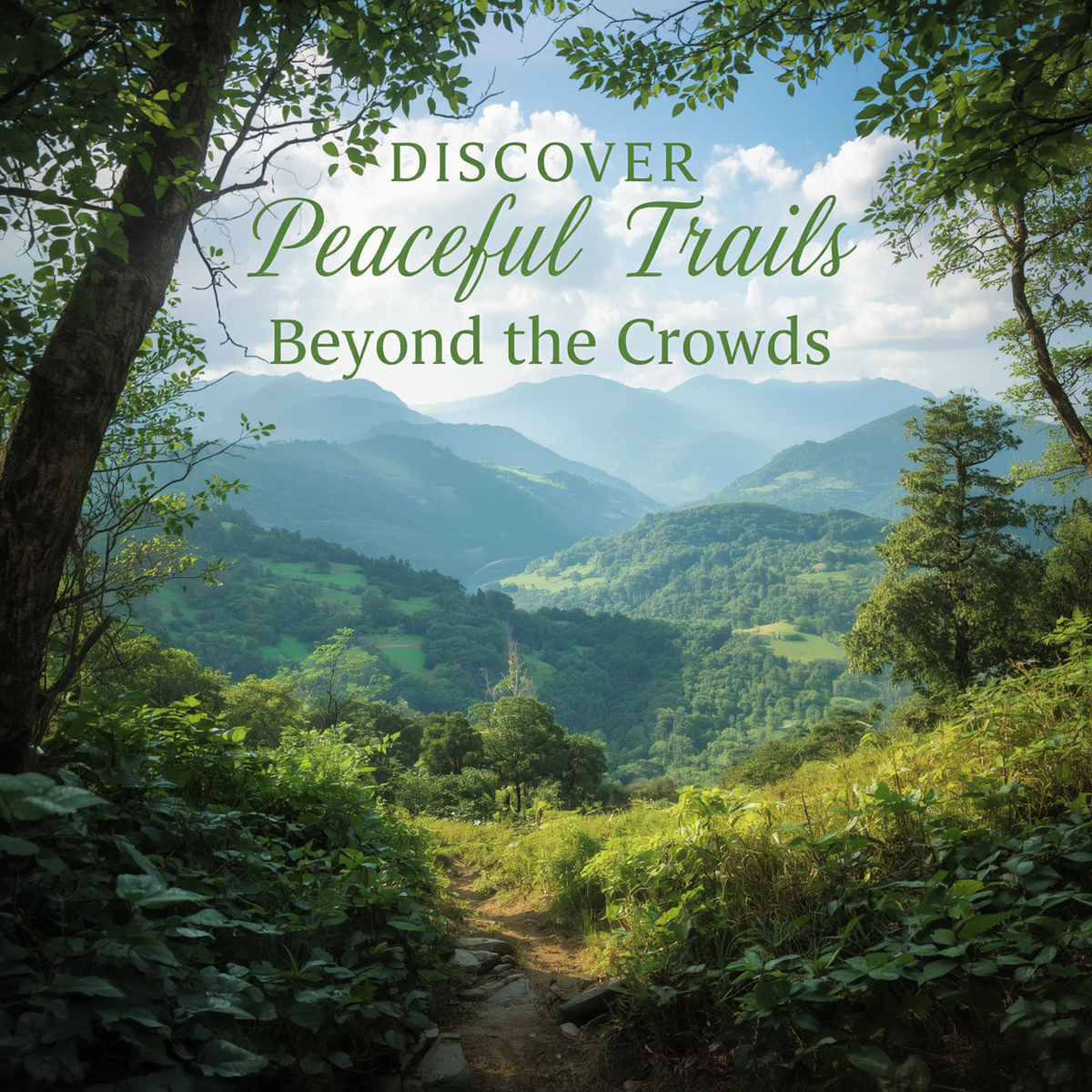
Hiking is one of the best ways to explore the natural world, but popular trails can sometimes become crowded. Famous viewpoints, well-known mountain routes, and heavily promoted hiking destinations often attract large numbers of visitors, especially during weekends and peak travel seasons. For travellers who prefer a quieter experience, rarely visited hiking areas offer an appealing alternative.
These lesser-known places provide opportunities to walk through peaceful forests, remote valleys, open countryside, mountain landscapes, and secluded coastal areas without the constant presence of large groups. Instead of following crowded paths, hikers can discover quieter routes where nature remains the main attraction.
Rarely visited hiking areas do not necessarily need to be completely remote or difficult to reach. Some can be found just beyond popular tourist destinations, while others may require longer journeys and more careful planning. What they share is a sense of peace, space, and discovery.
Why Choose Rarely Visited Hiking Areas?
One of the main reasons travellers choose less-visited hiking areas is the opportunity to enjoy nature without distractions.
Busy trails can make it difficult to appreciate the surroundings. Hikers may encounter queues on narrow paths, crowded viewpoints, noisy groups, and limited opportunities to stop and enjoy the scenery.
Quieter trails create a different atmosphere.
You can walk at your own pace, stop whenever you want, and spend more time observing the environment. A mountain viewpoint becomes more meaningful when you can sit there peacefully rather than competing for space with dozens of other visitors.
The experience becomes less about following the crowd and more about discovering the landscape.
Discover Peaceful Forest Trails
Forests are ideal places to search for quieter hiking experiences. Large woodland areas often contain numerous paths, meaning visitors can move away from the most popular routes and discover less-used trails.
Walking through a peaceful forest can be a calming experience. The sounds of birds, wind, leaves, and flowing water create a natural environment far removed from busy urban surroundings.
Forest trails can also offer plenty of variety. A route may pass through dense woodland before opening into a meadow, crossing a stream, or climbing towards a scenic viewpoint.
For nature lovers, forests can provide opportunities to observe birds, wildlife, plants, and changing seasonal landscapes.
Explore Remote Mountain Valleys
Mountain valleys can provide spectacular scenery while offering a sense of isolation.
Popular mountain destinations often concentrate visitors around a small number of famous routes. Travellers willing to explore less-promoted areas can sometimes find quieter valleys with equally impressive landscapes.
A remote valley may include streams, waterfalls, alpine meadows, traditional villages, and views of surrounding peaks.
Walking through such a landscape can feel like entering another world. The absence of heavy traffic and large tourist groups allows the natural environment to become the focus of the journey.
However, remote mountain routes require careful preparation. Weather can change quickly, and some trails may have limited signage or mobile coverage.
Find Quiet Coastal Hiking Routes
Coastal hiking offers another excellent opportunity to escape busy destinations.
While famous beaches and seaside resorts can become crowded, quieter sections of coastline may remain relatively peaceful.
Coastal trails can lead along cliffs, rocky beaches, dunes, coves, headlands, and small fishing communities.
The changing relationship between land and sea makes coastal hiking particularly interesting. Every turn can reveal a different view.
For a peaceful experience, consider routes away from major beaches and popular tourist centres. Walking during quieter periods of the day can also reduce encounters with other visitors.
Wander Through Rural Landscapes
Hiking does not always require dramatic mountains or remote wilderness.
Quiet countryside can provide some of the most relaxing walking experiences.
Rural hiking routes may pass through farmland, rolling hills, meadows, woodland, villages, and country lanes. The landscape may appear simple, but its peaceful atmosphere can make it incredibly rewarding.
Walking through rural areas also provides opportunities to experience local life.
You may encounter traditional farms, historic buildings, small village shops, local markets, and regional food along the way.
These experiences can add cultural depth to a hiking holiday.
Look Beyond Famous Hiking Destinations
One of the easiest ways to discover rarely visited hiking areas is to look beyond the destinations that dominate travel guides and social media.
Famous trails often become popular because of a particular viewpoint, mountain, lake, or landmark. However, surrounding areas may contain many alternative routes that receive far fewer visitors.
Research local trail networks instead of focusing only on famous routes.
Maps, regional tourism information, walking clubs, local guides, and hiking communities can help identify alternative paths.
Sometimes the most rewarding trail is not the one with the highest number of online reviews.
Travel During Quieter Seasons
The timing of a hiking trip can have a major impact on visitor numbers.
A destination that is extremely busy during summer may become much quieter during spring or autumn.
Shoulder seasons can provide a good balance between pleasant conditions and fewer visitors, depending on the region.
Autumn can bring colourful forests and cooler temperatures, while spring may provide fresh greenery and seasonal flowers.
However, hikers should always research local conditions before travelling. Weather, trail closures, snow, rainfall, and reduced daylight can affect accessibility.
A quiet trail is only enjoyable when conditions are suitable for your experience and equipment.
Prepare for Less Developed Trails
Rarely visited hiking areas may have fewer facilities than famous routes.
There may be limited signage, fewer rest stops, fewer shops, and less frequent public transport.
This makes preparation especially important.
Before starting a hike, research the route carefully and consider:
- Trail length
- Elevation gain
- Terrain difficulty
- Weather conditions
- Water availability
- Food supplies
- Accommodation
- Transport
- Navigation
- Emergency options
Do not assume that a less popular route will automatically be easier. In some cases, lower visitor numbers mean more challenging navigation or rougher trail conditions.
Pack the Right Equipment
A carefully prepared backpack can make a major difference on quiet trails.
Essential equipment will depend on the length and difficulty of the hike, but suitable footwear, weatherproof clothing, navigation tools, water, food, and basic first-aid supplies are generally important.
Layered clothing is particularly useful because weather can change during the day.
For remote areas, it is also sensible to have a reliable way to communicate in an emergency.
The objective is to be prepared without carrying unnecessary weight.
Enjoy the Freedom of Walking at Your Own Pace
One of the biggest advantages of rarely visited hiking areas is freedom.
On busy trails, hikers may feel pressure to maintain the pace of groups around them. On a quieter path, there is usually more space to choose your own rhythm.
You can walk slowly, stop for photographs, take a longer break, or spend time enjoying a viewpoint.
This makes the experience more relaxing.
Hiking does not need to be a race. The journey is just as important as the destination.
Experience Nature More Closely
Quiet trails make it easier to notice details in the natural environment.
You may hear birds before seeing them, notice animal tracks, discover small wildflowers, or observe changes in the landscape that would be easy to overlook on a busy route.
Slowing down encourages observation.
Instead of focusing only on the next viewpoint, hikers can appreciate the entire environment around them.
This deeper connection with nature is one of the strongest reasons to explore less-visited areas.
Support Local Communities
Rarely visited hiking regions can benefit from responsible tourism.
Small communities located near hiking routes may rely on local businesses, accommodation, restaurants, guides, transport services, and outdoor tourism.
Travellers can support these communities by choosing locally owned services whenever possible.
Buying local products, eating regional food, staying in independent accommodation, and hiring local guides can help tourism contribute to the local economy.
This approach also provides travellers with opportunities to learn more about the destination.
Consider a Local Guide
A local guide can be particularly valuable when exploring unfamiliar or remote hiking areas.
Local guides understand the terrain and may know trails that are difficult to find on standard tourist maps.
They can also provide information about local history, wildlife, traditions, and environmental conditions.
For challenging routes, a guide can provide additional support and help travellers make better decisions when conditions change.
The goal is not to remove the feeling of exploration but to make the experience more informed and responsible.
Respect Quiet Natural Environments
The peaceful character of rarely visited hiking areas can be fragile.
Visitors should take care to protect the landscapes they enjoy.
Stay on established trails where possible, avoid disturbing wildlife, carry waste with you, and follow local regulations.
Do not remove plants, rocks, or other natural features.
Noise should also be kept to a reasonable level, particularly in wildlife habitats and remote communities.
Responsible behaviour helps preserve the quiet atmosphere that makes these destinations special.
Leave Room for Discovery
One of the most exciting aspects of exploring rarely visited hiking areas is the possibility of discovering something unexpected.
A trail may lead to a hidden viewpoint, an old bridge, a small waterfall, or a peaceful meadow that was never part of your original plan.
Leaving some flexibility in your itinerary allows these moments to become part of the adventure.
However, flexibility should always be balanced with safety. Do not leave marked routes without understanding the terrain or conditions.
Capture the Beauty Responsibly
Less crowded hiking areas can provide excellent photography opportunities.
Without large groups in the background, it is easier to capture landscapes in their natural setting.
Mountain ridges, forests, rivers, coastlines, wildlife, villages, and changing skies can all create memorable images.
But photography should not interfere with the environment.
Avoid disturbing wildlife for photographs and do not enter restricted areas simply to find a better viewpoint.
The best travel photography respects the destination rather than changing it.
The Mental Escape From Crowded Places
A quiet hike can provide a valuable break from constant stimulation.
Modern life often involves screens, notifications, traffic, meetings, and crowded environments. Spending several hours on a peaceful trail can create space for reflection.
The rhythm of walking can help shift attention away from everyday distractions.
You may return from the trail physically tired but mentally refreshed.
This is one reason quiet hiking experiences appeal to travellers who are not necessarily looking for extreme adventure. Sometimes the goal is simply to spend meaningful time outdoors.
Make the Journey the Destination
Rarely visited hiking areas encourage a different approach to travel.
Instead of measuring the success of a trip by the number of attractions visited, the focus shifts towards the quality of the experience.
A quiet morning on a forest trail can be more memorable than a busy afternoon at a famous attraction.
A simple picnic overlooking a valley can become a highlight of the entire journey.
The absence of crowds gives travellers permission to slow down and appreciate these moments.
Final Thoughts
Rarely visited hiking areas provide an opportunity to discover peaceful trails, beautiful landscapes, and meaningful outdoor experiences beyond the crowds.
From quiet forests and remote mountain valleys to secluded coastlines and rural countryside, these destinations offer countless ways to explore nature at a slower pace.
Finding the right trail requires research and preparation, particularly when travelling to less-developed areas. Hikers should understand the route, prepare for changing weather, carry suitable equipment, and consider local guidance when necessary.
Most importantly, visitors should travel responsibly.
Respecting nature, supporting local communities, and preserving the peaceful character of these areas ensures that their beauty can be enjoyed for years to come.
For travellers willing to look beyond the most famous hiking routes, the reward can be more than a beautiful view. It can be the rare feeling of having a trail, a landscape, and a moment of nature almost entirely to yourself.