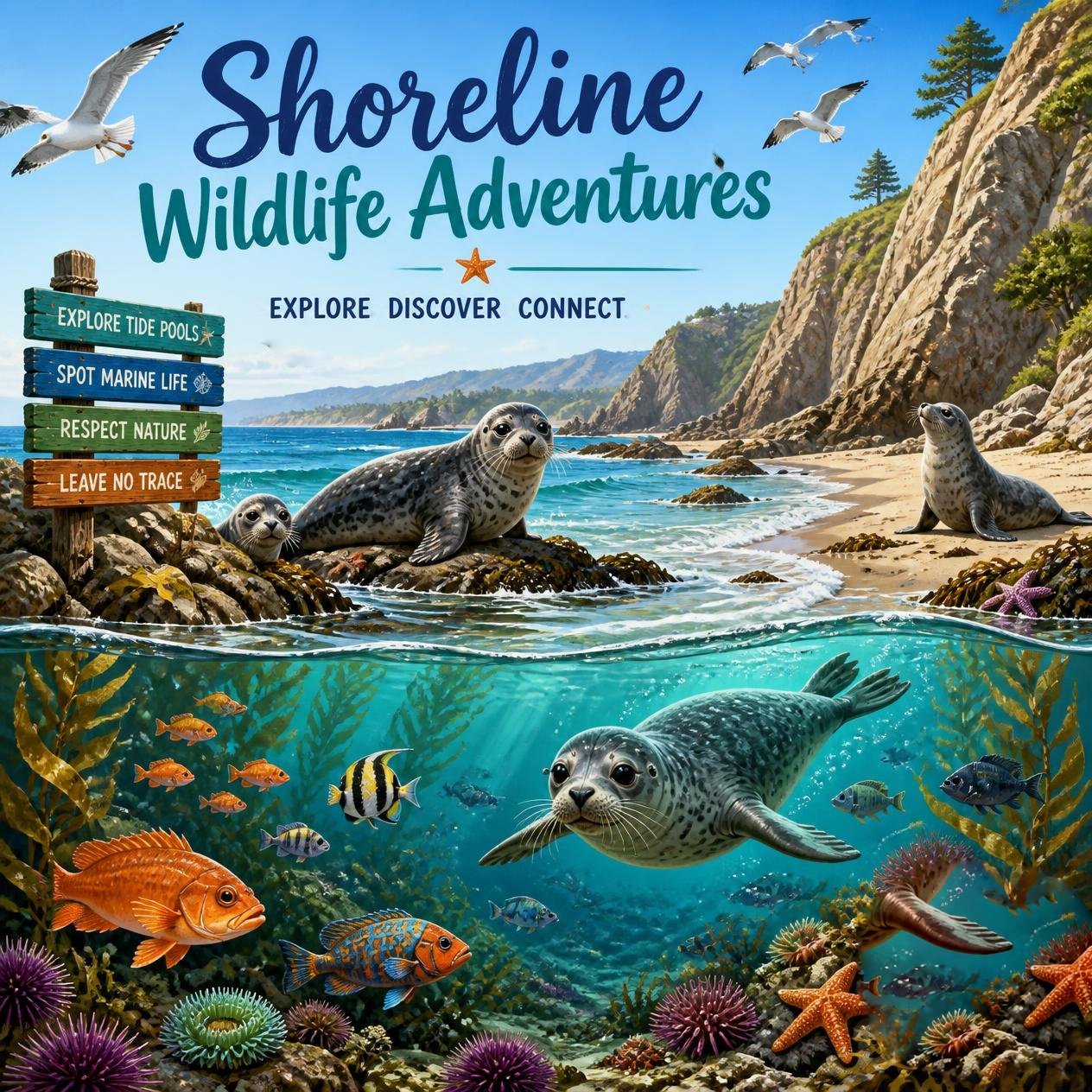
Coastlines are among the most exciting places to explore the natural world. Where land meets the sea, different ecosystems come together to create habitats for an incredible variety of wildlife. Rocky shores, sandy beaches, tidal pools, mangrove forests, salt marshes, cliffs, and offshore waters can all support fascinating forms of life.
Shoreline wildlife adventures give travelers the opportunity to discover these environments while observing marine animals and coastal birds in their natural surroundings. A simple walk along a beach can reveal tracks in the sand, seabirds above the water, crabs between rocks, or seals resting along a quiet shore.
For travelers who enjoy nature, photography, hiking, wildlife watching, and outdoor exploration, coastal journeys can offer memorable experiences without always requiring a demanding expedition.
From the rugged coastlines of Scotland to the tropical shores of Costa Rica and the remote beaches of South Africa, coastal habitats provide endless opportunities for discovery.
What Makes Shoreline Wildlife Special?
Coastal environments are constantly changing.
The movement of tides creates temporary pools, exposes rocks, moves food, and changes where animals can find shelter. Waves bring nutrients from the ocean, while coastal plants help stabilize beaches and wetlands.
This changing environment supports a wide range of animals.
Depending on the destination, travelers may encounter seals, sea lions, dolphins, whales, sea turtles, penguins, seabirds, crabs, starfish, fish, and countless smaller marine organisms.
The best part of shoreline wildlife exploration is that every visit can be different.
Explore the Wildlife Coast of Scotland
Scotland offers some of Europe’s most spectacular coastal wildlife experiences.
Its rocky shores, islands, sea cliffs, and remote beaches provide important habitats for seabirds and marine mammals.
The Scottish islands are particularly rewarding for wildlife enthusiasts. Places such as the Isle of Mull provide opportunities to observe seals, otters, seabirds, and sometimes larger marine animals from coastal viewpoints.
The Outer Hebrides offer long beaches, rugged shores, and quiet landscapes where travelers can experience coastal nature away from busy urban areas.
Walking along the shoreline provides a peaceful way to observe wildlife while enjoying dramatic sea views.
Discover Marine Life in Monterey Bay
California’s Monterey Bay is famous for its rich marine ecosystem.
The bay’s nutrient-rich waters support a wide range of marine species. Travelers may encounter sea otters, seals, sea lions, dolphins, whales, and numerous seabirds.
The coastline also offers opportunities for kayaking, coastal walking, wildlife photography, and responsible boat-based observation.
Sea otters are particularly fascinating to watch as they float in the water, often using kelp forests as habitat.
A visit to Monterey Bay can combine outdoor exploration with educational experiences at local marine centers and aquariums.
Walk Along the Shores of South Africa
South Africa has an impressive coastline with diverse wildlife habitats.
The Western Cape is particularly well known for marine animals and seabirds.
Along suitable coastal areas, travelers may encounter African penguins, seals, seabirds, and other marine wildlife.
Boulders Beach near Simon’s Town is famous for its African penguin colony. Visitors can observe these distinctive birds from designated areas while respecting wildlife boundaries.
Further along the coast, the Cape Peninsula offers dramatic cliffs, beaches, and ocean viewpoints.
The combination of wildlife and scenery makes South Africa an excellent destination for shoreline exploration.
Discover Sea Turtles in Costa Rica
Costa Rica’s coastline supports several species of sea turtles.
Certain beaches on both the Pacific and Caribbean coasts are important nesting areas.
During appropriate seasons and under controlled conditions, travelers may have opportunities to learn about nesting turtles through guided conservation programs.
The experience can be especially meaningful because visitors can learn about the challenges sea turtles face and the importance of protecting nesting beaches.
Costa Rica also offers mangroves, coastal forests, coral environments, and wetlands, creating opportunities to experience several connected ecosystems during one trip.
Explore the Galápagos Coastline
The Galápagos Islands provide one of the world’s most remarkable wildlife experiences.
The islands are home to marine iguanas, sea lions, penguins, sea turtles, seabirds, and numerous other species.
Coastal landscapes vary from volcanic shores and sandy beaches to rocky lava formations.
Marine iguanas are particularly fascinating because they have adapted to feeding in the ocean.
Travelers can explore coastal habitats through guided walks, snorkeling excursions, kayaking, and boat journeys.
Because the Galápagos ecosystem is exceptionally sensitive, visitors are expected to follow strict environmental rules and maintain appropriate distances from wildlife.
Watch Penguins Along the Falkland Islands
The Falkland Islands offer a remarkable opportunity to experience remote coastal wildlife.
Several penguin species breed across the islands, including gentoo, rockhopper, king, and Magellanic penguins.
The remote beaches and rocky shorelines provide important habitats for large colonies.
Walking near penguin colonies under appropriate guidance can provide an unforgettable wildlife experience.
The islands are also home to seals and many species of seabirds, creating a rich coastal ecosystem.
For travelers interested in remote nature, the Falklands offer a very different experience from more heavily visited destinations.
Explore Australia’s Coastal Wildlife
Australia’s enormous coastline contains an extraordinary variety of marine and coastal habitats.
The Great Ocean Road region in Victoria offers dramatic cliffs, beaches, offshore islands, and opportunities for wildlife observation.
Further south, Tasmania provides rugged coastal landscapes where travelers may encounter seals, seabirds, and other wildlife.
Western Australia also contains extensive beaches, reefs, mangroves, and coastal wetlands.
Travelers can choose from coastal hiking, kayaking, snorkeling, wildlife tours, and scenic drives.
The diversity of Australia’s coastline means that visitors can experience very different environments within the same country.
Discover Marine Wildlife in New Zealand
New Zealand is surrounded by productive coastal waters and offers excellent opportunities for marine wildlife observation.
The Kaikōura coastline is particularly famous for marine mammals.
The deep underwater canyon system near the coast creates nutrient-rich waters that support species such as sperm whales, dolphins, seals, and seabirds.
Visitors can experience the area through responsible wildlife cruises, kayaking, coastal walks, and scenic viewpoints.
New Zealand’s South Island also contains many rugged coastal environments where seals and seabirds can be observed.
Explore the Mangrove Coastlines of Belize
Belize provides a tropical approach to shoreline wildlife exploration.
Its coastline includes mangroves, lagoons, coral reefs, islands, and shallow coastal waters.
These habitats provide shelter and feeding areas for fish, birds, turtles, manatees, and other marine species.
Travelers can explore coastal environments by kayak or boat, while snorkeling provides opportunities to see underwater life.
Mangroves are particularly important because they protect coastlines and provide nursery habitats for young marine animals.
Exploring these areas can help travelers understand how connected coastal ecosystems are.
Discover Tidal Pool Wildlife
Not every wildlife adventure requires a boat.
Tidal pools can offer some of the most accessible ways to discover marine life.
When the tide moves out, water can remain trapped between rocks, creating small temporary habitats.
Depending on the location, visitors may see sea anemones, small fish, crabs, starfish, limpets, mussels, and other marine organisms.
Rocky coastlines in places such as the United Kingdom, Ireland, Portugal, Japan, and parts of North America can provide excellent opportunities for tidal pool exploration.
Travelers should always check tide times and avoid disturbing animals or removing marine life from its habitat.
Coastal Birdwatching Adventures
Shoreline wildlife is not limited to marine animals.
Coastal habitats attract enormous numbers of birds.
Seabirds often use cliffs for nesting, while wetlands and tidal flats provide feeding grounds for migratory species.
Depending on the destination, travelers may see puffins, gannets, albatrosses, pelicans, flamingos, herons, cormorants, and many other species.
A pair of binoculars can turn a simple coastal walk into an enjoyable birdwatching experience.
Early mornings are often particularly rewarding because wildlife activity can be high and coastal conditions may be calmer.
Responsible Shoreline Wildlife Travel
Wildlife observation should always prioritize the animals.
Travelers should maintain a safe distance, avoid feeding wildlife, follow local regulations, and never chase or corner animals for photographs.
Nesting areas and breeding colonies require particular care.
Drones may also be restricted around wildlife because they can cause stress or disrupt natural behavior.
Choosing licensed guides and conservation-focused operators can help ensure that wildlife tourism supports local protection efforts.
Coastal Photography Tips
Coastal wildlife can provide excellent photography opportunities, but patience is more important than getting extremely close.
A telephoto lens allows photographers to capture animals without disturbing them.
Morning and evening light can create beautiful conditions for coastal landscapes.
Photographers should also look beyond individual animals. Wide images showing wildlife within its natural habitat can tell a stronger story about the relationship between animals and the coastline.
Avoid using flash around sensitive wildlife unless specifically permitted.
Plan a Shoreline Wildlife Adventure
The best coastal wildlife destination depends on what you hope to see.
Travelers interested in penguins might consider South Africa or the Falkland Islands. Those fascinated by marine mammals can explore New Zealand or California. Sea turtle experiences are available in suitable areas of Costa Rica, while the Galápagos offers an extraordinary combination of land and marine wildlife.
Before traveling, check seasonal wildlife activity, local access rules, weather conditions, tide information, and conservation requirements.
A little planning can make the experience safer, more comfortable, and more rewarding.
Final Thoughts
Shoreline wildlife adventures provide an exciting way to explore the natural world where land and sea meet.
From the rocky islands of Scotland and the marine-rich waters of Monterey Bay to the penguin colonies of South Africa and the Falkland Islands, the turtle beaches of Costa Rica, the Galápagos coastline, and the marine habitats of New Zealand, every destination offers its own unique wildlife story.
Coastal environments remind us how closely different ecosystems are connected. Beaches, wetlands, mangroves, reefs, cliffs, and open ocean all work together to support life.
For travelers who enjoy nature and discovery, a shoreline wildlife journey can be both adventurous and educational.
Walk slowly along the shore, watch the tides, listen to the seabirds, look between the rocks, and give wildlife plenty of space.
Sometimes the most memorable travel experiences come from simply standing beside the sea and watching nature unfold in its own environment.