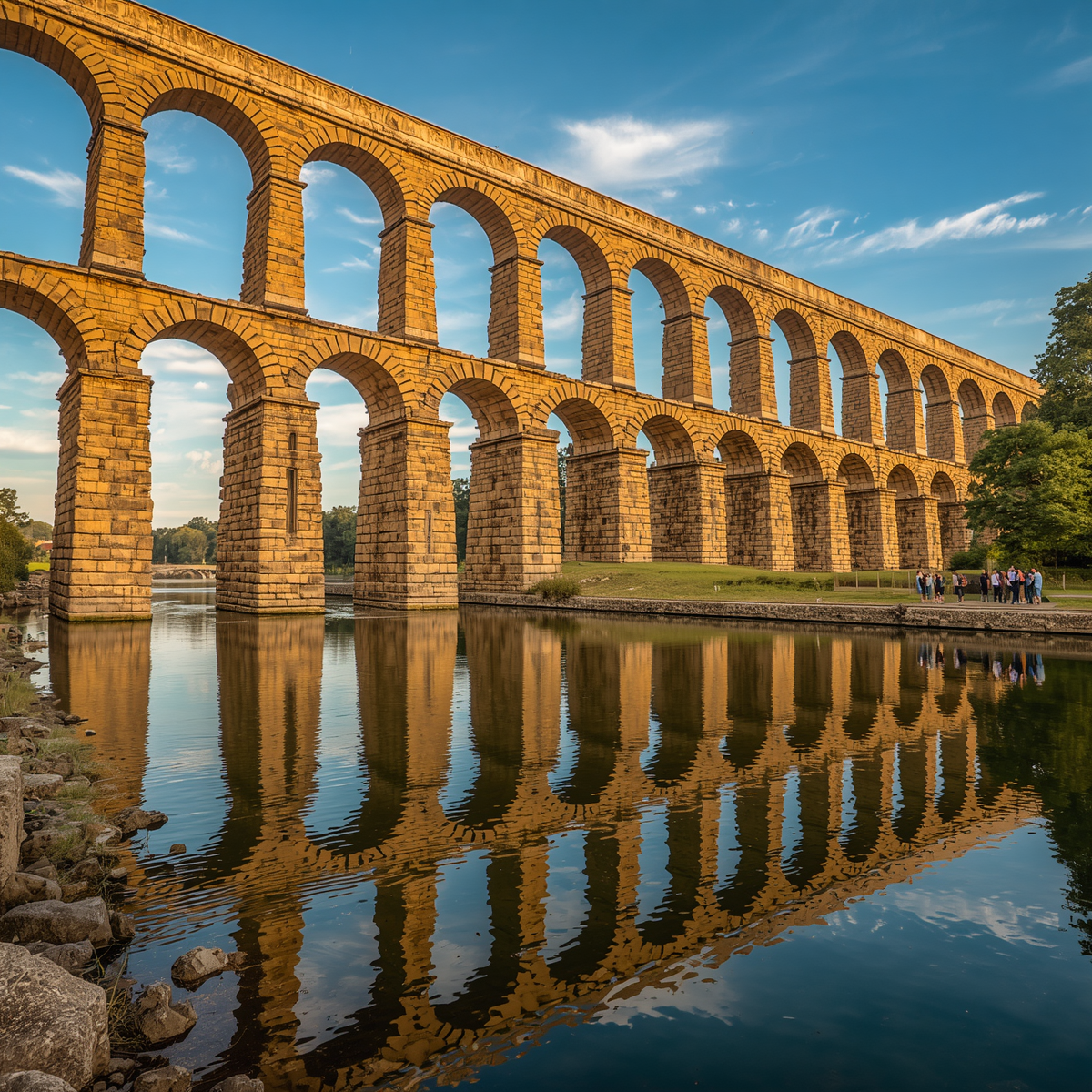
Historic aqueducts are among the most impressive achievements in the history of engineering. Built to transport water across valleys, rivers and challenging landscapes, these structures demonstrate how earlier civilisations developed practical solutions to support growing communities. Their arches, stone channels and carefully designed waterways remain fascinating examples of human creativity and technical knowledge.
Historic aqueduct engineering travel tours give visitors an opportunity to explore these remarkable structures while discovering the stories behind their construction. From ancient Roman water systems to impressive European bridges and historic canal networks, aqueducts reveal how water management influenced cities, agriculture and everyday life.
For travellers interested in architecture, history, engineering and cultural landscapes, these tours offer a different way to explore historic destinations. They combine outdoor discovery with educational experiences, allowing visitors to understand the importance of water infrastructure throughout history.
The Historical Importance of Aqueducts
The word aqueduct generally refers to a structure or system designed to carry water from one location to another. Although the most recognisable examples are elevated stone bridges, aqueduct systems often included underground channels, tunnels, pipes and carefully constructed waterways.
Ancient communities needed reliable water supplies for drinking, agriculture, public buildings and sanitation. As settlements expanded, nearby water sources were not always sufficient. Engineers therefore developed systems that could transport water over considerable distances.
Ancient Roman aqueducts are particularly well known for their scale and technical design. They supplied water to cities, public baths, fountains and households. Their construction required careful surveying, an understanding of gradients and extensive building knowledge.
However, water transportation systems existed in several ancient civilisations. Different societies developed their own approaches according to local geography, available materials and community needs.
Today, surviving aqueducts provide valuable evidence of how historic communities managed essential resources and developed infrastructure that supported urban growth.
Discover Remarkable Roman Aqueduct Engineering
Roman aqueducts remain some of the most celebrated examples of historic water engineering. Their impressive arches and long stone channels demonstrate the ability of Roman builders to transport water across difficult terrain.
One of the most famous examples is the <Entity value=”Pont du Gard” category=”point_of_interest” location=”Vers-Pont-du-Gard, France” /> in southern France. This remarkable structure formed part of a Roman aqueduct system supplying water to the ancient city of Nîmes.
<AsyncImageGroup query={[“Pont du Gard Roman aqueduct France wide view”,”Pont du Gard aqueduct stone arches river landscape”,”Segovia Roman aqueduct Spain historic city”]} aspectRatio=”5:4″ layout=”bento”/>
Another impressive example is the <Entity value=”Aqueduct of Segovia” category=”point_of_interest” location=”Segovia, Spain” /> in Spain. Its tall granite arches are a defining feature of the historic city and demonstrate the importance of Roman infrastructure.
Roman aqueducts often relied on gravity rather than mechanical pumping. Engineers carefully calculated the route so that water could travel gradually downhill. Maintaining an appropriate slope was essential because a channel that was too steep could cause erosion, while an insufficient gradient could slow the flow.
Visitors exploring these sites can learn how ancient builders combined surveying, masonry and practical engineering to create systems that served communities for generations.
Understanding the Engineering Behind Historic Aqueducts
The construction of an aqueduct required more than building a series of arches. Engineers needed to understand the landscape and plan a route that could transport water safely and consistently.
Several important engineering principles were involved.
Gradient and water flow: Aqueduct channels were designed with a carefully controlled slope. This allowed gravity to move water towards its destination without relying on modern pumping systems.
Structural support: Where valleys or uneven ground interrupted the route, elevated bridges and arches provided support for the water channel.
Materials and construction: Stone, brick, concrete and other locally available materials were selected according to the design and environmental conditions.
Maintenance access: Some systems included inspection points and access structures so workers could remove deposits, repair damage and maintain water flow.
Tunnels and underground channels: Engineers sometimes passed waterways through hills or beneath difficult terrain instead of building entirely above ground.
These features reveal the complexity of historic water infrastructure. During an engineering travel tour, visitors can observe how individual design elements worked together to create a reliable system.
Explore Historic European Aqueduct Destinations
Europe contains many historic aqueducts that attract visitors interested in engineering and cultural heritage. Each destination offers a different combination of architecture, landscape and historical background.
<AsyncImageGroup query={[“Segovia aqueduct Spain old town”,”Pontcysyllte Aqueduct Wales canal boat”,”Aqueduct of Vanvitelli Caserta Italy”]} aspectRatio=”5:4″/>
The <Entity value=”Pontcysyllte Aqueduct” category=”point_of_interest” location=”Wrexham County Borough, Wales, UK” /> in Wales is an outstanding example of later water engineering. Designed by Thomas Telford and opened in 1805, it carries the Llangollen Canal across the River Dee valley. Its impressive iron trough and supporting structure demonstrate the development of engineering during the Industrial Revolution.
In Italy, the <Entity value=”Caroline Aqueduct” category=”point_of_interest” location=”Caserta, Italy” />, also known as the Aqueduct of Vanvitelli, was built to supply water to the Royal Palace of Caserta and surrounding areas. Its monumental bridges form part of an important historic water system.
These destinations show how aqueduct engineering developed over different periods. Roman masonry, industrial-era ironwork and later hydraulic designs all reflect the changing needs and technical abilities of their societies.
The Connection Between Aqueducts and Ancient Cities
Aqueducts played an important role in the development of urban communities. A dependable water supply supported population growth, public health, agriculture and commercial activity.
In Roman cities, water was used for public baths, fountains, household needs and other civic facilities. Large-scale water systems also demonstrated the organisation and technical capabilities of the authorities responsible for maintaining them.
The availability of water could influence where settlements expanded and how public spaces were designed. Fountains and bathing facilities became important parts of urban life in several historic societies.
Aqueducts therefore tell a wider story about the relationship between infrastructure and civilisation. Their history is connected not only to engineering but also to architecture, politics, trade and social development.
Visitors can often explore nearby historic towns and archaeological remains to understand how water systems supported everyday life.
Aqueduct Photography and Scenic Landscapes
Historic aqueducts offer excellent opportunities for architectural and landscape photography. Their arches, stonework and elevated channels create strong visual patterns that stand out against natural surroundings.
The surrounding landscape can be just as interesting as the structure itself. Some aqueducts cross green valleys, while others pass through rocky terrain, historic towns or open countryside.
<AsyncImageGroup query={[“Pont du Gard aqueduct landscape photography sunrise”,”Pontcysyllte aqueduct canal boat aerial view”,”Segovia aqueduct Spain architectural photography”]} aspectRatio=”5:4″/>
Photographers can experiment with different perspectives to highlight the scale and design of these structures. Wide-angle photographs can show how an aqueduct fits into its landscape, while closer images can reveal the texture of stone blocks, arches and construction details.
Early morning and late afternoon often provide softer natural lighting. These conditions can help highlight architectural details and create more balanced landscape photographs.
Visitors should use designated viewing areas and avoid climbing on protected structures. Historic masonry can be fragile, and following site rules helps preserve these engineering landmarks.
Walking and Outdoor Exploration Around Aqueducts
Many historic aqueduct destinations are surrounded by walking routes and scenic viewpoints. These paths allow visitors to explore the landscape while learning about the engineering structure.
Some routes follow the original waterways, while others pass through nearby villages, countryside and historic sites. The experience can combine gentle walking with opportunities to observe the surrounding environment.
The Pontcysyllte Aqueduct, for example, forms part of a wider canal landscape where visitors can enjoy walking beside the water and observing traditional canal boats.
At other locations, marked trails provide views of aqueduct bridges from different heights and distances. These viewpoints help travellers appreciate the scale of structures that can be difficult to understand from a single position.
Before starting a walk, check local route information, weather conditions and accessibility. Some paths may include uneven surfaces, steep sections or limited facilities.
Historic Water Management and Modern Sustainability
Aqueducts also provide an opportunity to understand the long history of water management. Although modern infrastructure uses different materials and technologies, the basic need to collect, transport and manage water remains essential.
Historic water systems demonstrate how communities adapted to their surroundings and developed infrastructure to support everyday needs.
Many aqueducts were designed around gravity, which allowed water to move without continuous mechanical pumping along the entire route. Their construction also required careful planning to minimise problems associated with water flow and structural stability.
Today, these structures can encourage discussions about water conservation, infrastructure maintenance and the importance of protecting natural resources.
Visitors can learn how historic communities dealt with limited water supplies and how modern engineers continue to address challenges involving water distribution and environmental protection.
It is important to remember that historic aqueducts were not all designed in the same way. Their effectiveness and environmental impact depended on the technology, location and management practices of their time.
Museums and Guided Engineering Heritage Experiences
Guided tours and local museums can make an aqueduct visit more informative. Historical displays may include construction drawings, archaeological discoveries, maps, tools and explanations of how water systems operated.
A knowledgeable guide can explain details that might otherwise be overlooked, such as the gradient of a channel, the purpose of supporting arches or the materials used in construction.
Some destinations offer walking tours that connect aqueducts with nearby historic buildings, Roman settlements or industrial heritage sites.
These experiences are particularly useful for students, engineering enthusiasts and travellers who enjoy understanding how historic structures were designed.
Before booking, check whether a tour includes access to the aqueduct itself, nearby viewpoints or additional heritage attractions. Access arrangements vary between locations, especially where structures are protected or remain part of working infrastructure.
Planning a Historic Aqueduct Engineering Travel Tour
Careful planning can help you enjoy an aqueduct heritage trip without missing important attractions.
Start by choosing a destination based on its historical importance, accessibility and surrounding visitor facilities. Research the construction period, original purpose and engineering features of the aqueduct before travelling.
Check opening times and access arrangements, particularly if you want to visit a museum or join a guided tour. Some aqueducts can be viewed freely from public areas, while others have controlled visitor access.
Consider combining the visit with nearby attractions such as historic towns, archaeological sites, canals and local museums. This creates a more complete travel experience.
Wear comfortable footwear if you plan to explore surrounding walking routes. Bring water and weather-appropriate clothing, especially when visiting exposed countryside locations.
For photography, allow enough time to explore different viewpoints rather than rushing through the main attraction.
Protecting Engineering Heritage for Future Generations
Historic aqueducts are valuable cultural assets that require ongoing care. Weathering, pollution, vegetation and structural movement can gradually affect old masonry and other construction materials.
Responsible tourism helps protect these landmarks. Visitors should follow marked routes, avoid touching fragile sections and respect restricted areas.
Supporting local heritage organisations, museums and guided tours can also contribute to conservation efforts. These organisations help maintain historic sites, share educational information and raise awareness of their importance.
Aqueduct preservation is not only about protecting impressive architecture. It also safeguards knowledge about historic engineering, water management and the communities that depended on these systems.
By visiting responsibly, travellers can help ensure that future generations have the opportunity to explore and learn from these remarkable structures.
Why Historic Aqueduct Engineering Travel Tours Are Worth Exploring
Historic aqueduct engineering travel tours offer a rewarding combination of education, architecture, outdoor exploration and cultural discovery.
They allow visitors to understand how earlier societies transported water, supported growing cities and developed engineering solutions suited to challenging landscapes.
From the ancient stone arches of Roman aqueducts to the impressive industrial structures of the nineteenth century, each destination reveals a different chapter in the history of civil engineering.
These tours are suitable for history enthusiasts, photographers, students, architecture lovers and travellers looking for something beyond conventional sightseeing.
Most importantly, they encourage visitors to appreciate the engineering achievements that helped shape the development of human settlements.
Conclusion
Historic aqueduct engineering travel tours provide an excellent opportunity to explore remarkable waterways and engineering heritage. These structures demonstrate how communities used careful planning, practical knowledge and skilled construction to solve essential water supply challenges.
Whether visiting Roman aqueducts, exploring historic canal bridges or discovering traditional water systems, travellers can gain a deeper understanding of the relationship between engineering and civilisation.
With opportunities for photography, walking, guided learning and cultural exploration, aqueduct heritage journeys offer meaningful experiences for curious travellers. By respecting these historic landmarks and supporting their preservation, visitors can help keep their stories alive for generations to come.