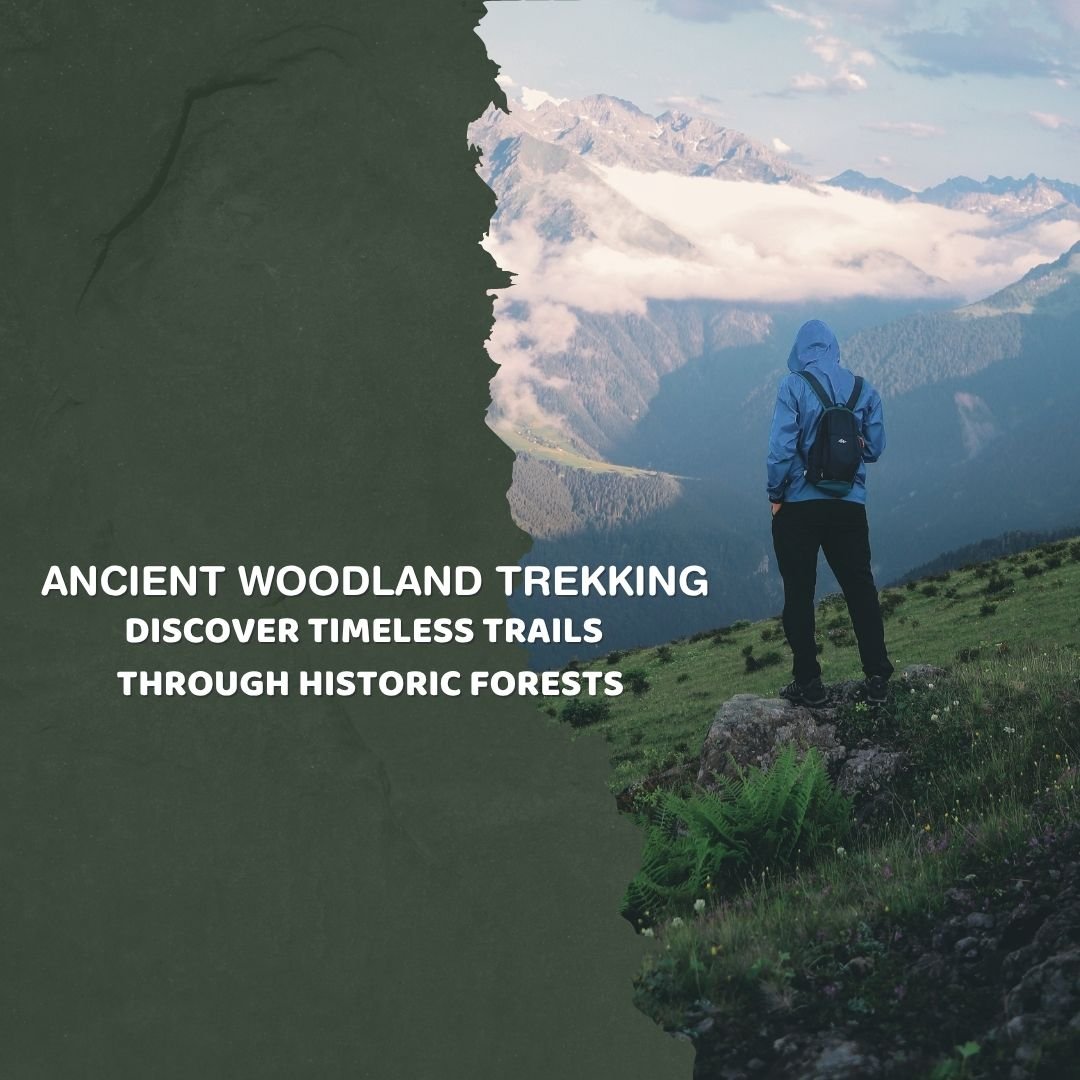
Walking through an ancient woodland can feel like stepping into another period of history. Tall trees, moss-covered paths, quiet streams, old stone walls, and hidden ruins can create an atmosphere that feels completely different from an ordinary hiking trail. Ancient woodland trekking gives travellers the chance to explore these peaceful environments while discovering landscapes shaped by nature and human history over hundreds or even thousands of years.
Historic forests can be found in many parts of the world. Some contain trees that have stood for centuries, while others preserve old pathways, archaeological remains, traditional villages, and historic landmarks. Trekking through these places allows travellers to combine outdoor adventure with cultural discovery.
For people who enjoy peaceful walking, nature, photography, history, and slow travel, ancient woodland trekking can be an unforgettable way to explore the past while enjoying the beauty of the present.
What Is Ancient Woodland Trekking?
Ancient woodland trekking involves exploring forests and wooded landscapes that have a long natural or cultural history. These areas may contain old trees, traditional walking paths, historic buildings, archaeological features, streams, valleys, and wildlife habitats.
The experience is different from hiking through a newly planted forest. Ancient woodlands often have a distinct character created over generations. Fallen trees, twisted branches, thick moss, natural clearings, and changing vegetation can make each section of the trail feel unique.
Some historic forests are also connected to important stories and traditions. Walking through them can therefore become both an outdoor adventure and a journey through history.
Why Explore Historic Forests?
Forests have played an important role in human civilisation for thousands of years. They have provided timber, food, shelter, medicine, and protection while also becoming part of local legends and traditions.
Today, many historic woodland areas provide peaceful spaces for hiking and nature exploration.
Walking through an old forest gives travellers an opportunity to slow down and observe their surroundings. Instead of focusing only on a destination, the trail itself becomes the attraction.
The sound of leaves moving in the wind, birds calling from the trees, and water flowing through a nearby stream can create a calming atmosphere.
For travellers looking for a break from busy cities, historic forests can provide a refreshing escape.
The New Forest, England
The New Forest in southern England is one of the most fascinating historic woodland landscapes in the country.
Despite its name, the New Forest is not actually new. Its history goes back many centuries, and the landscape has been shaped by traditional land management, grazing animals, woodland, heathland, and local communities.
Walking trails across the New Forest allow visitors to explore ancient trees, open heath, streams, and peaceful woodland paths.
The area is also known for its ponies, deer, and other wildlife. Hikers can enjoy a relaxed walking experience while discovering a landscape with a strong connection to English history.
Sherwood Forest, England
Sherwood Forest is famous around the world because of its connection with the legendary Robin Hood.
The forest provides an interesting combination of nature and folklore. Visitors can explore woodland trails while learning about the area’s long history.
One of the best-known natural features is the Major Oak, an ancient tree that has become an important symbol of Sherwood Forest.
Walking through the surrounding woodland offers an opportunity to imagine how forests may have looked in earlier centuries while enjoying modern trails and visitor facilities.
For history lovers, the connection between the landscape and Robin Hood legends adds an extra layer of interest.
Epping Forest, England
Located close to London, Epping Forest provides a remarkable contrast to the surrounding urban environment.
The forest has a long history and contains ancient trees, ponds, open grassland, and woodland trails.
Its location makes it an accessible option for travellers who want to experience historic woodland without travelling far from a major city.
Walking through Epping Forest can feel surprisingly peaceful. Within a short distance, the sounds of roads and buildings can be replaced by birdsong, rustling leaves, and natural surroundings.
The area is especially enjoyable for people who want a shorter woodland escape.
Forest of Dean, England
The Forest of Dean in Gloucestershire is another historic woodland destination with a strong cultural and industrial heritage.
The area has been associated with forestry and mining for centuries. Today, its forests provide numerous opportunities for walking and outdoor exploration.
Trails pass through dense woodland, valleys, streams, and scenic viewpoints. Along the way, travellers can also discover evidence of the area’s industrial past.
The Forest of Dean is a good example of how nature and human history can exist together within the same landscape.
Białowieża Forest, Poland and Belarus
Białowieża Forest is one of Europe’s most remarkable ancient forest landscapes.
Located on the border between Poland and Belarus, the forest is famous for its old-growth woodland and wildlife, particularly the European bison.
The Polish section offers opportunities to explore the forest under controlled and responsible tourism arrangements.
Walking through this ancient environment can provide a strong sense of connection with Europe’s natural past. Large trees, diverse habitats, and a rich range of wildlife make the region particularly important for nature lovers.
Because it is a protected environment, visitors should follow local regulations and stay within permitted areas.
Black Forest, Germany
Germany’s Black Forest is one of Europe’s most recognisable woodland regions.
Although not every section consists of ancient woodland, the region offers an extensive network of forest trails surrounded by hills, valleys, streams, and traditional villages.
Walking through the Black Forest can be combined with cultural experiences. Small towns and villages often feature traditional architecture and regional food.
The changing seasons also create different experiences. Summer brings deep green forests, autumn introduces colourful foliage, and winter can transform the landscape into a peaceful snowy environment.
Forests of Scotland
Scotland is well known for its dramatic mountains and open landscapes, but its historic woodlands are equally interesting.
Areas across the Scottish Highlands and other regions contain ancient native woodland, including remnants of the old Caledonian Forest.
Walking through these forests provides a glimpse into Scotland’s natural past. Pine trees, rugged hills, streams, and wildlife create an atmosphere that feels wild and remote.
The Glen Affric area is particularly well known for its beautiful woodland and mountain scenery.
Combining forest trails with nearby hills and lochs can create a varied hiking adventure.
Explore Forest Trails With Historic Connections
One of the most interesting aspects of ancient woodland trekking is discovering the stories connected to the landscape.
Some trails pass old castles, ruins, churches, bridges, or abandoned settlements. Others follow routes that were historically used by farmers, travellers, or local communities.
Before starting a hike, researching the history of the area can make the journey more engaging.
A simple forest path can become much more interesting when you understand who travelled through it centuries ago and how the surrounding landscape has changed.
Wildlife in Ancient Woodlands
Historic forests are often valuable habitats for wildlife.
Depending on the location, hikers may see deer, foxes, badgers, birds, insects, squirrels, and other woodland species.
Early morning and late afternoon can be good times for wildlife observation, although visitors should always avoid disturbing animals.
Ancient trees also provide habitats for insects, fungi, birds, and small mammals.
For nature photographers, these environments offer plenty of opportunities to capture wildlife and natural details.
Photography Through Historic Forests
Ancient woodlands can be incredibly photogenic.
Large old trees, winding paths, shafts of sunlight, moss-covered rocks, autumn leaves, streams, and mist can create atmospheric images.
Different seasons provide completely different visual experiences.
Spring can bring fresh greenery and flowers. Summer creates dense vegetation and bright woodland colours. Autumn can transform paths with golden and red leaves, while winter exposes the structure of old trees and can create a quiet, mysterious atmosphere.
Photographers should avoid damaging vegetation or disturbing wildlife while looking for the perfect shot.
Planning an Ancient Woodland Trek
A woodland trail may look easy, but proper preparation is still important.
Some historic forests contain uneven paths, muddy sections, steep slopes, or areas where navigation can become difficult.
Before starting your trek, check the route length, weather conditions, terrain, and expected walking time.
It is useful to carry:
- Comfortable walking shoes
- Water
- Snacks
- Weatherproof clothing
- A map or navigation device
- Phone with sufficient battery
- Basic first-aid supplies
- Insect protection when appropriate
- Sun protection
For longer routes, additional equipment may be necessary.
Walk Responsibly Through Historic Forests
Ancient woodlands are fragile environments. Visitors have a responsibility to protect them.
Stay on marked trails whenever possible and avoid climbing on ancient trees or damaging plants. Do not remove branches, flowers, stones, or other natural materials.
Take all rubbish with you and keep noise levels low.
If you encounter wildlife, observe it from a safe distance. Dogs should be controlled according to local regulations, particularly in areas with livestock or sensitive wildlife.
Responsible trekking helps preserve these special places for future generations.
A Slower Way to Experience History
Ancient woodland trekking encourages a slower style of travel.
Instead of rushing between major tourist attractions, travellers can spend hours exploring a landscape at walking speed.
You can stop beside an old tree, investigate a historic ruin, photograph a forest stream, or simply sit quietly beneath the branches.
These moments allow you to experience a destination more deeply.
The forest becomes more than scenery. It becomes part of the story.
Final Thoughts
Ancient woodland trekking offers a unique opportunity to combine outdoor adventure, natural beauty, and history. From the New Forest and Sherwood Forest in England to Białowieża Forest in Poland, the Black Forest in Germany, and the historic woodlands of Scotland, these destinations provide countless opportunities to explore timeless landscapes.
Walking through an ancient forest can create a feeling of connection with the past. Old trees, traditional trails, historic landmarks, wildlife, and local stories all contribute to an experience that feels both peaceful and meaningful.
For travellers who want to escape crowded attractions and discover landscapes with character, ancient woodland trekking is an excellent choice. Sometimes, the quietest trail can tell the oldest story.