

 Adventure Tours
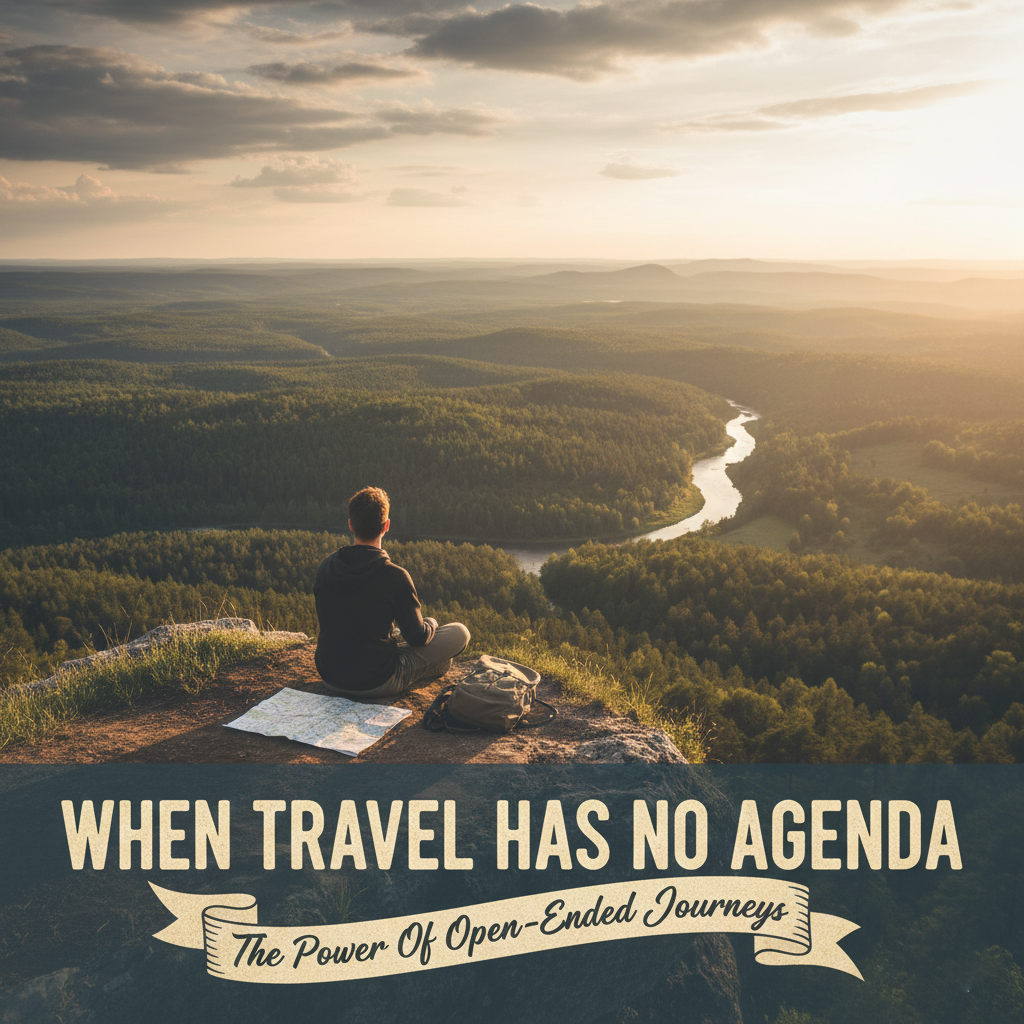
Most journeys begin with a plan. Dates are fixed, routes are drawn, expectations are set long before departure. While structure offers comfort, it also limits discovery. Open-ended travel challenges this model by removing agendas and allowing the journey to unfold naturally.
When travel has no agenda, it becomes an act of trust.
The Freedom Found Beyond Planning
Agendas shape outcomes. They tell travelers what to see, when to move, and how to feel. Open-ended journeys remove these instructions, replacing them with awareness and responsiveness.
Without a fixed agenda:
-
Time expands
-
Curiosity sharpens
-
Movement slows
-
Experience deepens
The traveler is no longer managing a schedule—they are participating in a process.
What Defines an Open-Ended Journey
Open-ended travel is not unstructured chaos. It is intentional openness—leaving space for adaptation, discovery, and pause.
Key characteristics include:
-
Flexible timelines
-
Adaptive routes
-
Minimal expectations
-
Deep attentiveness to environment
Decisions are made in response to the moment, not a checklist.
Letting Place Set the Pace
In agenda-free travel, landscapes determine rhythm. Weather influences rest. Terrain suggests movement. Human interaction reshapes direction.
The journey adjusts to:
-
Light and climate
-
Physical energy
-
Emotional state
-
Environmental cues
Rather than forcing experience, travelers allow it to reveal itself.
The Inner Shift That Happens Without an Agenda
When external structure disappears, internal awareness grows stronger. Travelers begin to notice:
-
Their own reactions
-
Subtle emotional shifts
-
Natural patterns of attention
-
Personal limits and strengths
Open-ended journeys often lead to unexpected clarity because there is no pressure to perform, document, or achieve.
Places That Invite Agenda-Free Travel
Svaneti Region — Georgia
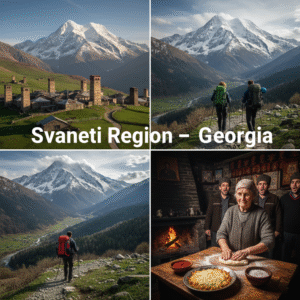
Remote mountain settlements and unhurried daily life invite slow, responsive exploration.
Northern Laos
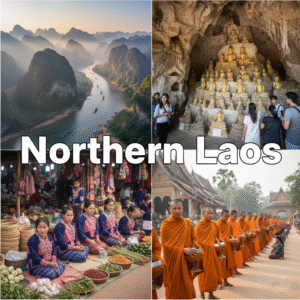
River travel, forest paths, and village rhythms shape journeys guided by presence rather than timetables.
Baja California Sur — Mexico
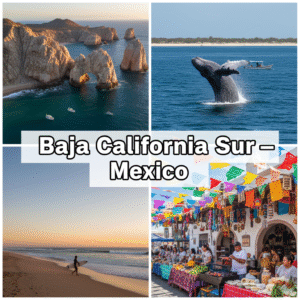
Vast deserts meeting open seas encourage spontaneous movement and reflective solitude.
Tasmanian Wilderness — Australia

Dense forests, wild coastlines, and minimal infrastructure foster deep immersion and adaptability.
Why Uncertainty Becomes a Strength
Without an agenda, uncertainty is unavoidable. Yet this uncertainty becomes one of the journey’s greatest teachers.
It builds:
-
Emotional resilience
-
Trust in intuition
-
Comfort with change
-
Self-reliance
Travelers learn that not knowing what comes next can be liberating rather than stressful.
Human Connection Without Expectation
When schedules disappear, interactions become unhurried and authentic. Conversations last longer. Listening deepens. People are met without roles or urgency.
These connections feel meaningful because they are not instrumental—they exist simply because time allows them to.
Simplicity as a Gateway to Depth
Open-ended journeys often require fewer possessions, fewer decisions, and fewer distractions. This simplicity amplifies awareness.
Small moments gain significance:
-
Shared meals
-
Changing light
-
Quiet walks
-
Unexpected kindness
Meaning arises from presence, not complexity.
Redefining Success in Travel
In agenda-free travel, success is not measured by destinations reached or photos captured. It is measured by:
-
Emotional grounding
-
Mental clarity
-
Sense of flow
-
Depth of engagement
The journey feels complete even without a clear endpoint.
Why This Form of Travel Resonates Today
As daily life becomes increasingly structured and outcome-driven, many travelers seek experiences that restore balance. Open-ended journeys offer relief from constant optimization.
They remind us:
-
Not everything needs a purpose
-
Stillness has value
-
Direction can emerge organically
Travel becomes a space for recalibration rather than escape.
Final Reflection
When travel has no agenda, it stops asking something of you—and starts offering something instead. Open-ended journeys create room for surprise, connection, and internal alignment.
You do not follow the journey.
You walk alongside it.
And in doing so, you discover that the most meaningful experiences are often the ones that were never planned.


