

 Adventure Tours
Most travel today is designed to accelerate time. Tight itineraries, early alarms, back-to-back landmarks — the experience becomes a race against the clock. Days blur together. Photos replace memory. Arrival feels rushed, and departure feels abrupt.
But there is another way to move through the world.
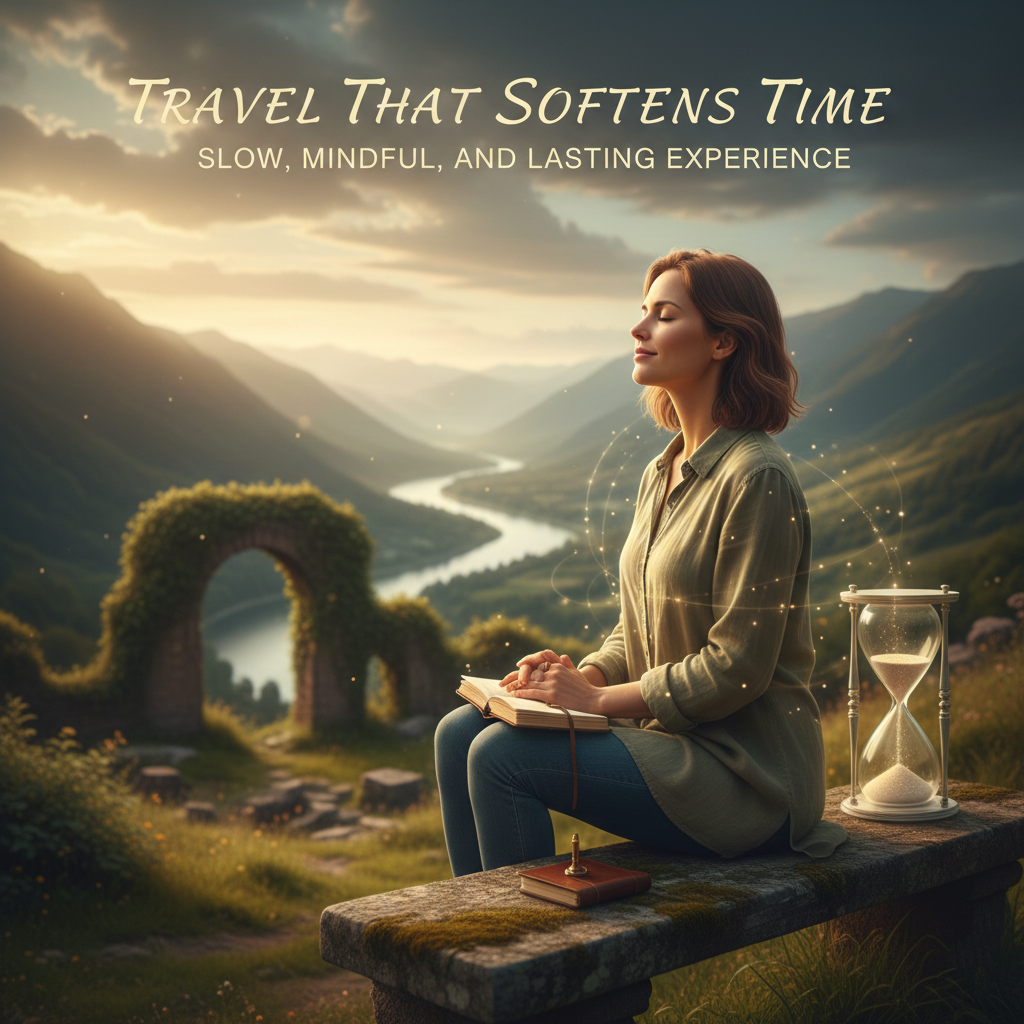
Travel that softens time does not compress experience. It expands it. It stretches moments gently, allowing space between activities and depth within them. It shifts focus from quantity to quality, from urgency to awareness.
Slow, mindful, and lasting experiences reshape how time feels — not by adding more to it, but by easing into it.
What Does It Mean to Soften Time?
To soften time is to reduce friction. It is to allow hours to unfold naturally instead of slicing them into rigid segments. It means choosing fewer destinations, staying longer, and allowing ordinary moments to become meaningful.
Softened time feels like:
-
Lingering over morning coffee
-
Walking without checking the hour
-
Sitting quietly without planning the next move
-
Letting conversation wander
It is not about doing nothing. It is about doing without pressure.
Places That Encourage Slowness
Certain destinations naturally invite softened time.
In Kyoto, Japan, temple gardens and wooden teahouses encourage reflection. Gravel paths slow footsteps. Light shifts gradually across stone and moss. Time feels suspended rather than counted.
In the hill towns of Umbria, Italy, afternoons stretch gently. Church bells echo across valleys while locals gather in small squares. There is no rush to leave because there is nowhere urgent to be.
In Lake Bled, Slovenia, walking the full perimeter of the lake takes time — not because it is long, but because it encourages pauses. The reflection of mountains on water pulls attention into stillness.
These places do not demand speed. They reward presence.
Staying Longer, Seeing Deeper
When we reduce the number of destinations in a trip, something shifts. Familiarity begins to grow. Streets become recognizable. Cafés feel welcoming. The body relaxes.
In Lisbon, Portugal, spending several days in one neighbourhood allows you to notice patterns — when the bakery opens, how light falls on tiled facades, which streets grow quieter at dusk.
In Copenhagen, Denmark, slow cycling through residential areas reveals rhythms beyond tourist centres. Everyday life becomes visible.
Time softens when repetition replaces novelty.
Morning Without Urgency
The tone of a day often shapes the entire journey. Early alarms and strict schedules create tension. Slow mornings create ease.
In Vancouver Island, Canada, waking to coastal mist and unhurried breakfasts sets a steady rhythm. The day begins gently.
In Granada, Spain, quiet mornings before the streets fill offer spaciousness. Sitting with coffee in a small plaza allows the city to reveal itself slowly.
When mornings are unforced, the rest of the day follows.
Mindful Movement Through Landscape
Slow travel is not static. It moves — but deliberately.
Walking along the cliffs near Fife, Scotland, the pace naturally adjusts to wind and terrain. Steps become steady. Breath synchronizes with the sea.
In the rice terraces of Ubud, Bali, narrow pathways demand attentiveness. Movement slows, not by obligation, but by design.
Mindful movement anchors attention in the present moment. Time stretches because awareness deepens.
Conversations That Unfold Naturally
Softened time changes conversation. Without rushing toward the next activity, dialogue becomes layered and reflective.
Sitting by the canals of Amsterdam, Netherlands, shared silence often turns into thoughtful exchange. Ideas surface gradually.
In small cafés in Ljubljana, Slovenia, long conversations replace rapid sightseeing. The city’s compactness reduces the need to hurry elsewhere.
When time expands, relationships deepen.
Reducing Digital Interruption
Constant documentation fragments time. Photographing, posting, and navigating on devices interrupts immersion.
Travel that softens time encourages intentional disconnection. Fewer photos. Fewer notifications. More observation.
In the remote stillness of Iceland’s Westfjords, limited connectivity becomes a gift. The landscape fills awareness without competition.
Attention becomes singular rather than scattered.
Letting the Body Adjust
Fast travel often leaves the body overstimulated. Late nights, early mornings, and constant movement create fatigue.
Slow travel respects physical rhythm:
-
Walking instead of rushing
-
Eating at regular intervals
-
Resting without guilt
-
Ending days early when needed
In the gentle countryside of The Cotswolds, England, short walks between villages allow for steady pacing. Rest becomes part of exploration rather than interruption.
When the body feels balanced, time feels abundant.
Moments That Endure
Paradoxically, slowing down often creates more vivid memories.
Watching snowfall accumulate in Quebec City, Canada. Listening to distant church bells in Florence, Italy. Sitting by water as evening settles in Sydney, Australia.
These experiences endure because they were not rushed. They were inhabited fully.
Time softens not only during the journey, but in memory afterward.
Returning Without Exhaustion
One of the clearest signs of softened time is how you feel upon returning home. Instead of needing recovery from your vacation, you carry steadiness with you.
There is no abrupt shift from intensity to routine. Instead, there is continuity. The calm cultivated during travel integrates into daily life.
Softened time lingers.
A Different Measure of Travel
Travel that softens time measures success differently. It is not about how many landmarks were visited, but how deeply each place was felt.
It asks:
-
Did you breathe easily?
-
Did you move steadily?
-
Did you notice small details?
-
Did time feel generous rather than scarce?
If the answer is yes, the journey succeeded.
Final Reflection
Slow, mindful, and lasting experiences reshape our relationship with travel. They replace acceleration with awareness and replace urgency with intention.
When time softens, space opens. Conversations deepen. Landscapes resonate longer. The journey becomes less about arrival and more about inhabiting the path itself.
Travel does not need to race forward.
Sometimes, the most powerful journeys are the ones that slow enough to let time expand — gently, quietly, and fully. 🌿

