

 Adventure Tours
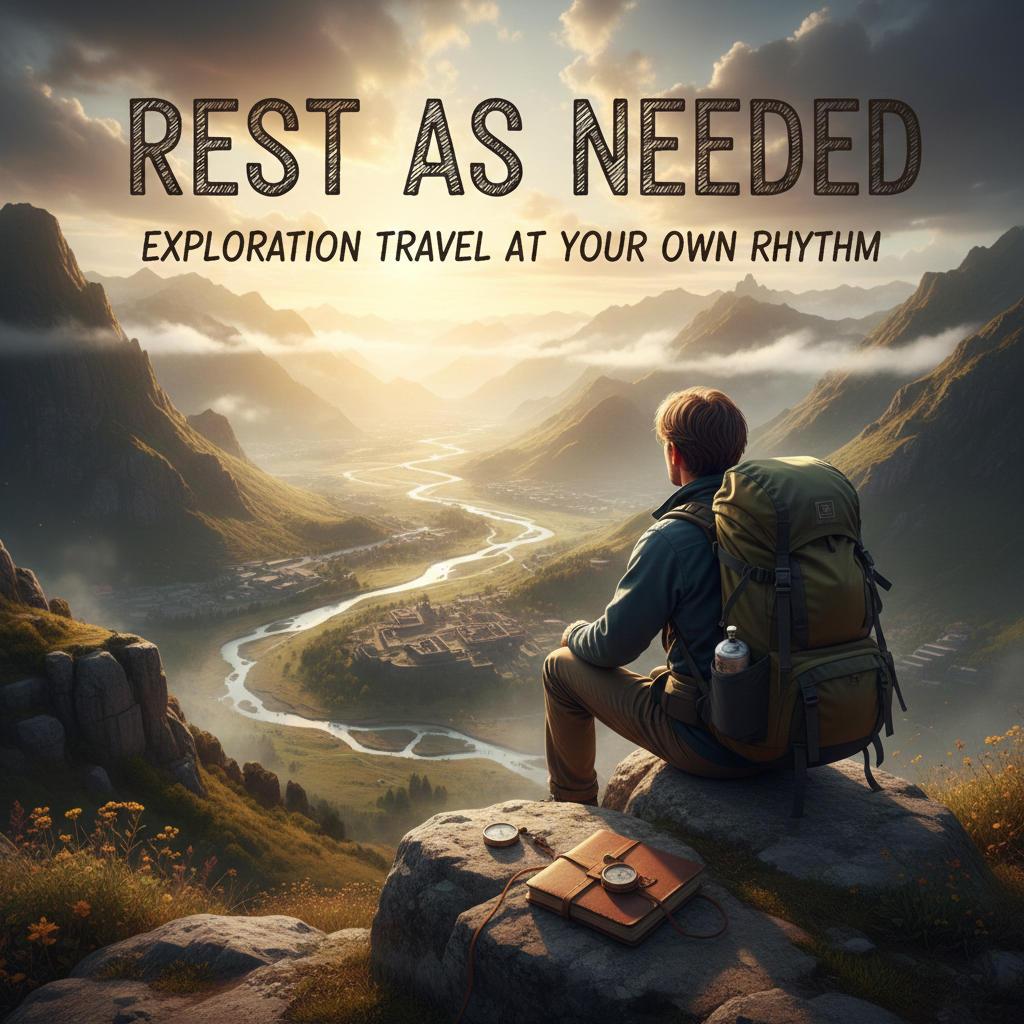
Modern travel often arrives with an invisible pressure. Schedules are tight, itineraries are dense, and experiences are measured by how much can be seen, captured, and completed in a limited amount of time. Somewhere along the way, movement replaced meaning, and speed became the default currency of exploration. Rest As Needed Exploration offers a different path—one that allows travel to unfold at the pace of the human body, not the clock.
This approach to travel is not about doing less for the sake of simplicity. It is about doing what feels right, when it feels right. It is about allowing rest to be part of the journey rather than something postponed until the journey ends.
The Cost of Rushed Travel
Fast travel creates a subtle exhaustion that often goes unnoticed until the journey is over. Constant transitions, early departures, packed days, and overstimulation can leave travelers more depleted than restored. Even beautiful places lose their depth when experienced in fragments.
Rushed travel asks the body to keep up with plans that were never designed around human rhythms. Sleep becomes compromised. Meals are hurried. Stillness disappears. Over time, this creates a disconnect between where a traveler is physically and how present they feel emotionally.
Rest As Needed Exploration responds to this imbalance by re-centering the traveler’s internal state as the primary guide.
What Rest As Needed Exploration Means
At its core, Rest As Needed Exploration is a permission-based style of travel. Permission to pause. Permission to stay longer. Permission to skip what does not resonate. It removes the idea that rest is wasted time and replaces it with the understanding that rest deepens experience.
In this model, walking replaces rushing. Sitting becomes meaningful. Silence becomes a companion rather than a gap to be filled. Travelers are encouraged to listen to their energy levels and respond accordingly.
This does not mean abandoning curiosity or adventure. It means approaching them with respect for personal limits and natural cycles.
Travel Designed Around the Human Nervous System
Human beings are not built for constant stimulation. The nervous system needs intervals of calm to process new environments, sounds, languages, and cultural cues. Rest As Needed Exploration allows the nervous system to settle, making space for genuine connection.
When the body feels safe and unpressured, perception sharpens. Details become noticeable—the rhythm of local life, subtle shifts in landscape, the emotional tone of a place. Travelers often find that fewer activities lead to richer memories.
This approach transforms travel from consumption into relationship.
Moving Without Timelines
One of the defining elements of Rest As Needed Exploration is the absence of rigid timelines. Days are shaped by how the traveler feels upon waking rather than what has been pre-booked.
A morning walk might extend into an afternoon pause. A planned excursion may give way to staying still. The value lies not in completion but in alignment.
Without constant time pressure, travelers often rediscover their own internal pacing—something many have lost in daily life. This rhythm becomes a quiet guide, making decisions simpler and more intuitive.
Rest as an Active Part of the Journey
In conventional travel, rest is something that happens between experiences. In Rest As Needed Exploration, rest is the experience. Sitting in a quiet café, watching light change over water, or lying still in a natural setting becomes just as meaningful as movement.
These moments are not empty. They allow reflection, emotional integration, and a sense of arrival that rushing never provides. Rest creates space for insights that cannot emerge while constantly moving.
Travel becomes less about external stimulation and more about internal clarity.
Choosing Fewer Places, Experiencing Them Fully
This style of travel often involves choosing fewer destinations and staying longer in each. Instead of hopping between locations, travelers allow one place to reveal itself gradually.
Extended stays reduce transition fatigue and allow for a more grounded experience. Familiarity grows. Navigation becomes intuitive. The environment begins to feel less foreign and more relational.
This depth of engagement often leads to a stronger emotional connection with place—one that lingers long after the journey ends.
Listening to the Body While Traveling
Rest As Needed Exploration encourages travelers to treat the body as a source of information rather than an obstacle. Fatigue, restlessness, or overstimulation are signals to adjust the pace, not push harder.
This attentiveness prevents burnout and supports sustained enjoyment. It also reduces the stress that often accompanies traditional travel, making the journey more restorative rather than draining.
When travelers honor physical and emotional needs, travel becomes an act of care rather than endurance.
Redefining Productivity in Travel
Many travelers unconsciously carry productivity expectations into their journeys. There is pressure to maximize value, see everything, and return with proof of experience. Rest As Needed Exploration dismantles this mindset.
Here, value is measured by presence, not output. A single meaningful interaction can outweigh a list of completed activities. A calm day can feel more fulfilling than a crowded itinerary.
This reframing allows travelers to return home feeling nourished rather than needing a recovery period.
A Natural Fit for Slow and Sustainable Travel
This approach aligns naturally with sustainable and responsible travel practices. Fewer movements mean reduced environmental impact. Longer stays support local economies more meaningfully. Slower engagement encourages respect for cultural rhythms rather than imposing external expectations.
Rest As Needed Exploration is not just beneficial for the traveler—it is gentler on the places being visited. It supports a form of tourism that values balance, continuity, and mutual respect.
Emotional Integration and Memory Formation
Experiences need time to settle in order to become meaningful memories. When travel is rushed, moments blur together. Rest allows experiences to be emotionally integrated.
Quiet evenings, unstructured days, and moments of stillness give the mind space to reflect. These pauses often become the most vividly remembered parts of a journey.
Travel shifts from a highlight reel to a lived narrative.
Returning Home Changed, Not Tired
One of the most telling outcomes of Rest As Needed Exploration is how travelers feel when they return home. Instead of exhaustion, there is clarity. Instead of overwhelm, there is steadiness.
The journey does not feel like something that happened outside of life—it feels like something that gently reshaped it. Travelers often bring back new habits of pacing, rest, and presence into their daily routines.
The journey continues long after arrival.
Travel That Respects You
Rest As Needed Exploration is ultimately about respect—respect for the body, the mind, and the places encountered. It rejects the idea that travel must be intense to be meaningful.
By traveling at your own rhythm, exploration becomes sustainable, personal, and deeply restorative. Movement and stillness find balance. Curiosity coexists with care.
In a world that constantly demands speed, choosing rest becomes a powerful act. And in travel, it opens the door to experiences that are not only seen—but truly felt.

