

 Adventure Tours
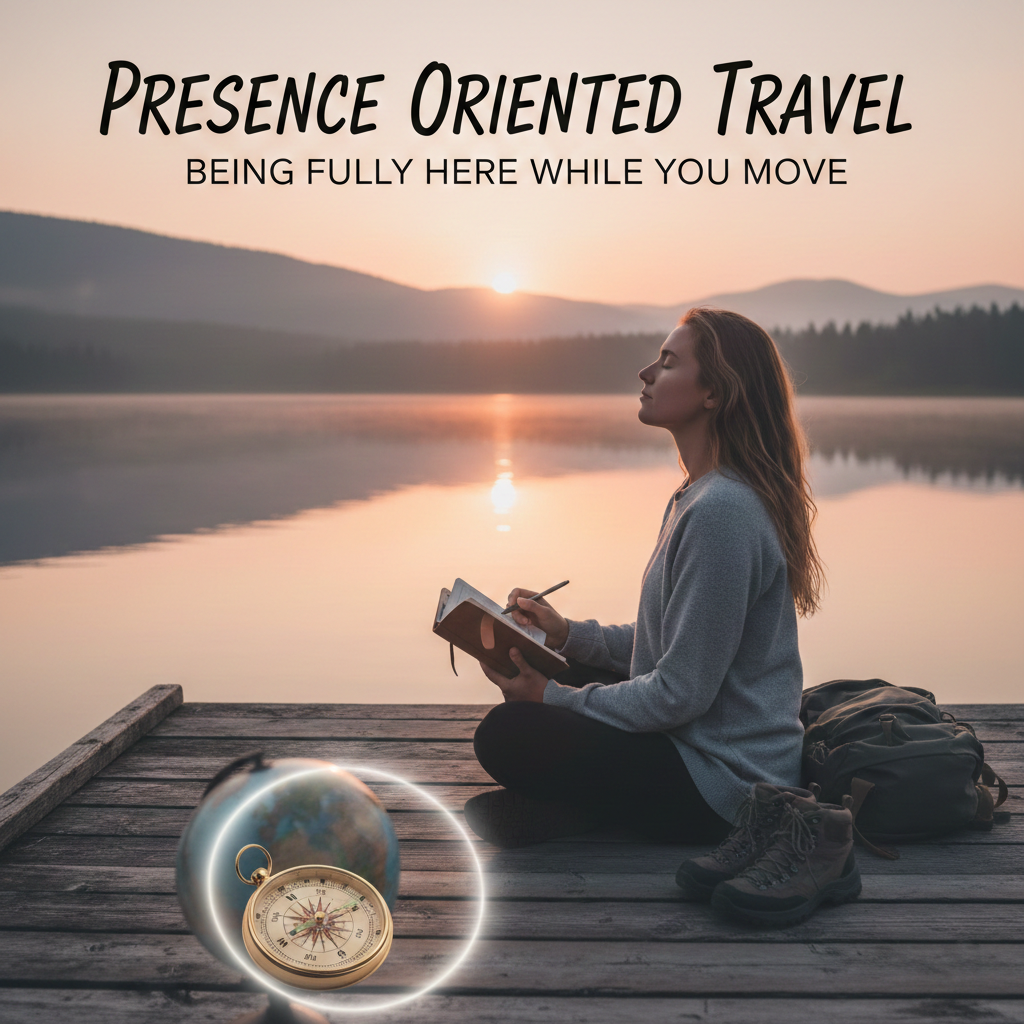
Travel is movement — across landscapes, across cultures, across distances. But too often, while the body moves, the mind races ahead. Planning the next stop. Checking directions. Capturing proof. Comparing experiences.
Presence Oriented Travel offers another way.
It asks a simple question:
What if you were fully here while you move?
Not halfway in tomorrow. Not partially in yesterday. Not split between the physical world and a digital one. Just here — attentive, grounded, aware.
When presence becomes the focus, travel transforms from consumption into connection.
What Does It Mean to Be Fully Here?
To be fully present while traveling is not to move slowly all the time. It is to move consciously.
It looks like:
-
Noticing the texture of cobblestones beneath your feet
-
Listening to unfamiliar languages without translating immediately
-
Observing light change across buildings
-
Breathing steadily instead of rushing
In Kyoto, Japan, temple gardens invite this kind of awareness. The crunch of gravel, the alignment of stones, the filtered sunlight through bamboo — none demand speed. They ask for attention.
Presence begins when attention settles.
The Difference Between Seeing and Noticing
Many travelers see remarkable places. Fewer truly notice them.
In Florence, Italy, it is possible to walk past Renaissance architecture while focused entirely on the next attraction. Yet sitting quietly in a small piazza, observing how locals move through their daily routines, reveals subtler layers of the city.
In Ljubljana, Slovenia, the gentle curve of the river and the rhythm of foot traffic across bridges become more meaningful when observed without agenda.
Seeing collects images.
Noticing gathers experience.
Walking as a Practice of Awareness
Walking is one of the simplest forms of presence-oriented movement.
Along the canals of Amsterdam, Netherlands, slow walking invites awareness of reflections on water, bicycles gliding past, conversations drifting from open windows.
In the countryside of The Cotswolds, England, quiet footpaths between villages allow footsteps to synchronize with breath. Fields stretch outward without urgency.
When walking becomes attentive rather than goal-driven, the journey itself becomes the destination.
Letting Go of Constant Documentation
The desire to document can fracture presence. Pausing to frame, edit, and post shifts focus outward.
Presence-oriented travel does not forbid photography. It simply encourages intention.
In the cliffs of Fife, Scotland, standing still as wind moves across the sea may offer more depth than capturing multiple angles. In remote areas like Iceland’s Westfjords, vast landscapes feel fuller when observed directly rather than through screens.
Memory strengthens when it is lived before it is recorded.
Breath as Anchor
Movement and presence are connected through breath.
In steep neighbourhoods of Lisbon, Portugal, climbing slowly with steady breathing grounds the body. Instead of rushing to viewpoints, each step becomes deliberate.
In the rice terraces of Ubud, Bali, humidity and narrow pathways encourage measured inhalations and exhalations. Breath sets the pace.
When breath leads, the mind follows.
Staying With a Moment Longer
Modern travel culture often encourages quick transitions. Arrive, observe, leave. Repeat.
Presence-oriented travel lingers.
In Lake Bled, Slovenia, watching clouds shift across the water for an extended time reveals subtle changes in colour and light. In Granada, Spain, sitting in a shaded courtyard listening to distant guitar music deepens sensory experience.
Remaining in a single place longer than necessary often unlocks unexpected insight.
Time expands when we stop chasing it.
Engaging the Senses Fully
Presence is sensory.
What does the air feel like?
What sounds layer together?
What scents define a street?
How does light shift across surfaces?
In coastal regions of Vancouver Island, Canada, salt air and forest scent merge in subtle ways. In small cafés in Quebec City, Canada, warmth, aroma, and quiet conversation create atmosphere beyond visuals.
Presence engages more than sight.
Traveling Without Anticipation Overload
Anticipation can quietly remove us from the present. Thinking about the next destination while still in the current one fragments experience.
Presence-oriented travel gently redirects attention.
In Copenhagen, Denmark, cycling slowly along waterfront paths encourages focus on immediate surroundings rather than the next stop. In Ljubljana, compact streets reduce the mental pressure of long distances.
Being fully here reduces internal noise.
Shared Presence in Fellowship
Traveling with others can either distract from or deepen presence.
Walking side by side in The Cotswolds, without constant conversation, allows shared awareness. Sitting quietly together beside canals in Amsterdam creates connection without performance.
Presence multiplies when it is shared calmly.
Returning Home With Greater Awareness
One of the lasting effects of presence-oriented travel is that awareness continues after the journey ends.
You may notice:
-
Light in your own city more clearly
-
The rhythm of daily routines
-
The texture of familiar streets
-
The tone of conversations
Presence practiced abroad integrates into everyday life.
Travel becomes training for attention.
Redefining Movement
Presence-oriented travel reframes the idea that movement must be productive.
Movement can simply be:
-
A slow walk without destination
-
A pause at a window
-
A seat on a bench
-
A moment of stillness within motion
You can be fully here even while moving forward.
A Different Kind of Fulfillment
When presence guides travel, fulfillment feels different. It is not measured by the number of sites visited but by the depth of engagement.
Did you notice details?
Did you breathe steadily?
Did time feel expansive?
Did you feel grounded in your body?
If so, the journey succeeded.
Final Reflection
Presence Oriented Travel is not about abandoning exploration. It is about inhabiting it fully.
To be here while you move is to let attention anchor you. To let breath regulate you. To let places reveal themselves gradually rather than rapidly.
You do not need to rush toward the next experience.
You do not need to divide yourself between moments.
You can walk through Kyoto, sit beside water in Ljubljana, climb hills in Lisbon, or wander fields in The Cotswolds — fully here.
And when you are fully here, travel becomes less about distance covered and more about awareness expanded.
The world does not require you to hurry.
It simply invites you to arrive.

