

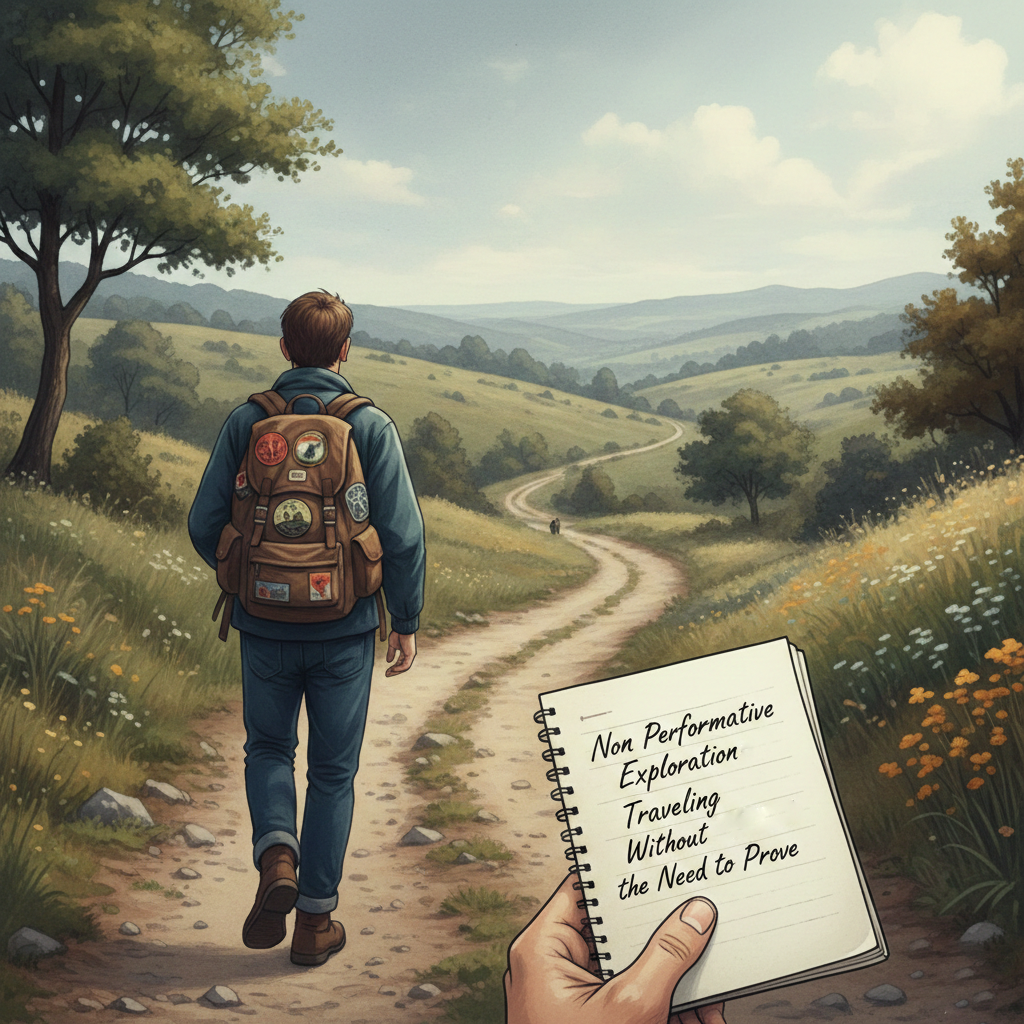
 Adventure Tours
Travel today often feels like a stage.
There are checklists to complete, landmarks to document, angles to capture, stories to package. Experiences can quietly become performances — curated for approval, comparison, or validation. The pressure to maximize, to impress, to demonstrate how much has been seen or achieved can overshadow the experience itself.
Non-performative exploration offers an alternative.
It is travel without the need to prove.
Without the silent competition.
Without the urgency to turn every moment into evidence.
It is movement rooted in sincerity rather than spectacle.
What Is Performance in Travel?
Performance in travel is subtle. It may look like:
-
Racing to photograph iconic views before crowds gather
-
Feeling anxious if a “must-see” is missed
-
Posting in real time to confirm experience
-
Comparing itineraries with others
-
Measuring a trip by productivity rather than presence
These behaviors are not inherently wrong. But when they dominate the journey, travel shifts from exploration to exhibition.
Non-performative travel removes the invisible audience.
Letting Go of the Checklist
In cities like Florence, Italy, it is easy to feel the weight of expectation. Renaissance landmarks, galleries, domes — the list feels endless. But sitting quietly along the Arno River at dusk can offer more depth than rushing through multiple museums in one afternoon.
In Kyoto, Japan, instead of temple-hopping to capture the “perfect” image, choosing one garden and remaining there — noticing wind through bamboo or the sound of gravel underfoot — transforms observation into immersion.
When the checklist loosens, awareness sharpens.
Moving Without Comparison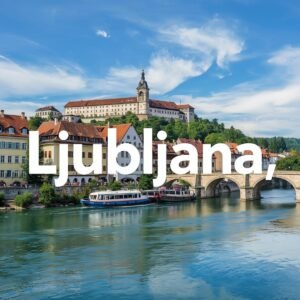
Comparison can quietly erode experience. Hearing others recount ambitious itineraries or exotic detours may create doubt about your own pace.
In Ljubljana, Slovenia, a slow morning beside the river may appear modest compared to busier European capitals. Yet its gentleness is precisely its richness.
In The Cotswolds, England, wandering between small villages without agenda may not seem dramatic. But the quiet lanes, stone cottages, and open countryside create a rhythm that does not require amplification.
Non-performative exploration trusts that depth matters more than scale.
The Freedom of Being Unimpressive
There is liberation in allowing a journey to be ordinary.
Eating simple bread and olives in a side street in Granada, Spain. Watching cyclists pass by in Copenhagen, Denmark without documenting the moment. Walking canals in Amsterdam, Netherlands without narrating the experience.
These acts may not translate into dramatic stories. Yet they remain deeply personal.
Travel does not need to astonish others to be meaningful.
Digital Distance and Inner Clarity
Much of modern travel performance is amplified by digital immediacy. Posting, sharing, and curating fragments attention.
In remote landscapes like Iceland’s Westfjords, limited connectivity naturally reduces this impulse. The cliffs, wind, and open sea hold attention fully. There is no urgency to broadcast.
On forested trails in Vancouver Island, Canada, silence feels complete without commentary. The absence of digital interruption softens internal pressure.
When we remove the audience, experience becomes more intimate.
Slowing the Pace of Achievement
Many travelers approach destinations with the mindset of achievement — how much can be completed in a limited time?
Non-performative travel shifts from achievement to alignment.
In Lake Bled, Slovenia, walking the perimeter slowly, stopping frequently, may mean fewer activities accomplished — but more awareness absorbed.
In Lisbon, Portugal, instead of climbing every viewpoint, selecting one and sitting there as light changes creates layered memory rather than fragmented snapshots.
The goal shifts from accumulation to resonance.
Emotional Honesty on the Road
Not every travel moment is extraordinary. Fatigue, confusion, and even disappointment are natural parts of movement.
Non-performative exploration allows honesty.
You can admit that you are tired in Umbria, Italy, and skip a hilltop town. You can choose a quiet afternoon indoors in Quebec City, Canada when snowfall invites rest rather than activity.
When travel is not a performance, emotions do not need editing.
Authenticity strengthens connection — both to place and to self.
Letting Places Remain Themselves
Performance often imposes narrative onto destinations. We seek dramatic angles, unusual perspectives, or curated experiences.
Non-performative travel allows places to exist without reinterpretation.
In Fife, Scotland, coastal winds and open skies do not require embellishment. Walking quietly along cliffs is sufficient.
In Kyoto, a single temple courtyard observed without agenda reveals more than a rushed sequence of attractions.
Respect replaces consumption.
Traveling With Others Without Competing
Shared journeys can also become performative — subtle competition over who suggests the most impressive activity or discovers the hidden gem.
Gentle exploration avoids this.
In Amsterdam, companions can drift separately for hours and reconnect without comparison. In The Cotswolds, shared quiet walks replace constant commentary.
Connection strengthens when there is no need to outshine.
Returning Without Exhaustion
One of the clearest signs of non-performative travel is how you feel upon returning home.
If a journey required constant proving — to yourself or others — it often leaves fatigue behind.
If it unfolded naturally, without pressure, the memory feels steady rather than fragmented.
You return grounded rather than depleted.
Redefining Success in Travel
Non-performative exploration redefines what makes a trip meaningful.
Success is not:
-
Number of landmarks visited
-
Quantity of photos taken
-
Social media engagement
-
Comparison to others’ adventures
Success becomes:
-
Depth of attention
-
Emotional steadiness
-
Genuine connection
-
Personal clarity
It is measured internally rather than externally.
A Quieter Way to Move
Traveling without the need to prove invites humility. It removes ego from movement. It replaces spectacle with sincerity.
You can sit in a small café in Ljubljana for hours without justification.
You can walk the hills of Lisbon slowly without chasing views.
You can watch evening light settle in Granada without capturing it.
And it is enough.
Final Reflection
Non-performative exploration is not anti-ambition. It is pro-presence. It asks you to travel as a participant rather than a performer.
Without the pressure to demonstrate, you notice more.
Without the need to impress, you relax more deeply.
Without the invisible audience, you become more honest.
The world does not require proof that you were there.

