

 Adventure Tours
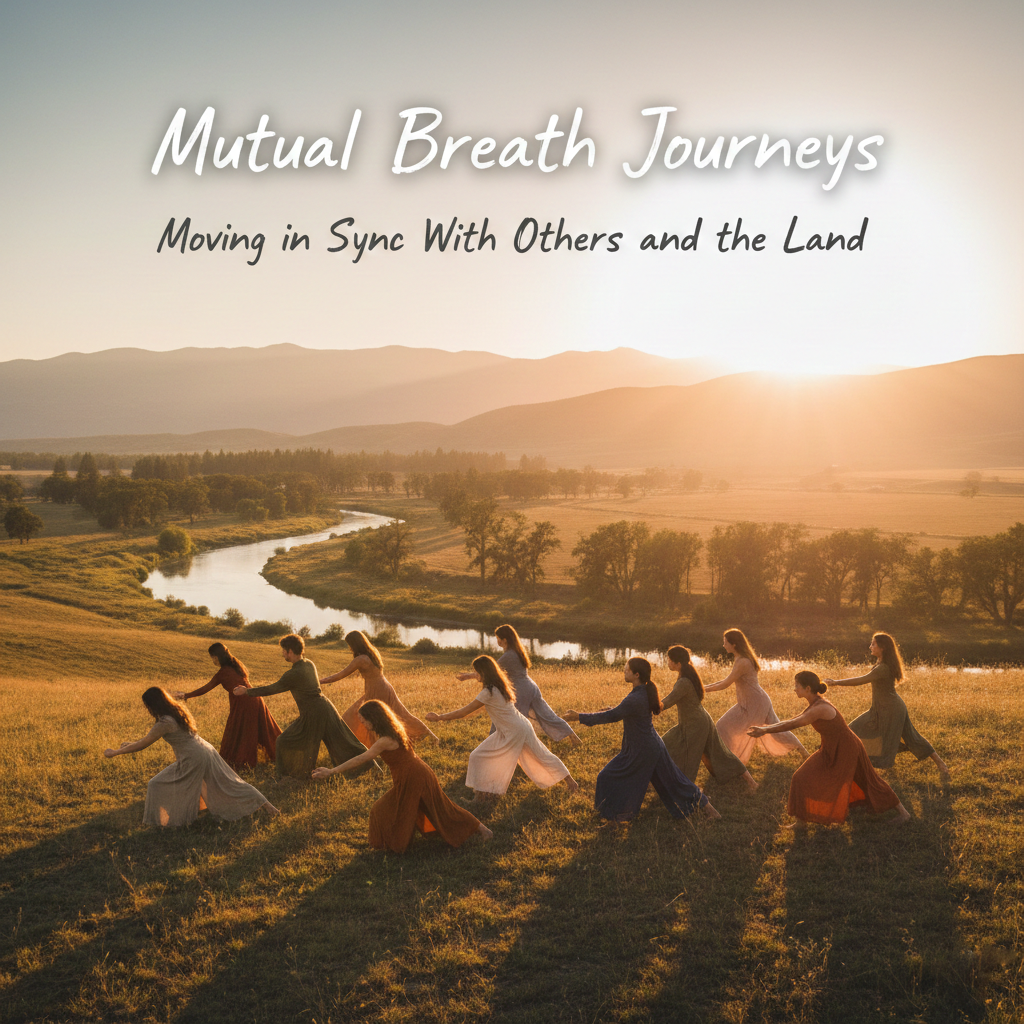
Most travel is built around individual desire—personal itineraries, private goals, curated highlights. Even group travel often remains fragmented, with people moving alongside one another rather than with one another. Mutual Breath Journeys propose a different way of moving through the world: travel shaped by shared rhythm, collective presence, and alignment with the land itself.
These journeys are not about efficiency or spectacle. They are about attunement—learning to notice not just where you are, but how you are breathing, how others are breathing, and how the landscape holds and guides that rhythm. When movement becomes synchronized, travel shifts from consumption to participation.
What Is a Mutual Breath Journey?
A Mutual Breath Journey is travel guided by collective pace and environmental awareness. Instead of imposing speed, schedules, or personal ambition, travelers move at a tempo that naturally emerges between people and place.
This means:
-
Walking together rather than ahead or behind
-
Pausing when the group pauses
-
Letting terrain determine rhythm
-
Allowing silence to be shared rather than filled
Breath becomes the unspoken coordinator. When breathing slows, movement slows. When breath deepens, attention expands.
Why Breath Matters in Travel
Breath is the most basic form of regulation. It reflects stress, calm, curiosity, and fatigue instantly. Traditional travel often disrupts breathing through rushing, overstimulation, and constant decision-making.
Mutual Breath Journeys restore balance by:
-
Reducing urgency
-
Supporting nervous system regulation
-
Encouraging present-moment awareness
-
Creating emotional safety within groups
When people breathe together—literally or metaphorically—trust forms without effort.
Moving With Others Without Losing Yourself
One of the quiet fears of shared travel is loss of autonomy. Mutual Breath Journeys resolve this by removing competition and performance.
There is no:
-
Pressure to lead
-
Expectation to entertain
-
Need to optimize time
Instead, presence becomes the contribution. You don’t need to assert yourself to belong. Your participation is felt simply by staying aware and responsive.
Paradoxically, this creates more personal space, not less.
The Land as a Co-Participant
In these journeys, the landscape is not a backdrop. It actively shapes movement.
-
Narrow paths slow conversation
-
Wind invites quiet
-
Steep ground shortens steps
-
Open plains encourage longer strides
Rather than resisting these cues, travelers accept them. The land sets the tone, and the group responds together.
This responsiveness builds respect—not as an idea, but as a physical experience.
Silence as Shared Language
Mutual Breath Journeys often include long stretches without conversation. This silence is not awkward—it is connective.
Shared silence allows:
-
Observation without commentary
-
Emotional processing without interruption
-
A sense of togetherness without demand
In these moments, people stop performing their travel experience and start inhabiting it.
Why These Journeys Feel Safer and Deeper
When movement is synchronized, anxiety drops. No one is left behind. No one is pushed forward. Decisions become communal without debate.
This creates:
-
Reduced social tension
-
Increased empathy
-
Natural leadership that shifts fluidly
-
A sense of collective care
The journey feels held, not managed.
Places That Naturally Support Mutual Breath Travel
Certain environments encourage this style of movement by design or temperament.
The Atlas Mountains, Morocco

Village paths, gradual ascents, and shared tea breaks create organic group rhythms shaped by hospitality and terrain.
Tasmania’s Tarkine Region

Dense forest and soft ground quiet conversation and heighten collective attention.
Letting Go of Personal Tempo
In everyday life, personal pace is often defended. Mutual Breath Journeys invite temporary surrender of that control—not as loss, but as relief.
You no longer need to decide:
-
When to stop
-
When to push
-
When to move on
The group and the land make those decisions together.
This shared responsibility lightens mental load.
How Mutual Breath Changes Group Dynamics
Without fixed roles, groups become fluid systems. Leadership shifts naturally. Care becomes instinctive.
You notice:
-
Someone slowing and match them
-
Someone resting and pause nearby
-
Someone curious and allow space
These micro-adjustments create trust without discussion.
Returning Home With a Different Sense of Togetherness
The effect of Mutual Breath Journeys often lasts beyond the trip. Travelers report:
-
Greater patience in daily interactions
-
Increased sensitivity to others’ pace
-
More comfort with silence
-
Deeper respect for environmental limits
The journey recalibrates how you move through shared space.
A Quiet Alternative to Individualism
Mutual Breath Journeys are not anti-individual. They are post-individual—acknowledging that human experience is relational by nature.
Moving together does not erase identity. It contextualizes it.
Final Reflection
Mutual Breath Journeys remind us that travel does not have to separate us—from each other or from the land. When movement slows, when breath aligns, and when attention widens, travel becomes something shared rather than claimed.
You don’t just arrive somewhere together.
You become present together.
And in that shared presence, the journey finds its true depth.

