

 Adventure Tours
Modern travel is often obsessed with arrival. Destinations dominate narratives, itineraries compress time, and the moment of “getting there” is treated as the true beginning. Yet some of the most transformative travel experiences occur before arrival—in the spaces between movement and destination, where anticipation softens and awareness deepens.
Calm-before-arrival journeys honor these moments of stillness. They recognize that travel does not begin when you reach a place, but when your internal pace begins to slow.
Why the Space Before Arrival Matters
The moments leading up to arrival—approaching a coastline, descending into a valley, crossing a quiet border—carry a unique psychological quality. The mind releases expectation, and the body begins to settle.
These moments are powerful because:
-
They interrupt habitual urgency
-
They reduce performance pressure
-
They allow presence to emerge naturally
-
They create emotional readiness for place
Stillness here is not inactivity. It is transition.
The Forgotten Art of Anticipatory Calm
Historically, journeys unfolded slowly. Long approaches by foot, river, or road created natural pauses that allowed travelers to acclimate mentally and emotionally. Modern transport has compressed these transitions.
Calm-before-arrival journeys restore:
-
Gradual sensory adjustment
-
Emotional decompression
-
Curiosity without demand
Instead of rushing toward experience, the traveler meets it halfway.
Stillness as a State, Not a Stop
Stillness does not require stopping completely. It is a quality of movement—unforced, attentive, unhurried.
In calm-before-arrival travel, stillness appears as:
-
Quiet observation during approach
-
Reduced conversation and digital input
-
Awareness of breath and posture
-
Letting landscapes reveal themselves slowly
The body arrives before the mind—and that is intentional.
The Nervous System and Gentle Transitions
Arrival shock is real. Rapid transitions—from airport to city, from motion to stimulation—can overwhelm the nervous system. Calm-before-arrival journeys soften this impact.
They support regulation by:
-
Slowing external input
-
Allowing sensory integration
-
Reducing decision-making pressure
When the nervous system feels safe, presence becomes effortless.
Approach Shapes Experience
How you arrive determines how you perceive. A rushed arrival sharpens defensiveness. A calm arrival opens receptivity.
Travelers who honor stillness before arrival often notice:
-
Greater sensitivity to atmosphere
-
Deeper emotional connection to place
-
Reduced urge to immediately “do”
-
Increased capacity for quiet appreciation
The place feels met, not consumed.
Landscapes That Invite Calm-Before-Arrival
Certain geographies naturally support gentle approaches due to their scale, silence, or rhythm.
1. Scottish Isle Routes

Ferries crossing quiet waters provide reflective transition into island life.
2. Lake Titicaca, Bolivia–Peru

Slow elevation gain and expansive horizons encourage physiological and emotional adjustment.
Travel Without Immediate Engagement
Calm-before-arrival journeys resist immediate immersion. There is no rush to unpack, explore, or document.
Instead, travelers allow:
-
Sitting quietly upon arrival
-
Walking without direction
-
Observing light, sound, and temperature
-
Letting the body register place first
Experience deepens through patience.
Stillness as Respect for Place
Arriving calmly is also a form of respect. It acknowledges that places have rhythms that should not be interrupted by haste.
This mindset:
-
Honors local pace and culture
-
Reduces extractive tourism behavior
-
Encourages humility over entitlement
The traveler adapts to place—not the other way around.
The Psychological Gift of In-Between Time
The in-between is where identity softens. You are no longer fully who you were, and not yet who you will be there.
This liminal state offers:
-
Emotional openness
-
Reduced self-definition
-
Increased curiosity
-
Temporary release from roles
Calm-before-arrival journeys protect this fragile, fertile space.
Designing a Calm-Before-Arrival Journey
This approach does not require remote destinations. It requires intention.
Practical ways to design calm include:
-
Choosing slower modes of transport when possible
-
Avoiding tightly scheduled arrival days
-
Limiting phone use during approach
-
Leaving the first hours intentionally unplanned
-
Sitting with the environment before engaging
Stillness must be allowed, not scheduled.
Returning the Practice Home
The value of calm-before-arrival does not end with travel. It teaches how to approach transitions in everyday life—meetings, changes, decisions—with more softness.
Travelers often return with:
-
Greater tolerance for pauses
-
Reduced urgency
-
Improved emotional regulation
-
Appreciation for transitional moments
The practice becomes internal.
Arrival as a Gentle Landing
When arrival is calm, the journey does not spike—it settles. There is no emotional whiplash, no urgency to validate the trip.
Instead:
-
Presence replaces expectation
-
Observation replaces action
-
Experience unfolds naturally
Arrival becomes a landing, not an impact.
Final Thoughts
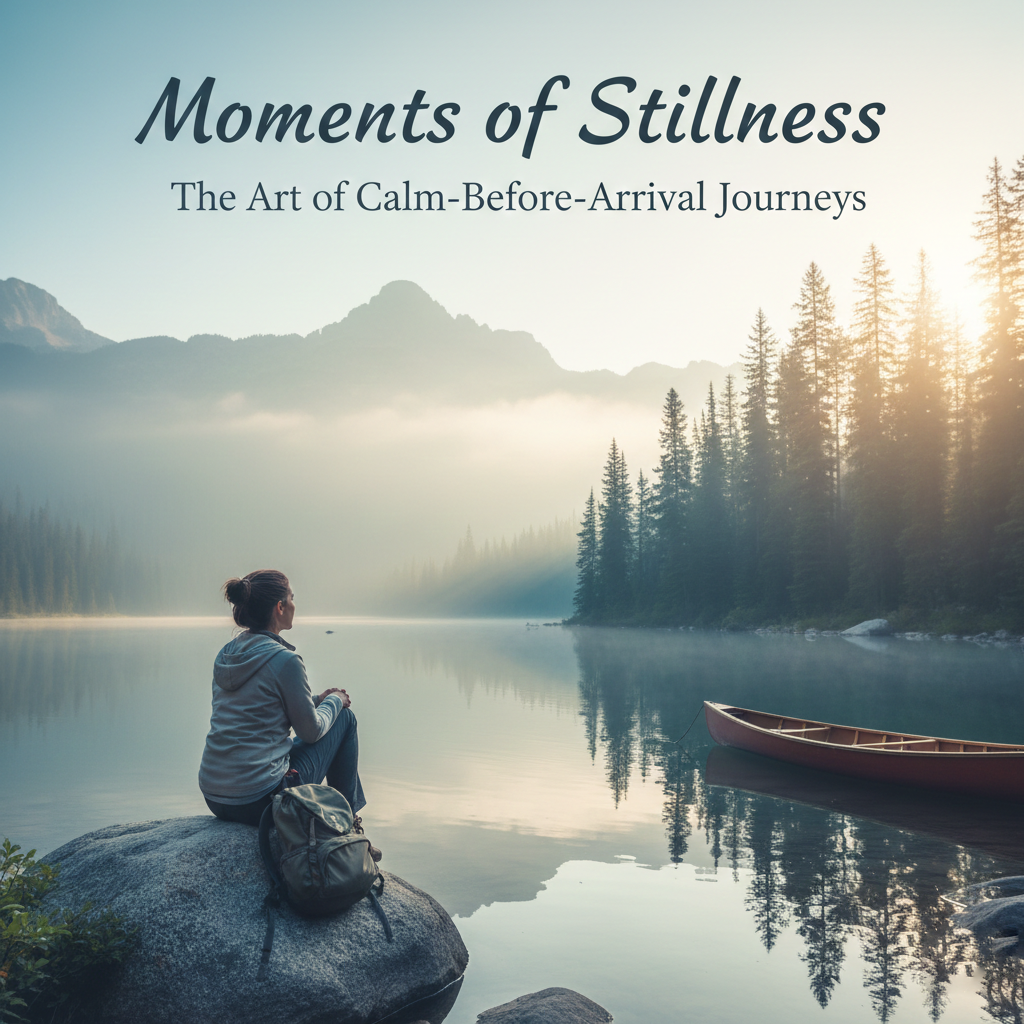
Moments of Stillness: The Art of Calm-Before-Arrival Journeys remind us that travel is not defined by where we end up, but by how we arrive.
In honoring stillness before arrival, we give ourselves the rare gift of meeting the world gently. And in doing so, we allow the journey to shape us quietly, deeply, and with lasting grace.
Because sometimes, the most meaningful part of travel happens just before we get there.


