

 Adventure Tours
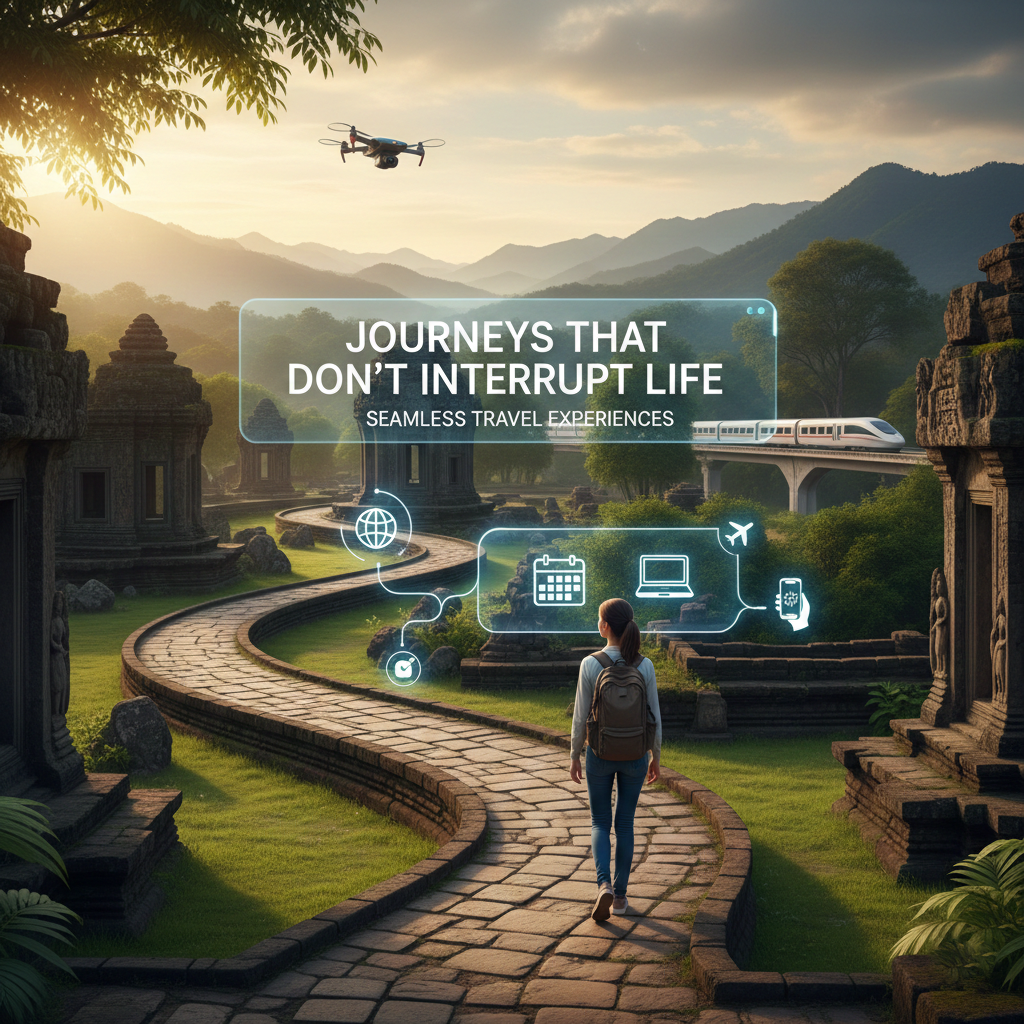
For many people, travel has come to mean disruption. Routines are broken, energy is drained, schedules are overloaded, and returning home often requires recovery from the trip itself. But a quieter philosophy of movement is emerging—one that treats travel not as an interruption to life, but as a continuation of it.
Seamless travel experiences are designed to blend into everyday rhythm rather than replace it. They allow people to move through the world without abandoning who they are, how they live, or the pace they need to stay grounded. These journeys don’t demand reinvention. They respect continuity.
What Seamless Travel Really Means
Seamless travel is not about luxury for its own sake, nor is it about minimalism as deprivation. It is about alignment. The journey fits the traveler, rather than forcing the traveler to adapt to the journey.
This means:
-
Smooth transitions instead of rushed connections
-
Familiar rhythms carried into unfamiliar places
-
Time that feels lived-in, not consumed
-
Movement that feels additive, not extractive
Seamless journeys don’t shout for attention. They integrate quietly.
Travel That Extends Daily Life
In seamless travel, work, rest, curiosity, and movement coexist. There is no sharp divide between “home mode” and “travel mode.” Mornings still feel like mornings. Evenings still wind down naturally. The journey supports personal rhythm instead of overriding it.
This style of travel appeals especially to people who don’t want escape—but expansion. They want new environments without abandoning their inner stability.
Places That Naturally Support Seamless Travel
Some destinations lend themselves beautifully to this way of moving, not because they are passive, but because they are adaptable.
1. Kyoto, Japan

Kyoto offers continuity through ritual. Daily life flows with quiet precision—morning markets, neighborhood temples, evening streets settling into calm.
Travelers can move slowly, revisit the same routes, and build familiarity. Seamless travel here comes from repetition rather than novelty.
2. Lisbon, Portugal
Lisbon’s pace invites unforced exploration. Trams run through lived-in neighborhoods, viewpoints appear without effort, and meals stretch naturally into conversation.
Life does not stop for the visitor. The visitor gently joins it.
3. Vancouver Island, Canada
On Vancouver Island, especially around Tofino and smaller coastal towns, nature and daily life coexist. Surf sessions blend into café hours. Forest walks replace scheduled activities.
The landscape allows travelers to keep their internal rhythm while changing their surroundings.
Designing Journeys Without Friction
Seamless travel reduces friction at every level. Logistics are simplified. Accommodation feels intuitive. Locations are chosen for livability, not just beauty.
Instead of packing days with highlights, seamless journeys focus on:
-
Staying longer in fewer places
-
Choosing accommodations that support routine
-
Leaving space between plans
-
Allowing days to remain partially unplanned
This creates mental ease. Decisions become lighter. Time feels more generous.
The Emotional Benefit of Non-Interruptive Travel
When travel doesn’t interrupt life, emotional regulation improves. There is less overstimulation and less pressure to maximize every moment.
Travelers often report:
-
Lower anxiety
-
Better sleep
-
Increased presence
-
Stronger memory retention
-
Deeper satisfaction rather than short-lived excitement
Seamless travel supports the nervous system rather than challenging it.
Technology as a Quiet Enabler
In seamless travel, technology works quietly in the background. Tools are used to reduce effort, not increase distraction.
Navigation simplifies movement. Communication maintains connection without obligation. Digital access supports continuity instead of pulling attention away from the present moment.
The goal is not digital detox—but digital harmony.
Why This Travel Style Is Growing
Modern life is already complex. People are increasingly selective about experiences that demand extra energy. Seamless travel respects this reality.
As remote work, flexible schedules, and longer stays become more common, travelers want journeys that feel compatible with who they already are—not who they pretend to be on vacation.
This shift represents maturity in travel culture.
Travel as Integration, Not Escape
Seamless travel reframes the purpose of movement. It is no longer about leaving life behind, but about carrying life forward into new contexts.
A morning coffee in Lisbon can feel like a morning coffee anywhere—just with different light. An evening walk in Kyoto can mirror an evening walk at home—just with different sounds.
This familiarity does not reduce wonder. It deepens it.
Living While Moving
Journeys that don’t interrupt life create a rare feeling: the sense that nothing is on hold. Relationships continue. Habits remain intact. Curiosity expands gently.
Travel becomes something lived alongside life, not instead of it.
Final Reflection
Seamless travel experiences are not defined by spectacle. They are defined by flow. They allow people to move through the world without fracturing their inner continuity.
In these journeys, life does not pause—it evolves.
And perhaps that is the most meaningful kind of travel there is.

