

 Adventure Tours
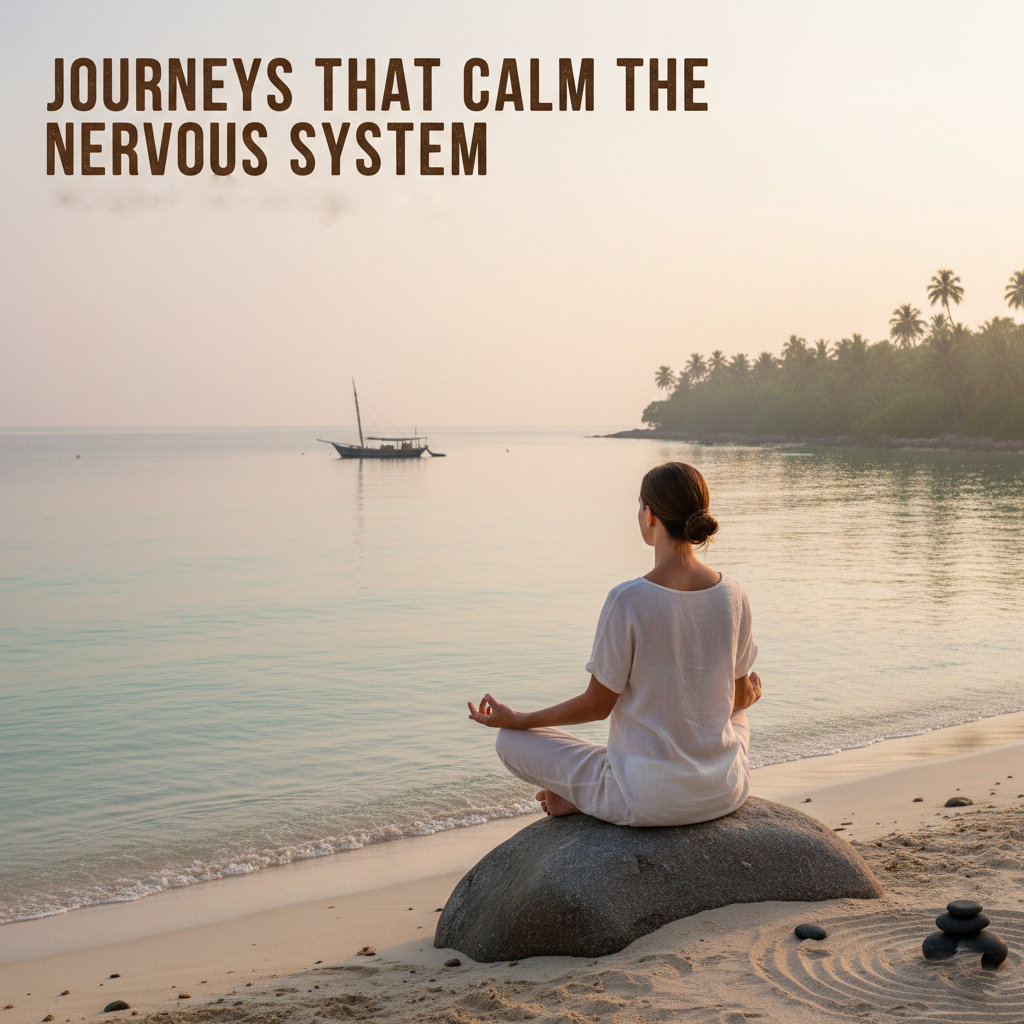
In a world shaped by urgency, noise, and constant stimulation, travel is quietly evolving. More people are no longer seeking intensity, speed, or packed itineraries. Instead, they are choosing journeys that calm the nervous system—travel experiences designed to restore balance, regulate stress, and gently reconnect mind and body.
Mindful travel is not about escape. It is about return: to presence, to breath, to a slower rhythm of being.
Why the Nervous System Needs Rest
Modern life keeps the nervous system in a near-constant state of alert. Notifications, deadlines, traffic, and digital overload activate stress responses long after the threat has passed. Over time, this leads to fatigue, anxiety, shallow breathing, and mental fragmentation.
Mindful travel experiences counteract this by:
-
Reducing sensory overload
-
Encouraging slower pacing
-
Reintroducing natural rhythms
-
Creating psychological safety through simplicity
These journeys don’t stimulate—they soothe.
What Is Nervous-System-Calming Travel?
Travel that calms the nervous system is intentionally designed around regulation rather than excitement. It prioritizes environments and activities that signal safety, spaciousness, and ease to the body.
Key characteristics include:
-
Gentle landscapes and open horizons
-
Predictable, unrushed daily flow
-
Minimal decision-making
-
Deep engagement with natural elements
The goal is not to “do more,” but to feel less strained.
The Role of Nature in Regulation
Nature has a direct impact on the nervous system. Research consistently shows that exposure to natural environments lowers cortisol levels, slows heart rate, and supports emotional balance.
Mindful journeys often center around:
-
Forests that soften sensory input
-
Water bodies that regulate breathing through rhythm
-
Mountains that create perspective and grounding
-
Open plains that reduce mental compression
These environments communicate calm without words.
Slow Movement as Therapy
Fast movement keeps the nervous system alert. Slow, repetitive movement tells the body it is safe.
Mindful travel favors:
-
Walking instead of rushing
-
Gentle hiking over endurance treks
-
Canoeing or kayaking on still water
-
Cycling quiet rural routes
Movement becomes meditative rather than goal-driven.
Presence Over Performance
Traditional travel often feels performative—capturing photos, checking landmarks, optimizing time. Mindful travel removes this pressure.
Instead, it emphasizes:
-
Being rather than documenting
-
Sensation over spectacle
-
Experience over achievement
When there is no need to “prove” the journey, the nervous system relaxes.
Sensory Simplicity
Overstimulated senses create stress. Mindful journeys intentionally simplify sensory input.
This includes:
-
Muted color palettes of natural environments
-
Natural sounds like wind, water, and birds
-
Minimal artificial lighting
-
Clean, uncluttered accommodations
The nervous system responds by settling into rest.
Five Places Known for Nervous-System-Calming Travel
Certain locations naturally support mindful, regulating experiences due to their geography, culture, and pace of life.
1. Faroe Islands

Wide open landscapes, dramatic coastlines, and near-total silence create a profound sense of spacious calm.
2. Lake Bled, Slovenia
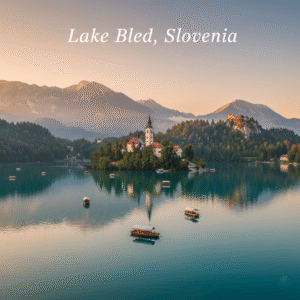
Gentle water, forested hills, and walkable surroundings support slow, rhythmic days.
3. Azores, Portugal

Volcanic landscapes, thermal waters, and low-density tourism create grounding, elemental experiences.
4. Kyoto’s Rural Outskirts, Japan

Quiet temples, moss gardens, and disciplined simplicity encourage deep presence and nervous-system regulation.
5. Finnish Lakeland
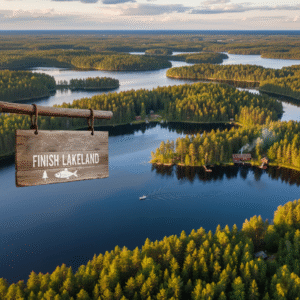
Still water, endless forests, and sauna culture promote deep relaxation and emotional reset.
The Power of Routine Without Rigidity
Mindful travel offers gentle structure—enough predictability to create safety, without pressure.
Daily rhythms might include:
-
Morning walks or quiet observation
-
Simple meals at consistent times
-
Long, unstructured afternoons
-
Evenings without screens
The nervous system thrives on this balance.
Disconnection as Healing
Digital disconnection is not deprivation—it is relief. Many mindful journeys intentionally limit connectivity.
This allows:
-
Mental quiet
-
Deeper bodily awareness
-
Improved sleep quality
-
Reduced comparison and anxiety
Without constant input, the mind softens.
Human Connection Without Intensity
Mindful travel doesn’t eliminate social interaction—it reshapes it.
Encounters tend to be:
-
Fewer but more meaningful
-
Rooted in listening rather than performance
-
Slow and unforced
These interactions feel safe, not draining.
Travel as Regulation, Not Reward
Traditional travel is often treated as a reward after burnout. Nervous-system-calming journeys challenge this model.
They position travel as:
-
Preventative care
-
Emotional maintenance
-
Mental hygiene
This reframing supports long-term well-being rather than temporary escape.
Returning Changed—Quietly
The most powerful effect of mindful travel is not dramatic transformation. It is subtle recalibration.
Travelers often return with:
-
Slower internal tempo
-
Improved emotional regulation
-
Clearer attention
-
Reduced reactivity
The change is quiet—but lasting.
Designing Your Own Calming Journey
You don’t need luxury or distance to create mindful travel. Key principles matter more than location.
Focus on:
-
Fewer destinations
-
Longer stays
-
Natural environments
-
Reduced schedules
-
Intuitive pacing
Calm is designed through intention.
Final Thoughts
Journeys That Calm the Nervous System are not about escaping life—they are about learning how to meet it differently. Through mindful travel experiences, the body relearns safety, the mind relearns stillness, and the spirit regains space to breathe.
In a world addicted to speed, choosing calm becomes a radical act.
And travel, once again, becomes medicine.


