

 Adventure Tours
Not all journeys need a climax. Not every trip needs a “best moment,” a peak experience, or a dramatic story to tell afterward. For a growing number of travelers, the most meaningful experiences are the ones that remain subtle, steady, and almost unremarkable on the surface. This is the essence of low-key travel — journeys designed without highlights, without pressure, and without the need to impress.
Low-key travel is not about doing less for the sake of minimalism. It is about removing performance from movement. It allows travelers to enter places quietly, stay present without urgency, and leave without extraction. For mindful explorers, this way of traveling restores balance and creates a deeper, more sustainable connection with place.
What Does “No-Highlight Travel” Really Mean?
Traditional travel often follows a narrative arc: anticipation, peak moment, and conclusion. No-highlight travel deliberately flattens that arc. There is no single moment that defines the journey. Instead, the experience remains evenly textured from beginning to end.
No-highlight travel prioritizes:
-
Consistent emotional tone
-
Gentle transitions between places
-
Familiarity over novelty
-
Presence over memory-making
-
Experience without spectacle
The value lies not in what stands out, but in what settles in.
Why Mindful Explorers Are Choosing Low-Key Journeys
Many travelers today arrive already overstimulated. Daily life is filled with alerts, deadlines, and constant decision-making. When travel mirrors that intensity, it fails to restore.
Low-key travel offers relief by:
-
Reducing cognitive load
-
Removing urgency
-
Supporting nervous system regulation
-
Allowing attention to soften
-
Creating emotional continuity
Mindful explorers are not looking for escape — they are looking for alignment.
Places That Naturally Support No-Highlight Travel
Some locations resist spectacle by their very nature. They do not perform. They do not demand attention. Instead, they invite quiet participation.
1. The Outer Hebrides, Scotland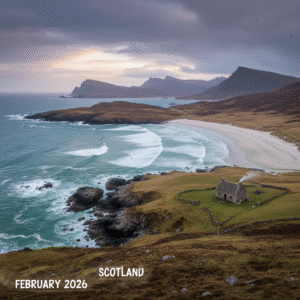
These islands offer soft light, long silences, and open landscapes shaped more by weather than people. Walking coastal paths or sitting near the sea becomes enough. There are no highlights — only continuity.
2. Hokkaido’s Countryside, Japan
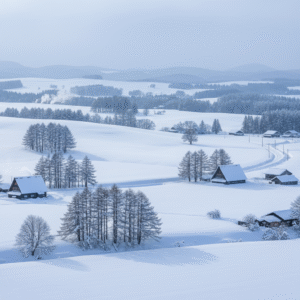
Away from Japan’s urban intensity, rural Hokkaido offers wide agricultural land, quiet forests, and steady seasonal rhythms. Days unfold without urgency, shaped by weather and light rather than itinerary.
3. Eastern Patagonia Steppe, Argentina
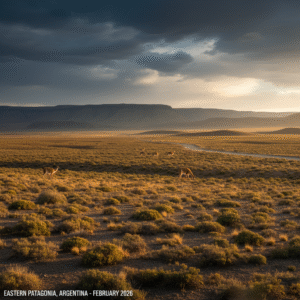
Far from iconic mountain vistas, the steppe is vast, open, and subtle. Movement here is internal rather than visual. The land does not ask to be photographed — only respected.
What Low-Key Travel Feels Like Day to Day
In no-highlight journeys, the day is not structured around achievement.
A typical day might include:
-
Slow morning routines
-
Walking without a destination
-
Long pauses between activities
-
Familiar meals eaten without novelty
-
Early evenings shaped by quiet
There is no sense of falling behind. Nothing needs to be optimized. Time becomes expansive because it is not being measured against expectations.
The Emotional Impact of Traveling Without Highlights
Low-key travel often feels uneventful at first — especially for travelers accustomed to stimulation. But as days pass, a different kind of depth emerges.
Travelers commonly experience:
-
Reduced anxiety
-
Improved sleep
-
Heightened sensory awareness
-
Emotional steadiness
-
Increased patience and clarity
Because nothing spikes attention, the mind remains open and receptive. The journey integrates rather than overwhelms.
How No-Highlight Travel Changes Memory
Highlight-driven trips produce vivid snapshots but fade quickly. Low-key travel leaves fewer images but stronger emotional residue.
Instead of remembering events, travelers remember:
-
How their breathing slowed
-
How silence felt comfortable
-
How time stopped feeling scarce
-
How presence replaced anticipation
These memories are quieter — and longer lasting.
Who Low-Key Travel Is For
Traveling low-key is not for those seeking adrenaline, novelty, or constant stimulation. It is for travelers who value continuity over climax.
It resonates with:
-
Mindful solo travelers
-
Burnout-aware professionals
-
Writers and creatives
-
Couples seeking emotional reset
-
Travelers who prefer depth over display
This form of travel does not reward urgency. It rewards attentiveness.
Low-Key Travel as a Sustainable Practice
No-highlight journeys are inherently sustainable. They reduce strain on local environments, avoid over-tourism, and minimize cultural disruption.
By traveling without spectacle:
-
Places are not turned into products
-
Communities are not pressured to perform
-
Landscapes remain intact
-
Travelers leave lighter footprints
Low-key travel is respectful by design, not by branding.
The Quiet Luxury of No-Highlight Experiences
Luxury is often associated with excess. Low-key travel redefines luxury as ease.
Luxury becomes:
-
Time without urgency
-
Silence without discomfort
-
Movement without pressure
-
Presence without documentation
This kind of luxury cannot be photographed — only felt.
Final Reflection
Traveling low-key is not about lowering expectations. It is about releasing the need for moments to stand out. No-highlight experiences teach us that meaning does not always announce itself — it often arrives quietly, through steadiness and repetition.
For mindful explorers, low-key travel is not a compromise. It is a return — to balance, to presence, and to a way of moving through the world without forcing it to perform.
Sometimes, the most meaningful journeys are the ones
that never try to become a story —
and simply allow life to continue, gently, in another place.


