

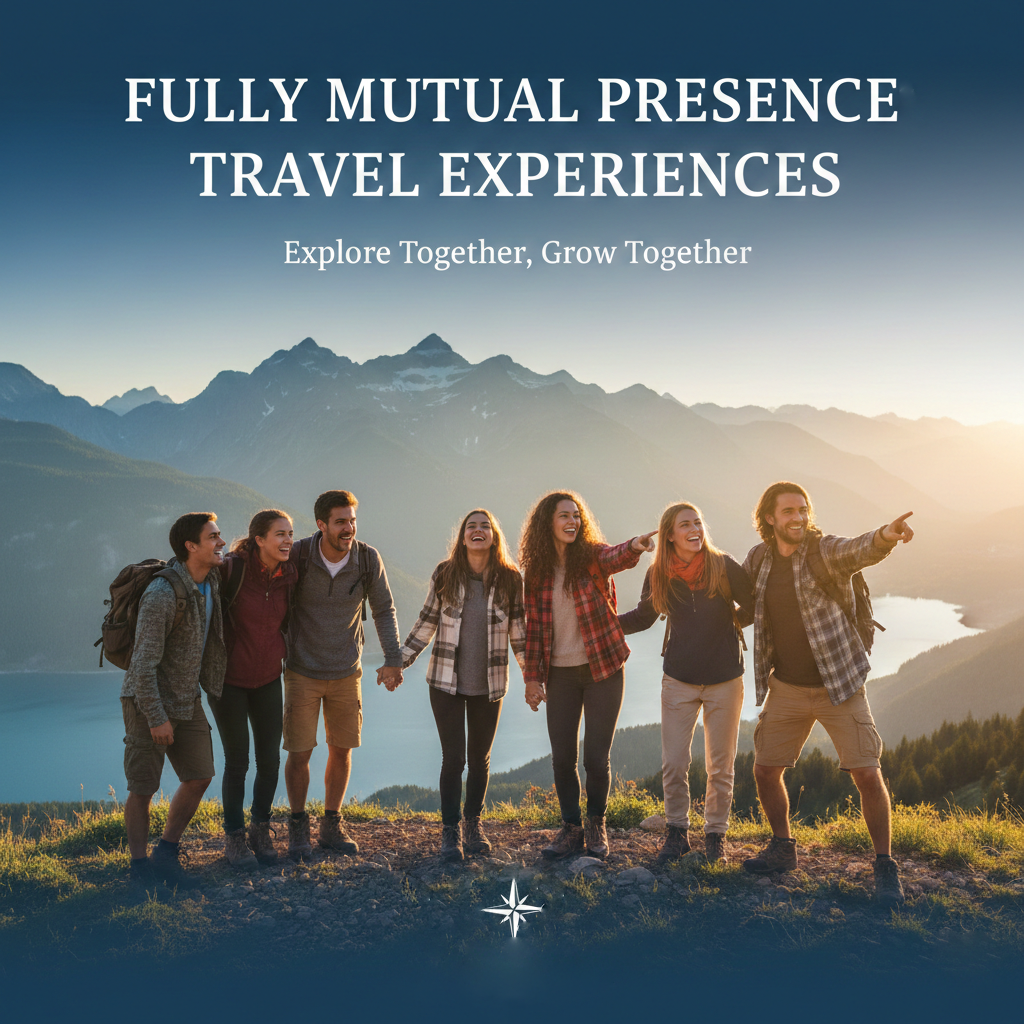
 Adventure Tours
Travel has long been associated with movement — moving through landscapes, crossing borders, collecting destinations. Yet, in many modern journeys, something essential is quietly missing: mutual presence. We travel together, but we are often not fully with one another. Attention is split between schedules, devices, expectations, and the pressure to make every moment count.
Mutual presence travel experiences offer a different approach. They are not defined by where you go or how much you do, but by how fully you arrive together. These journeys are designed to support shared attention, emotional availability, and the simple act of being present with one another — without distraction, performance, or urgency.
What Mutual Presence Means in Travel
Mutual presence is the state in which people share the same moment fully — mentally, emotionally, and physically. In travel, this means creating conditions where relationships are not overshadowed by logistics, stimulation, or constant motion.
Rather than asking, What are we doing next? mutual presence travel asks, How are we being together right now?
These journeys prioritize:
-
Shared rhythms over packed itineraries
-
Attention over activity
-
Emotional safety over stimulation
-
Time that unfolds naturally rather than being managed
Mutual presence does not require constant conversation or interaction. Silence, too, becomes a shared space — comfortable, meaningful, and connective.
Why Modern Travel Often Fragments Togetherness
Contemporary travel culture rewards intensity. We chase highlights, optimize schedules, and document experiences as proof of value. While exciting, this model often fragments attention and weakens connection.
Tight timelines pull people in different directions. Screens interrupt conversations. Novelty competes for focus. Even luxury travel can become isolating when every moment is curated for individual consumption rather than shared experience.
Mutual presence travel counters this fragmentation by removing excess. When there is less to manage, less to chase, and less to prove, attention naturally returns to the people sharing the journey.
The Design of Mutual Presence Travel Experiences
Being together fully does not happen by accident. These journeys are intentionally shaped to protect attention and emotional availability.
1. A Shared Pace
Movement happens together. Walking speeds align. Days unfold without pressure to rush ahead or split up. The slowest rhythm becomes the guiding one.
2. Reduced Decision Fatigue
Too many choices pull attention outward. Mutual presence journeys simplify options, allowing energy to remain with the relationship rather than logistics.
3. Low-Stimulation Environments
Quiet landscapes, open terrain, and minimal crowds reduce sensory overload. These environments make presence easier by calming the nervous system.
4. Limited Digital Interruption
Connectivity is reduced or intentionally managed. Without constant notifications, conversations deepen and moments feel complete rather than interrupted.
What These Journeys Feel Like
Mutual presence travel experiences rarely announce themselves with dramatic moments. Their impact is subtle and cumulative.
Travelers often notice:
-
Conversations that deepen without effort
-
Shared silences that feel grounding rather than awkward
-
A gentle slowing of thought and breath
-
Increased emotional attunement
-
Moments of laughter or reflection that arise naturally
Rather than creating highlights, these journeys create continuity — a sense of being steadily connected throughout the experience.
Landscapes That Support Being Together Fully
Certain places naturally encourage mutual presence through their pace, scale, and atmosphere.
1. Lake Bohinj, Slovenia
Calm waters, forested trails, and a gentle rhythm of daily life create space for walking, talking, and sitting together without interruption.
2. The Atlas Foothills, Morocco
Open valleys and slow rural life encourage shared routines and unhurried days shaped by natural rhythms.
How Mutual Presence Transforms Relationships
Unlike activity-driven travel, mutual presence journeys often continue working long after the trip ends. They restore something easily lost in daily life: shared attention.
Many travelers report:
-
Renewed emotional closeness
-
Improved listening and patience
-
Reduced defensiveness and reactivity
-
A stronger sense of alignment
-
Memories defined more by feeling than events
Because these journeys remove pressure, relationships are allowed to settle into a more authentic state.
Who Mutual Presence Travel Is For
Being together fully is not for travelers seeking constant stimulation or entertainment. It is for those who value depth, ease, and emotional clarity.
These experiences resonate with:
-
Couples seeking reconnection
-
Families wanting undistracted time
-
Close friends navigating transitions
-
Creative partners deepening collaboration
-
Travelers who see presence as a form of care
Mutual presence travel is not about escaping reality — it is about meeting reality together, without armor.
The Quiet Luxury of Shared Presence
There is a subtle luxury in not being pulled apart — by schedules, expectations, or external noise. Mutual presence reframes luxury as time, attention, and emotional availability.
Nothing needs to be achieved. Nothing needs to be documented. The value lies in shared moments that feel complete as they are.
In these journeys, simplicity becomes richness. Slowness becomes depth. Togetherness becomes the experience itself.
Final Reflection
Being Together Fully is not about perfect harmony or constant closeness. It is about creating the conditions where connection can emerge naturally — without force, performance, or distraction.
Mutual presence travel experiences remind us that the most meaningful journeys are not measured in miles or milestones, but in moments of shared awareness. When travel supports presence, it does more than move us through the world — it gently brings us back to one another.
In the end, being together fully may be the rarest destination of all.


