

 Adventure Tours
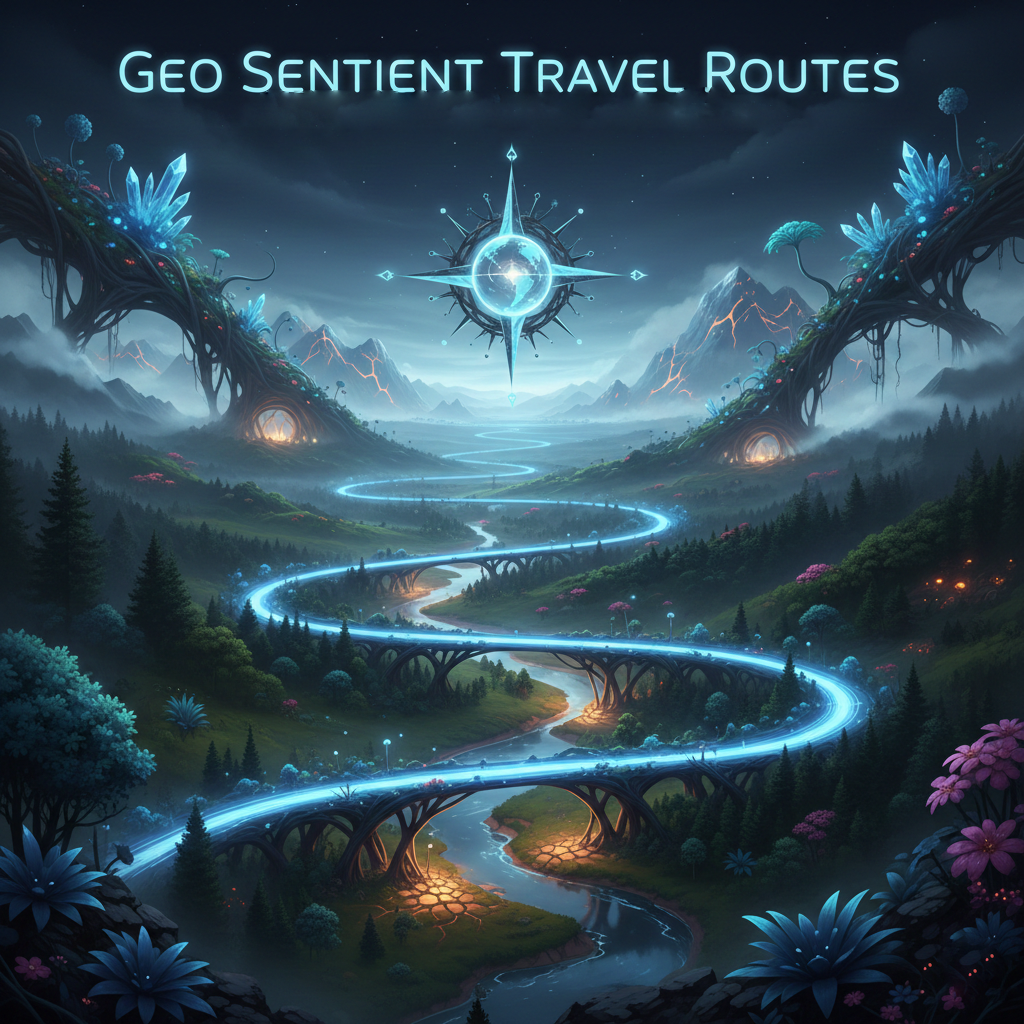
Maps show where the land is. Geo-sentient travel routes reveal how the land lives.
As modern travelers move beyond checklists and coordinates, a new form of exploration is emerging—one that listens to the Earth rather than overlays it with rigid lines. Geo-sentient travel is not about following predetermined routes; it is about responding to terrain, climate, ecology, and cultural memory in real time. These journeys evolve as landscapes breathe, shift, and speak.
In geo-sentient travel, the Earth becomes the guide.
What Are Geo-Sentient Travel Routes?
Geo-sentient travel routes are adaptive pathways shaped by environmental intelligence rather than static planning. Instead of designing itineraries around highways, attractions, or schedules, these journeys are formed by:
-
Geological formations
-
Climate patterns and seasonal shifts
-
Water systems and soil health
-
Wildlife corridors
-
Indigenous land knowledge
-
Natural sensory signals
The route is not fixed. It is alive.
Why Traditional Maps Are No Longer Enough
Conventional travel maps are based on permanence—roads, borders, and destinations that assume landscapes are static. But the Earth is dynamic:
-
Rivers change course
-
Coastlines erode and rebuild
-
Forests migrate
-
Mountains weather and fracture
-
Deserts move with wind
Geo-sentient travel acknowledges this reality and adapts accordingly.
The Core Philosophy of Geo-Sentient Travel
At its heart, geo-sentient travel is about humility.
Rather than controlling or conquering land, travelers:
-
Observe before moving
-
Adjust pace to environmental cues
-
Travel during seasons that protect ecosystems
-
Respect natural limits
The journey becomes a collaboration between human intention and planetary intelligence.
How Geo-Sentient Routes Are Designed
1. Earth-First Intelligence
Routes begin with studying terrain behavior—how land reacts to rain, heat, cold, and time.
2. Climate Responsiveness
Travel windows shift with monsoons, snowmelt, drought cycles, and migration seasons.
3. Cultural Memory Integration
Many geo-sentient routes follow ancient trade paths, nomadic corridors, and spiritual trails once shaped by environmental necessity.
4. Sensory Navigation
Sound, wind, temperature, scent, and light become navigational tools—not just GPS.
The Traveler’s Experience
Geo-sentient travel feels fundamentally different.
Travelers often describe:
-
A heightened awareness of surroundings
-
Reduced mental noise
-
A sense of being guided rather than guided by
-
Deeper respect for ecological systems
You move slower—but experience more.
Examples of Geo-Sentient Travel in Practice
River-Responsive Journeys
Kayak or foot routes that change daily based on water levels, currents, and riparian ecosystems.
Mountain Weather-Led Treks
High-altitude routes that follow wind patterns, snow stability, and wildlife movement.
Coastal Tide-Shaped Paths
Journeys guided by tidal rhythms, lunar cycles, and marine life behavior.
Desert Wind Routes
Travel shaped by dune migration, wind corridors, and temperature shifts.
Forest Regeneration Trails
Paths that avoid young growth areas and shift with forest renewal cycles.
Why Geo-Sentient Travel Matters Now
As climate change accelerates, travel must evolve.
Geo-sentient travel:
-
Reduces environmental stress
-
Prevents overuse of fragile zones
-
Encourages climate literacy
-
Builds adaptive resilience in tourism
This is not a trend—it is a necessity.
Geo-Sentient Travel and Conscious Luxury
Luxury in geo-sentient travel is not excess—it is access with restraint.
High-value elements include:
-
Small-group exploration
-
Expert eco-guides and land stewards
-
Flexible itineraries
-
Low-impact accommodations
-
Deep learning experiences
The privilege lies in listening, not consuming.
Who Is Geo-Sentient Travel For?
This form of travel attracts:
-
Thoughtful explorers
-
Climate-aware travelers
-
Nature-led adventurers
-
Cultural preservationists
-
Slow-travel advocates
It is for those who understand that movement itself carries responsibility.
Geo-Sentient Travel Routes with Larski Travel
For Larski Travel, geo-sentient journeys represent a bold future-facing identity.
Potential offerings include:
-
Living-landform expedition routes
-
Sensor-mapped adventure paths
-
Earth-memory exploration trails
-
Climate-shaped trekking circuits
-
Awareness-centric navigation experiences
These routes position Larski as a pioneer of intelligent, responsive travel.
Preparing for a Geo-Sentient Journey
Travelers should bring:
-
Flexibility and patience
-
Respect for unpredictability
-
Physical and mental adaptability
-
Willingness to learn from land and guides
The reward is travel that feels earned, authentic, and transformative.
Final Thoughts
Geo-sentient travel routes mark a turning point in how humanity moves through the world. By responding to Earth rather than maps, these journeys restore balance between exploration and preservation.
They remind us that the planet is not a passive stage—but a living intelligence. And when we learn to travel with it, not over it, the journey becomes deeper than distance.
Geo-sentient travel is not about where you go.
It is about how the Earth allows you to move.


