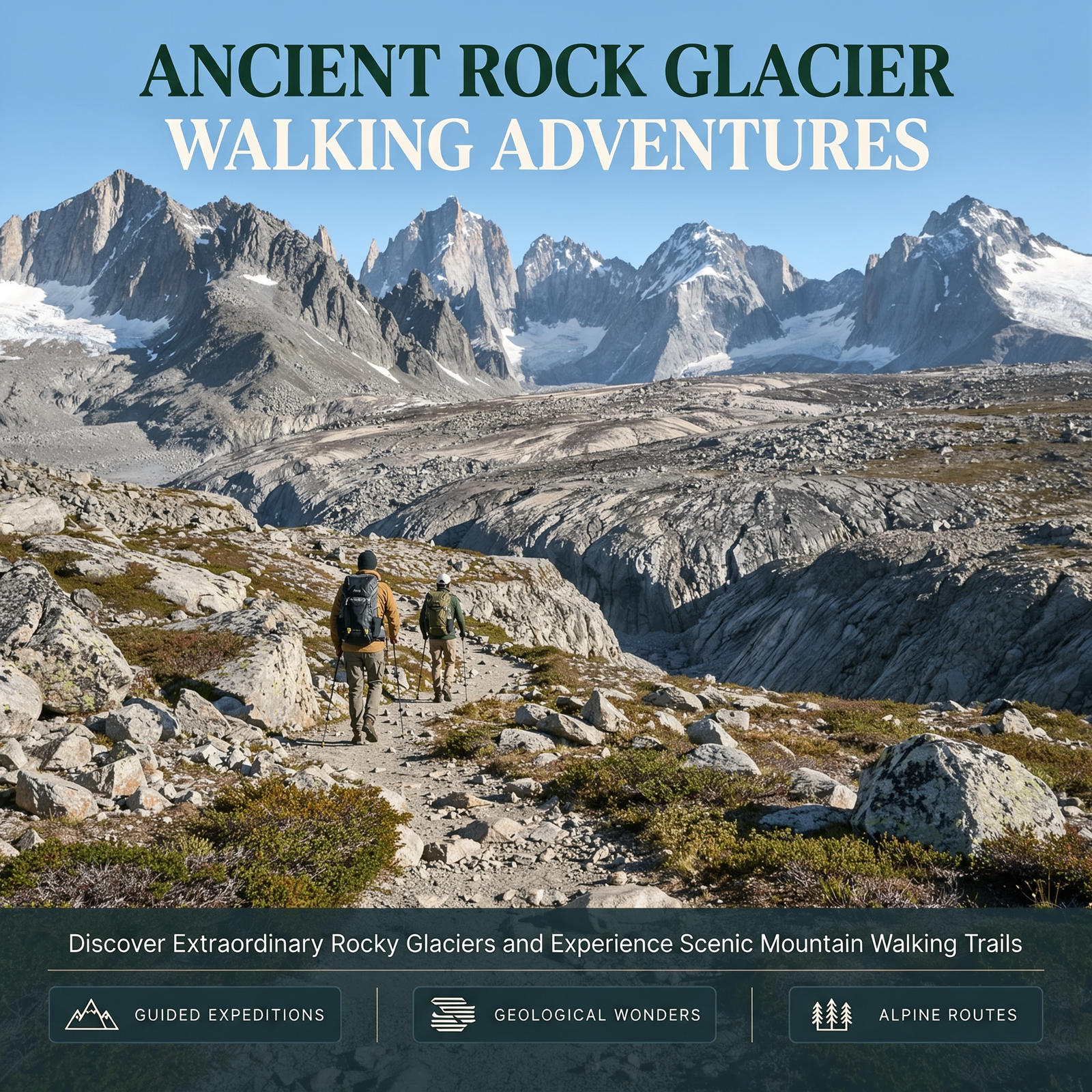
Mountain landscapes are full of natural wonders, but some of the most fascinating features are hidden beneath layers of rocks and stones. Rock glaciers are unusual geological formations that combine rocky debris with ice or the remains of ancient ice. Their rugged surfaces, flowing patterns, and distinctive shapes create extraordinary scenery for travellers who enjoy mountain exploration.
Ancient rock glacier walking adventures offer an opportunity to discover these remarkable formations while enjoying scenic mountain trails. Unlike traditional glacier walks, which often involve visible ice and specialised equipment, many rock glacier routes can be explored from established mountain paths and viewpoints. They provide a fascinating way to understand how glaciers and mountain environments change over time.
From the European Alps to the Rocky Mountains and the high-altitude landscapes of South America, rock glaciers can be found in several mountainous regions around the world. These destinations attract hikers, nature enthusiasts, photographers, and geology lovers who want to experience something different from conventional mountain holidays.
What Are Rock Glaciers?
Rock glaciers are landforms found in cold mountain environments. They consist mainly of rock debris mixed with ice, although some may contain little remaining ice and represent older, inactive formations.
They often develop in high-altitude areas where freezing conditions allow ice to remain beneath layers of stones and rocky material. Over long periods, gravity and internal ice movement can cause the mass to move slowly downhill.
From a distance, rock glaciers may look like unusual rocky tongues extending from mountain slopes. Their surfaces can contain ridges, grooves, uneven stones, and distinctive patterns created by gradual movement.
There are different types of rock glaciers, including active, inactive, and relict formations. Active rock glaciers continue to move, while relict examples no longer contain enough ice to maintain movement.
These features are valuable for understanding mountain geology, past climatic conditions, and the long-term development of alpine landscapes.
Explore the Remarkable Rock Glaciers of the Swiss Alps
<AsyncImage query=”Swiss Alps rock glacier rocky tongue mountain landscape” aspectRatio=”16:9″ width=”100%”/>
Switzerland is famous for its dramatic mountain scenery, traditional alpine villages, and extensive network of hiking routes. Its high mountain environments also contain fascinating rock glacier formations that provide interesting opportunities for geological exploration.
The Valais region is particularly suitable for travellers interested in alpine geology. Its rugged valleys, steep slopes, and high-altitude terrain contain various glacial landforms shaped by ancient ice and changing mountain conditions.
Walking routes around the wider Mattertal and other alpine valleys offer opportunities to observe rocky mountain environments from established trails. Some locations provide views of rock glaciers and related deposits, although visitors should research specific formations before planning a route.
The combination of mountain scenery, clear alpine air, and distinctive geological features makes Switzerland an attractive destination for walking holidays.
Discover Rock Glacier Landscapes in the Austrian Alps
<AsyncImage query=”Austrian Alps rock glacier alpine mountain valley rocky terrain” aspectRatio=”16:9″ width=”100%”/>
Austria offers a variety of mountain landscapes where hikers can explore ancient glacial environments and rugged alpine terrain. Regions such as Tyrol and the Ötztal Alps are known for their high mountains, glacier valleys, and impressive geological features.
The Ötztal region is particularly interesting for understanding how ice, rock, and mountain processes shape the landscape. Its high-altitude surroundings contain different types of glacial deposits and rocky formations.
Travellers can enjoy established mountain walking routes, scenic viewpoints, and educational experiences that explain the region’s geological history.
Rock glacier exploration should always be planned around suitable trails rather than attempting to cross unstable formations. Some areas contain loose stones, hidden ice, and steep terrain that can be dangerous without specialist knowledge.
Experience the Rocky Mountain Landscapes of Colorado
<AsyncImage query=”Colorado Rocky Mountains alpine rock glacier rocky landscape” aspectRatio=”16:9″ width=”100%”/>
The Rocky Mountains of Colorado contain remarkable high-altitude landscapes shaped by ancient glaciers, seasonal freezing, and long periods of geological change.
Several mountain valleys and cirques contain rock glaciers or related periglacial formations. These features are especially interesting to visitors who want to understand how cold environments influence the movement of rock and ice.
The San Juan Mountains and other high mountain regions offer opportunities to explore rugged terrain and scenic alpine walking routes. Hikers can enjoy mountain lakes, rocky slopes, and impressive views while learning about the geological history of the surrounding landscape.
Before visiting, travellers should research specific rock glacier locations and choose routes suitable for their walking experience. High-altitude weather can change quickly, and some trails may remain snow-covered well into the summer season.
Explore Ancient Mountain Geology in the Italian Alps
<AsyncImage query=”Italian Alps Dolomites rocky glacial valley mountain landscape” aspectRatio=”16:9″ width=”100%”/>
The Italian Alps provide a spectacular setting for mountain walking and geological discovery. Their dramatic peaks, deep valleys, and rugged slopes reveal evidence of ancient glacial activity and ongoing natural processes.
The Dolomites are particularly famous for their distinctive rock formations and scenic walking trails. Although the region is not defined exclusively by rock glaciers, its wider alpine environment provides opportunities to understand how glaciers, frost, gravity, and erosion have shaped mountain terrain.
Visitors can explore established walking routes around mountain valleys and high-altitude viewpoints. Along the way, they may discover glacial deposits, rocky slopes, and unusual geological structures.
For travellers interested in combining outdoor adventure with natural history, the Italian Alps offer a rewarding destination.
Discover Rock Glacier Terrain in the Andes
<AsyncImage query=”Andes mountains Argentina rock glacier rocky alpine valley” aspectRatio=”16:9″ width=”100%”/>
The Andes stretch across South America and contain some of the world’s most impressive high-altitude environments. Their mountain landscapes include glaciers, rocky slopes, high valleys, and distinctive periglacial landforms.
In parts of Argentina and Chile, rock glaciers are important features of the mountain environment. They are especially significant in dry high-altitude regions where frozen ground and limited precipitation influence how ice and rocky material develop.
The Andes offer opportunities for travellers to discover these unusual landscapes through guided mountain experiences and established trekking routes.
Walking in high-altitude environments requires proper preparation. Visitors should allow time to adjust to elevation, carry sufficient water, and seek local guidance before exploring remote mountain areas.
What Makes Rock Glacier Walking Adventures Special?
Rock glacier walking holidays offer a different perspective on mountain exploration. Instead of focusing only on mountain peaks and traditional glaciers, they introduce travellers to the smaller geological details that make alpine environments unique.
Some of the most interesting features include:
- Distinctive rocky surfaces: Uneven stones and natural ridges create unusual landscape patterns.
- Ancient ice-related formations: Rock glaciers provide evidence of cold climatic conditions and long-term geological processes.
- Scenic mountain surroundings: Many formations are located in remote valleys and high-altitude environments.
- Geological learning: Visitors can discover how ice, gravity, and rock movement shape mountain terrain.
- Photography opportunities: Their textures, shapes, and surrounding peaks create interesting subjects for landscape photography.
These experiences appeal to travellers who enjoy combining physical activity with learning about the natural world.
Best Seasons for Rock Glacier Walking
Choosing the right season is important when planning a rock glacier walking adventure. Mountain weather can vary significantly depending on altitude, location, and local climate.
Summer: Summer is often the most suitable period for many established alpine walking routes. Snow may have cleared from lower trails, and longer daylight hours provide more time for exploration. However, high-altitude snow and ice can remain throughout the season.
Early autumn: Early autumn can offer cooler temperatures, clearer mountain views, and attractive colours in surrounding valleys. Visitors should check local weather forecasts because conditions can change quickly.
Spring: Spring can bring fresh mountain scenery, but snowmelt and unstable trail conditions may make some routes difficult. Many high-altitude paths remain inaccessible.
Winter: Winter walking is suitable only for routes and activities designed for snowy conditions. Rock glacier terrain can be particularly hazardous because of ice, loose stones, and hidden snow-covered obstacles.
Always check local trail conditions and follow advice from mountain authorities before starting a walk.
Essential Equipment for Mountain Walking
Rock glacier environments can be challenging, even when explored from established trails. Suitable equipment helps make the experience more comfortable and reduces avoidable risks.
A pair of sturdy hiking boots with good grip is essential for uneven mountain paths. Waterproof clothing, warm layers, and gloves can provide protection against changing weather.
A comfortable backpack should contain drinking water, snacks, a first-aid kit, sun protection, and a map or reliable navigation device. A fully charged mobile phone is also useful, although mobile coverage may be limited in remote areas.
Trekking poles can provide additional support on uneven paths and steep sections. A camera or smartphone is useful for capturing the unusual shapes and textures of rock glacier landscapes.
Visitors should avoid walking directly across unstable rock glaciers unless they are taking part in a properly organised specialist activity. Established viewpoints and marked trails are usually safer ways to experience these formations.
Photography Opportunities Around Ancient Rock Glaciers
Rock glaciers offer unusual subjects for landscape photography. Their rocky surfaces, flowing shapes, and surrounding mountain scenery create compositions that are different from typical glacier photographs.
Wide-angle photography can capture the full scale of a formation against the background of mountain peaks. Close-up images can highlight the patterns of stones, ridges, and weathered surfaces.
Morning and evening light may bring out the textures of rocky terrain, while changing cloud conditions can create dramatic mountain backgrounds.
Photographers should choose safe viewpoints and avoid approaching unstable slopes simply to achieve a better angle. A good photograph should never come at the expense of personal safety or environmental protection.
Why Rock Glaciers Matter to the Natural Environment
Rock glaciers are more than unusual mountain formations. They are important features for understanding cold-region environments and the effects of climate change.
Ice-rich rock glaciers can store frozen water within mountain landscapes. Their movement and condition provide scientists with information about temperature, ground ice, and long-term environmental changes.
Studying these formations can also help researchers understand how high-altitude ecosystems respond to changing climatic conditions.
As mountain temperatures rise, some rock glaciers experience changes in ice content and movement. Monitoring these processes helps improve scientific understanding of mountain environments.
Responsible tourism can support greater awareness of these natural features. Visitors should follow marked routes, avoid disturbing geological formations, and respect protected mountain areas.
Plan Your Rock Glacier Walking Holiday With Larski Travel
A successful rock glacier walking holiday begins with choosing the right destination and route. Consider your fitness level, walking experience, preferred mountain environment, and interest in geology before making travel arrangements.
Some travellers may prefer gentle walking trails with distant views of rocky glacier formations, while experienced hikers may enjoy longer mountain routes with more challenging terrain.
Research local guides, accommodation, transport options, and seasonal trail access before travelling. If you are interested in learning about the geological history of a region, a guided experience can make the journey more informative.
Larski Travel encourages outdoor exploration and discovery of remarkable natural landscapes. Rock glacier walking adventures offer an opportunity to experience mountain environments from a different perspective while developing a greater appreciation for the processes that shape our planet.
With careful planning and respect for mountain safety, these journeys can become memorable experiences for nature lovers and adventurous travellers.
Conclusion
Ancient rock glacier walking adventures offer a fascinating way to explore extraordinary rocky glaciers and scenic mountain landscapes. From the Swiss and Austrian Alps to Colorado and the Andes, these environments reveal the powerful relationship between rock, ice, and changing climatic conditions.
Whether you enjoy mountain walking, photography, geology, or discovering remote natural environments, rock glacier landscapes provide something different from a traditional hiking holiday.
Choose suitable trails, prepare for changing weather, and respect the fragile mountain environment. With thoughtful planning, your next walking adventure can combine beautiful scenery, outdoor discovery, and a deeper understanding of Earth’s geological history with Larski Travel.