Nature offers many remarkable landscapes, but travertine terraces are among the most fascinating formations to discover. These natural structures are created over long periods as mineral-rich water flows across the land and slowly deposits calcium carbonate. The result is a series of beautiful terraces, pools, steps and unusual rock formations that create an unforgettable natural setting.
Travertine terrace nature exploration gives travellers an opportunity to discover these unique environments, learn about geological processes and enjoy some of the most interesting water-shaped landscapes in the world. From colourful mineral pools to flowing streams and layered stone surfaces, every area has its own natural character.
For people who enjoy outdoor adventures, photography and discovering unusual natural attractions, travertine terraces provide an exciting travel experience. They combine geological beauty with peaceful surroundings and offer a closer look at how water and minerals work together to shape the environment.
What Are Travertine Terraces?
Travertine terraces are natural formations created when mineral-rich water deposits calcium carbonate as it flows across the ground. This process usually takes place around springs where underground water carries dissolved minerals towards the surface.
When the water reaches the open air, changes in temperature and pressure can encourage carbon dioxide to escape. This allows calcium carbonate to settle and gradually build up on rocks and other surfaces.
Over many years, these deposits create layers that develop into natural steps and terraces. Water continues to flow across them, forming small pools, channels and different surface patterns.
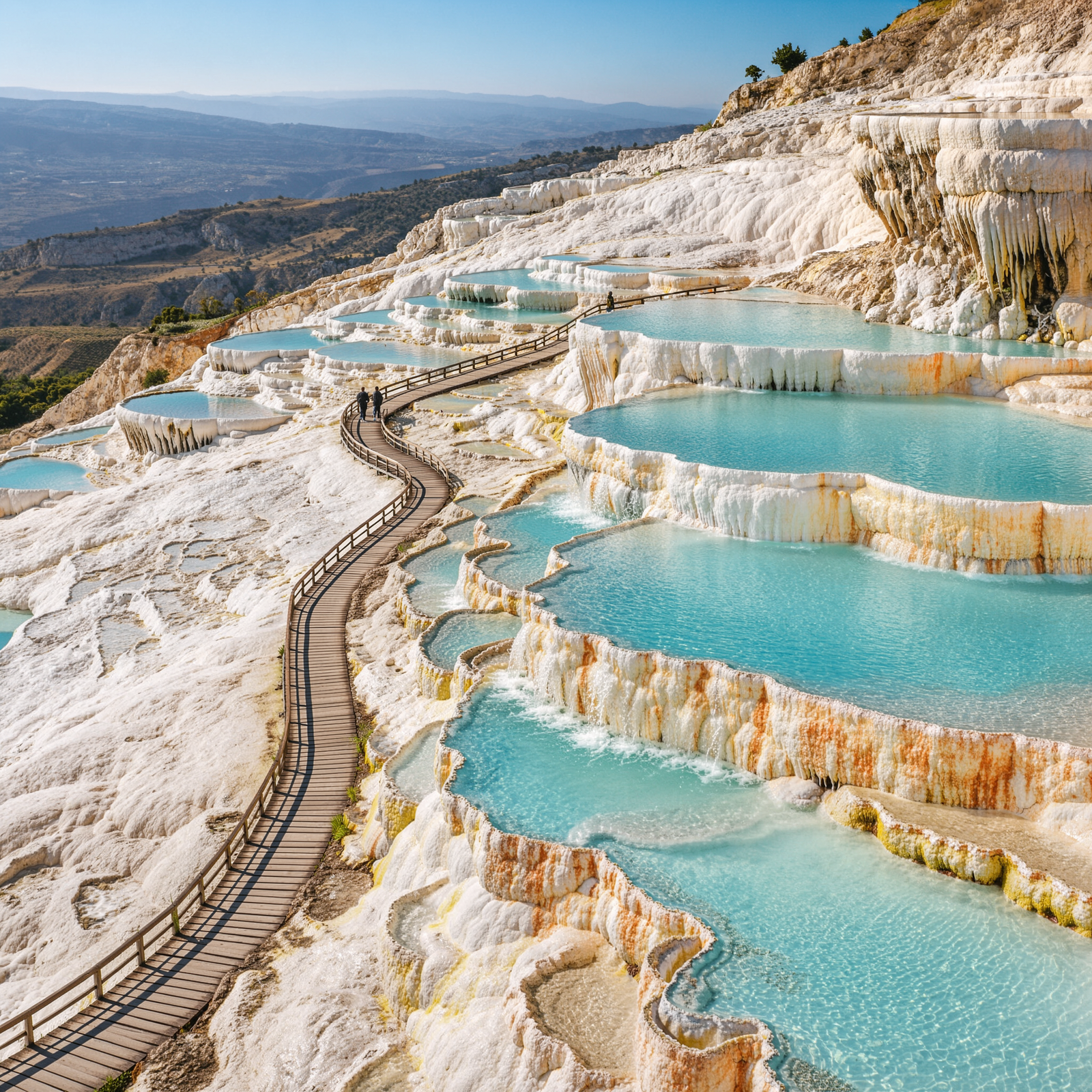
Travertine terraces can vary in colour and shape. Some have bright white mineral surfaces, while others display shades of cream, beige, orange and brown because of mineral content and environmental conditions.
These formations are valuable natural features because they show how geological processes can gradually transform a landscape.
Discover Beautiful Mineral Formations
One of the most exciting parts of exploring travertine terraces is seeing their unusual mineral formations up close. The layered surfaces, natural ridges and mineral deposits create patterns that are difficult to find in ordinary landscapes.
Some terraces look like a staircase made from stone, while others contain rounded edges and shallow pools. Water flowing over the surfaces can create delicate textures and small channels that make each formation unique.
The appearance of travertine can also change depending on the amount of water flowing through an area. Wet surfaces may appear shiny, while dry sections can have a softer, chalk-like appearance.
Visitors can spend time observing these details and learning how mineral deposits develop. These small features help explain the slow natural processes responsible for creating such impressive landscapes.
Explore Natural Terraced Landscapes
Travertine terraces often create a series of natural levels that look like steps across a hillside or valley. These terraced landscapes are formed as mineral deposits gradually build up around flowing water.
The different levels can create a beautiful combination of pools, stone edges and small waterfalls. Some areas have wide terraces with open views, while others contain narrow channels surrounded by mineral-covered rocks.
Walking around these environments allows visitors to appreciate how the landscape has developed over time. The changing shapes and textures provide plenty of interesting details to discover.
Some famous travertine locations are found near natural hot springs, where warm mineral-rich water continues to create deposits. These environments can be particularly impressive because the flowing water and mineral surfaces work together to produce a constantly changing landscape.
Enjoy Colourful Natural Pools
Natural pools are among the most attractive features of many travertine terrace destinations. These pools form where mineral-rich water collects in small depressions between the terraces.
Their appearance depends on several factors, including water depth, sunlight, minerals and surrounding rock. Some pools appear clear, while others may display blue, green or pale turquoise shades.
When sunlight reaches the water, reflections can make the pools look even more colourful. The surrounding mineral surfaces also create an attractive contrast with the water.
These natural pools are popular with photographers and nature enthusiasts because they provide beautiful views from different angles.
However, not every travertine pool is suitable for swimming. Water temperature, depth, mineral conditions and local conservation rules can vary. Visitors should always follow official guidance and avoid entering restricted areas.
Famous Travertine Landscapes Around the World
Travertine formations can be found in different parts of the world. Some destinations are internationally recognised for their remarkable terraces, mineral pools and geological features.
Pamukkale, Türkiye: Pamukkale is one of the best-known travertine destinations. Its bright white terraces and mineral-rich thermal waters create a striking landscape. The area is also recognised as part of a UNESCO World Heritage property alongside the ancient city of Hierapolis.
Huanglong, China: Huanglong is famous for its colourful pools, limestone formations, forests and mountain scenery. Its natural terraces create a beautiful combination of water and mineral landscapes.
Mammoth Hot Springs, United States: Located in Yellowstone National Park, Mammoth Hot Springs features impressive travertine terraces formed by hot spring water. The changing mineral deposits create unusual shapes and colours.
Bagni San Filippo, Italy: This destination is known for its natural thermal environment and white limestone formations. Visitors can explore the surrounding landscape while enjoying views of the unusual mineral structures.
Each destination offers a different experience, making travertine exploration an interesting option for travellers who want to discover geological attractions around the world.
Learn How Travertine Formations Develop
Travertine terraces provide an excellent opportunity to understand natural geological processes. Their formation involves water movement, mineral concentration and the gradual accumulation of calcium carbonate.
Underground water can pass through limestone rocks and dissolve small amounts of minerals. As the water travels towards the surface, it carries these dissolved materials with it.
When the water emerges from a spring, environmental changes can cause some minerals to settle. These deposits gradually collect on the ground, around pools and along the edges of flowing water.
The process is slow, and the appearance of a terrace can change over many years. New deposits may build up while water continues to shape the surrounding surfaces.
Understanding this process makes a visit more meaningful. Instead of seeing only an attractive landscape, visitors can appreciate the natural activity that created it.
Best Time for Travertine Terrace Exploration
The best time to visit a travertine terrace depends on its location, climate and local visitor conditions. Different seasons can change the appearance of the landscape and the overall travel experience.
Spring: Spring can be an enjoyable time to explore many travertine destinations. Mild temperatures and fresh natural surroundings make outdoor walking more comfortable.
Summer: Summer often provides longer daylight hours and opportunities to enjoy clear views of the terraces. However, popular destinations can become busy, and exposed areas may feel hot during the middle of the day.
Autumn: Autumn can offer pleasant temperatures and quieter surroundings in some locations. It is a good season for photography and relaxed nature exploration.
Winter: Some travertine destinations remain accessible during winter, although cold weather, rain or snow can affect walking conditions. Warm spring water may create interesting contrasts with cooler surroundings.
Before planning a visit, travellers should check local weather forecasts, opening information and seasonal access restrictions.
Photography Opportunities in Travertine Landscapes
Travertine terraces provide excellent opportunities for nature photography. Their unusual shapes, mineral colours and flowing water create interesting subjects for photographers of different experience levels.
Wide-angle photography can capture the full scale of a terraced landscape, especially when the formations stretch across a hillside. Close-up photographs can highlight mineral textures, water channels and small natural details.
Sunrise and late afternoon may provide softer lighting, helping bring out the colours and patterns of the terraces. Reflections in natural pools can also create attractive compositions.
Photographers should take care when choosing where to stand. Mineral surfaces can be slippery, uneven or fragile. It is important to use permitted viewpoints and avoid walking on delicate formations just to capture a photograph.
Wildlife and Natural Environments Around Travertine Terraces
Travertine landscapes can support different forms of plant and animal life, depending on their location and water conditions.
Vegetation may grow around the edges of mineral formations where suitable soil and moisture are available. Nearby forests, grasslands and wetlands can provide habitats for birds, insects and small animals.
Some hot spring environments also contain microorganisms that are adapted to unusual water temperatures and mineral conditions. These organisms can play an important role in the natural processes taking place around thermal springs.
Observing the surrounding environment adds another dimension to travertine exploration. Visitors can enjoy not only the mineral formations but also the wider ecosystem that exists around them.
It is important to avoid disturbing wildlife, damaging plants or introducing waste into natural water systems.
Walking and Exploring Travertine Terrace Trails
Many travertine destinations have walking paths that allow visitors to explore the landscape safely. These routes may pass through open viewing areas, natural surroundings and designated viewpoints.
Some trails are short and suitable for casual visitors, while others may involve longer walks through nearby hills, forests or valleys.
Walking around these formations provides an opportunity to notice details that may be missed from a distance. Visitors can observe how the terraces change shape, how water moves through natural channels and how mineral deposits create different textures.
Comfortable footwear is important because wet mineral surfaces can become slippery. Visitors should follow marked routes and respect signs that identify restricted or protected areas.
For destinations with extensive landscapes, local guides can also help explain the geological history and natural features of the area.
Responsible Travel and Conservation
Travertine terraces are natural formations that can be sensitive to human activity. Walking on fragile surfaces, leaving rubbish or entering protected pools can damage the environment.
Responsible tourism helps preserve these landscapes for future generations. Visitors should follow local regulations, remain on designated paths and avoid touching or removing mineral formations.
It is also important to use waste bins where available and carry rubbish away when necessary. Natural water sources should be protected from pollution, and wildlife should be observed without interference.
Travellers can support conservation by choosing responsible local tour operators and respecting the advice of park staff and guides.
Small actions can make a meaningful difference. By exploring carefully, visitors can enjoy these remarkable landscapes while helping protect their natural beauty.
Plan Your Travertine Terrace Adventure with Larski Travel
Travertine terrace nature exploration offers a wonderful opportunity to discover some of the world’s most unusual natural landscapes. From beautiful mineral pools and layered stone formations to flowing water and colourful terraces, these environments provide an unforgettable experience for nature lovers.
Whether you enjoy scenic walks, landscape photography, geological discovery or peaceful outdoor adventures, travertine destinations offer something interesting to explore.
With suitable planning and responsible travel habits, visitors can enjoy these natural wonders while learning about the geological processes that created them.
Larski Travel encourages travellers to discover remarkable landscapes, appreciate the natural world and enjoy meaningful outdoor experiences. Exploring travertine terraces is a memorable way to experience the beauty and creativity of nature.
Conclusion
Travertine terraces show how natural processes can create extraordinary landscapes over thousands of years. Their mineral formations, colourful pools and terraced surfaces make them fascinating destinations for exploration and photography.
From Pamukkale in Türkiye to the remarkable formations of Yellowstone and Huanglong, these destinations offer opportunities to discover geological beauty in different parts of the world.
For travellers who enjoy nature, learning and outdoor adventures, travertine terrace exploration is an experience worth adding to their travel plans.